
Everyday Carry for Normal People (2026): 5 Daily Tools and Stashes
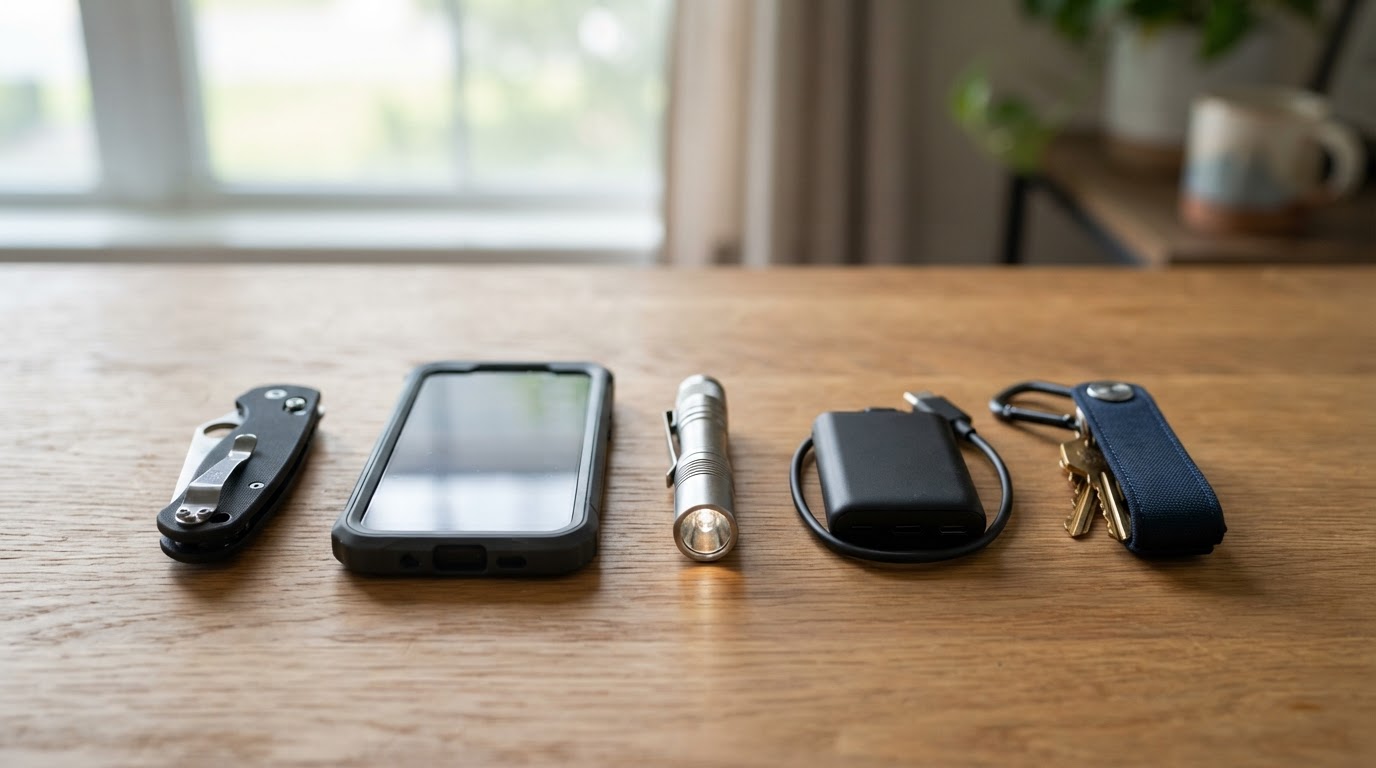
No tactical cosplay: a $40 pocket light, a charged phone, and 3 more ordinary tools that solve dark lots, dead phones, and stalled commutes for under $100.
This article contains affiliate links. If you buy through these links, we may earn a small commission at no extra cost to you.
Most everyday-carry lists read like a tactical catalog: combat knives, paracord, gear that gets side-eye in an office. Normal life has different emergencies: a dark parking garage, a dead phone on a delayed train, a 2-mile walk home in dress shoes. This is the normal-life kit for those moments: two pocket tools, two grab-and-go stashes, and one recovery protocol starting at about $40 if you already own a power bank.
1. Light You Do Not Have to Hold
Phone flashlights fail at the worst moment: they drain the battery you need for maps and calls, and they occupy the hand you need for keys and doors. A dedicated pocket light fixes all three.The Streamlight 66602 MicroStream USB Rechargeable… (about $40, 4.7 stars) is 3.87 inches, 1.2 ounces, USB-rechargeable, and clips to a hat brim or bag strap for hands-free light: 250 lumens on high, 3.5 hours on low. It lives in a pocket or purse and you forget it until the stairwell goes dark.
Need real throw for trails, big lots, or checking a roadside noise? The Nitecore EDC29 6500 Lumen Flat EDC Flashlight (about $110) packs a 6,500-lumen turbo into a 0.76-inch flat body with an OLED battery screen, so you see remaining runtime before you need it. Overkill for most commutes; exactly right if you walk unlit routes nightly.
2. Power for the Phone That Is Your Lifeline
A charged phone is a flashlight backup, a map, a payment method, and a rescue call. The power bank you already own (any 10,000mAh unit, charged monthly) is the second EDC item. Keep its short cable attached so it is one grab, not a treasure hunt. Our elderly parents emergency plan covers setting up backup power and medical checklists for older relatives.
3. The Walk-Home Trunk Stash
Offices empty onto dark streets during outages and storms. Keep a shoebox in the trunk: broken-in sneakers or flats, warm socks, the spare flashlight, a phone cable, and a printed card with two emergency contacts (a dead phone makes your contacts list theoretical). The sneaker swap alone turns a miserable 3-mile walk into a boring one. Drivers should pair this with the solo jump-start method in our dead battery guide: the same trunk holds the booster pack.
4. The 2AM ER Grab Pouch
Illness never schedules. A gallon zip bag by the door with insurance cards (copies, not originals), a 10-foot phone cord like the Anker USB-C to USB-C Cable 10ft (100W) (about $10 for Anker's braided 100W USB-C cable, long enough to reach a hospital wall outlet from the bed), crackers, electrolyte packets, a medication list, and a pen turns a 2AM scramble into a 60-second grab. Parents: add the pediatrician's after-hours number on paper. Our [sick-day home kit](/articles/sick-day-home-care-kit) stocks the house side; this pouch is the leaving side.5. The Lost-Wallet 15-Minute Protocol
No gear prevents a lost wallet; rehearsal does. If it happens: freeze the three credit bureaus from your phone (free, reversible), lock cards in banking apps, file the phone-carrier lock if the phone went too, and pull the $50 in small bills from the trunk stash for the ride home. Keep offline 2FA backup codes printed at home, not in the wallet they are supposed to rescue. The full identity-recovery sequence is in our identity theft guide.
Carry the five, practice the two protocols once, and ordinary Tuesdays stop being emergencies. For the car side of this kit, see Pack: See and Start; for home backup when the grid joins the outage, Pack: Power On.
Frequently asked questions
What is everyday carry for a normal person?
Five practical layers: a hands-free pocket flashlight, a charged 10,000mAh power bank with an attached cable, a walk-home shoebox in the trunk (sneakers, socks, $50 cash), an ER grab pouch by the front door, and a rehearsed lost-wallet freeze protocol. Skip the tactical knives and paracord bracelets; carry what solves dark parking lots, dead phones, and long walks home.
Is the Streamlight MicroStream worth it over a phone light?
Yes for hands-free use: it clips to a hat brim, runs 3.5 hours on low without touching your phone battery, and costs about $40. A phone light drains the device you need for calls and maps, and ties up a hand.
What should I keep in my car for walking home?
Sturdy closed shoes, warm socks, a compact flashlight, a phone charger, and $50 in small bills. Most unplanned walks home fail on footwear and light, not distance.