
Emergency Planning for Elderly Parents: A Practical Checklist (2026)
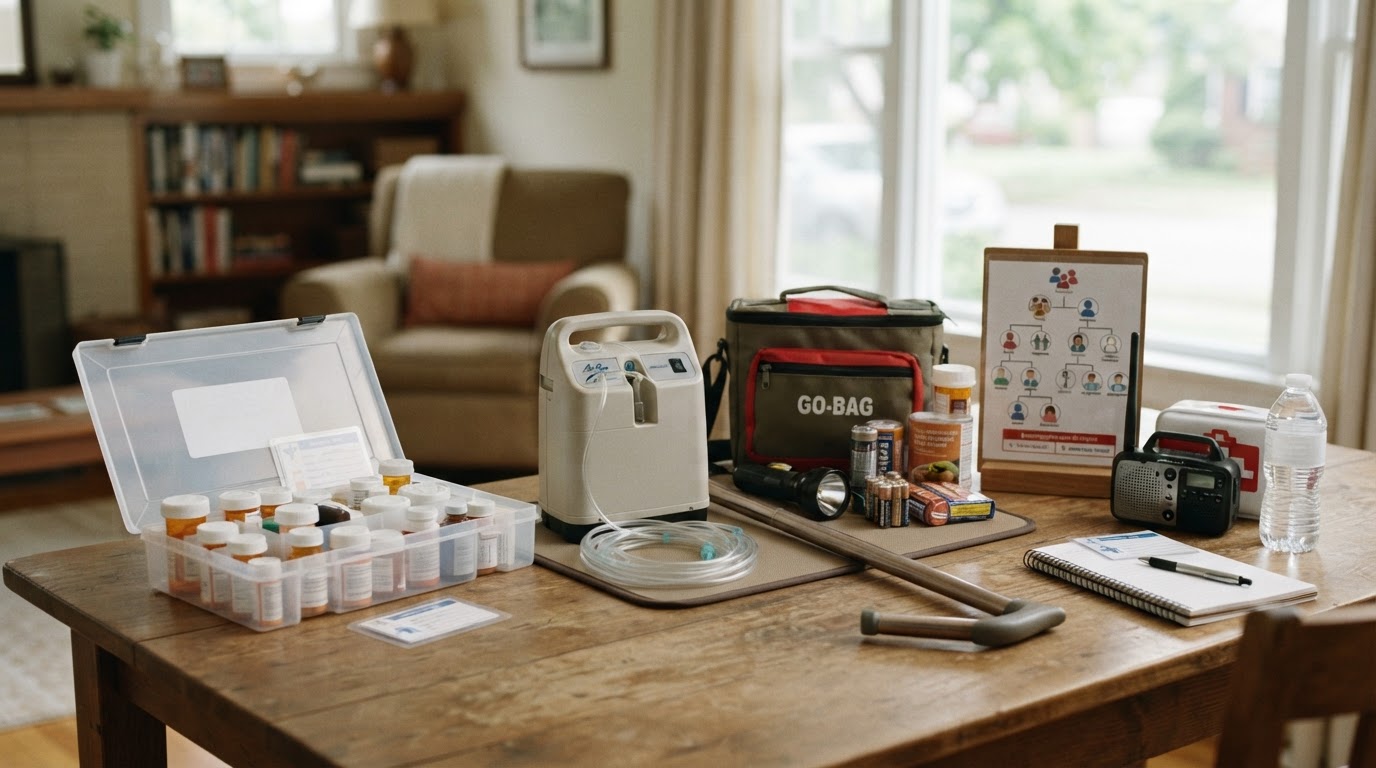
Emergency planning for elderly parents: medication dependencies, oxygen and mobility needs, the communication tree, and what to prepare before the next outage.
This article contains affiliate links. If you buy through these links, we may earn a small commission at no extra cost to you.
Write one dependency list for an older parent: medicines, powered equipment, mobility help, emergency contacts, and who can reach the house. Add an approved medication backup, test the exact power setup, and arrange a nearby check-in. An outage that is merely inconvenient for one household can stop a concentrator or lift next door.
Use this checklist with the family communication plan and prescription supply guide.
Make a Medication Backup Plan
Ask each prescriber and pharmacist what emergency supply is appropriate and legally available. The prescription supply guide explains 90-day fills, travel overrides, storage, and rotation.
- Ask about a 90-day fill when the prescription and plan allow it. It reduces refill deadlines but does not create a reserve.
- Use a weekly AM/PM organizer. A AUVON Weekly Pill Organizer 2 Times a Day (AM/PM) makes a missed dose visible when its compartment remains full after the scheduled time.
- Photograph every bottle front and back so a prescriber or new pharmacy can verify the drug, dose, and original pharmacy.
- Keep one current list with drugs, doses, prescribers, pharmacy, purpose, allergies, and the date checked.
- Plan for refrigerated medicine. Record each product's storage range and manufacturer number, and ask the pharmacist about an approved travel container.
Powered Medical Equipment: Know the Runtime
Inventory every medical device with a plug:
- Oxygen concentrators often draw 300–600W. A 245Wh EcoFlow RIVER 3 Portable Power Station provides roughly 20–40 minutes at that load after losses, not a full night. Get the supplier's approved battery or generator plan and keep exhaust outside, well away from the concentrator.
- Supplier support varies. Confirm the emergency number, after-hours process, and any registration requirements before an outage.
- CPAP draw varies, especially with heated hoses or humidifiers. Check the label or a watt meter and test the exact battery setup.
- Power wheelchairs and lifts need charging before the outage. A dead chair can block an evacuation.
- Hearing aids need the correct cell. Match tab size 10, 13, 312, or 675; Duracell Hearing Aid Batteries Size 312, 60 Count fits only size 312 devices.
- Write each device's model, input watts, and tested runtime beside its plug. The portable power station guide explains the math.
Mobility and Evacuation Reality
Practice an evacuation with the mobility aid and vehicle you would really use:
- Assign help by ability. Decide who steadies the parent, who carries equipment, and who brings the vehicle.
- Ask local emergency management about voluntary registries, accessible transport, and medical shelters. Registration does not guarantee rescue, so keep a separate family plan.
- Walk the route once, including stairs, ramps, door widths, and the transfer into the car.
- Keep the vehicle ready: maintain fuel above half a tank and add the basics from the winter car kit.
The Communication Tree
Power and cell failures are local, so put this tree in writing:
- Primary contact: one out-of-area relative everyone texts.
- Nearby check: a neighbor with a key and an agreed check-in time. Keep Midland ER310 Emergency Radio near the bed or chair so NOAA alerts are not buried in a bag.
- Escalation: decide when the neighbor calls family, the non-emergency police line, or 911. Medical equipment failure or immediate danger needs faster action than a routine missed check-in.
Keep the page on the refrigerator and copies in both wallets.
Put the Documents in One Packet
Keep copies of IDs, medical and homeowners insurance cards, Medicare or Medicaid numbers, prescription and allergy lists, power-of-attorney and healthcare-directive documents, and the contact tree in a grab-and-go document binder. Store encrypted copies where both the parent and caregiver can reach them.
The Maintenance Habit
Prescriptions change, neighbors move, and batteries age. Review the plan when clocks change: rotate the approved medication supply, test power and lights, confirm the neighbor is available, and verify every contact number. Put the next review on both calendars.
Frequently asked questions
What should elderly people have in an emergency kit?
Start with the standard household kit, then add their dependencies: the medication supply approved by their care team, a current prescription and allergy list, spare glasses or hearing-aid batteries, water for taking medicine, a light and radio near the bed, and tested backup power for essential equipment.
How do I check on elderly parents during a disaster if I live far away?
Build the tree before it's needed: an out-of-area contact everyone texts, a neighbor with a key and a standing knock-after-storms agreement, and the non-emergency police line for welfare checks. During the event, texts beat calls on congested networks.
How long will a battery power station run an oxygen concentrator?
A concentrator drawing 300–600W could use a 500–700Wh station in roughly 40 minutes to 2 hours after conversion losses. A 245Wh station is too small for a full night. Measure the exact device, test the approved setup, and ask the supplier about emergency support.