
Calorie Garden Starter: Potatoes, Beans and Squash When Stores Run Short
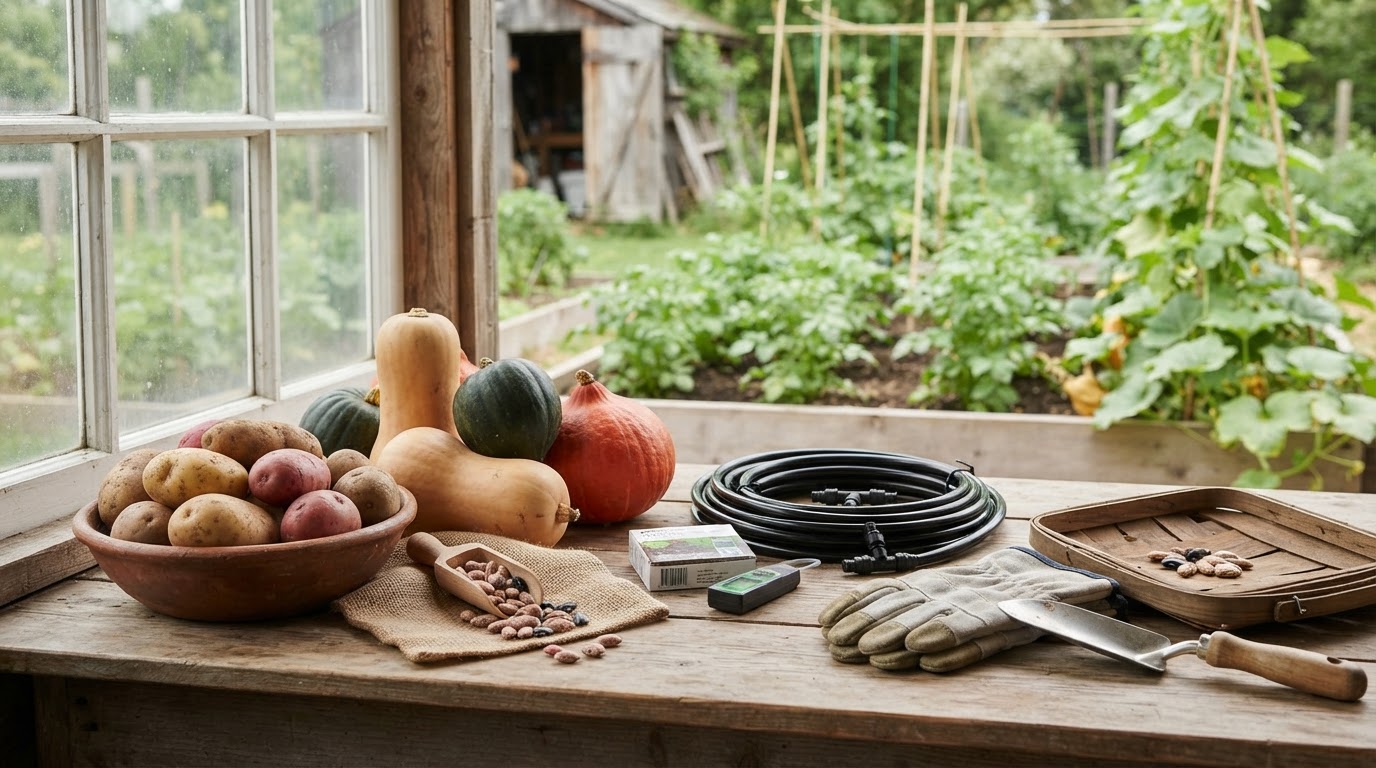
Grow calories that matter when supply chains stall. Potatoes, dry beans and winter squash, plus soil tests, drip water and harvest storage in one plan.
This article contains affiliate links. If you buy through these links, we may earn a small commission at no extra cost to you.
Salad beds do not carry a family through a supply break. Calorie crops do. This starter plan grows potatoes, dry beans and winter squash, then stores them with no power. It fits a small yard or a few raised beds. For pantry math, see our food and water storage guide.
Quick answer: Test soil once, plant calorie crops, water roots with drip, harvest into food grade buckets, and store cool, dark and dry. Skip bulk soil claims and unverified seed promises.
Grow calories, not just greens
Potatoes, dry beans and winter squash give the most food energy per area in a small plot, per extension vegetable guides. They also store for months without freezing or canning when handled right. Tomatoes and greens still help morale and vitamins, but plant them after the calorie base is in.
Save space with simple rules. Give squash room to run or a sturdy trellis. Give beans sun and a fence or poles to climb. Hill potatoes and harvest on time. Rotate beds each year and keep paths mulched so weeds do not steal water. No seed brand can promise yields for your soil and weather, so this guide makes no seed claims.
Test soil once, then feed it
Guessing wastes fertilizer and can burn plants. A mail-in lab test reports 13 plant nutrients plus pH with tailored input guidance, per the MySoil product listing. Results arrive in days, per the provider, and tell you what to add, how much, and when.
Sample as directed, mail it, and follow the report. Favor compost and targeted amendments over heavy blind feeding. Retest when you change beds or inputs. Keep the report with your garden notes so next season starts from fact, not memory.
Water roots, not leaves
Drip beats sprinklers for a preparedness plot. It puts water at roots, cuts waste, and keeps leaves drier, which cuts disease. A two-line kit with quick connectors sets up fast with no plumbing, per the MIXC product listing. The kit below carries 230 feet of tubing in two sizes with adjustable emitters, per the MIXC listing.
Run short deep sessions in the morning. Mulch to hold moisture. Check emitters weekly for clogs and kinked lines. If pressure runs low, water fewer zones at once. Store a manual watering backup, since timers and grid power can fail. For household water planning, the food and water storage guide covers gallons per person math.
Tools that earn their keep
Small plots need a few strong hand tools, not a shed full of gear. A 3-piece set with trowel, transplanter and cultivator covers digging, planting, weeding and aerating, per the Fiskars product listing. Cast aluminum heads resist rust and hold an edge, per the maker. Soft grips cut fatigue on long planting days.
Clean tools after use and hang them dry. Sharp clean edges cut roots faster and spread less disease. Gloves, a kneeling pad and a harvest basket round out the kit from household stock.
Harvest into buckets, store cool and dry
Pick on time and handle gently. Cure winter squash and potatoes as directed by extension guides so skins toughen for storage. Dry beans fully on the plant or under cover before shelling. Toss damaged items to the compost, not the bin.
Pack sound harvest into food grade buckets with tight lids to block pests and moisture. The buckets below are food grade 5-gallon pails with lids and handles, per the EconoHome product listing. Gamma style gasket lids upgrade the seal where needed. For canning the surplus, see our canned food shelf life guide for what fails first and how to check jars.
Hold stores cool, dark and dry with airflow. Check every few weeks for soft spots, sprouts and pests, and use damaged items first. First in, first out. Date each bucket.
Starter checklist
See Gear Worth Buying below for the four picks referenced here.
| Item | Why | Source |
|---|---|---|
| Sunny bed or raised beds | Calorie crops need full sun | Yard or containers |
| Lab soil test done | Feed what soil lacks | see pick below |
| Potato, bean and squash plan | Calories first, greens second | Seed packets |
| Hand tool set cleaned and hung | Dig, plant, weed, aerate | see pick below |
| Drip lines checked weekly | Water roots, save water | see pick below |
| Food grade buckets with lids | Pest proof harvest hold | see pick below |
| Cool dark dry store spot | Months of storage, no power | Pantry or closet |
Gear Worth Buying
- Fiskars 3-Piece Garden Hand Tools Set with Trowel… (~$24.95, 4.8 stars): trowel, transplanter and cultivator for small-plot digging and planting.
- MySoil Soil Test Kit with Lab Analysis and… (~$34.95, 4.6 stars): mail-in lab test with nutrient and pH report plus input guidance.
- MIXC 230FT Quick-Connect Drip Irrigation System Kit (See current price, 4.3 stars): quick-connect drip tubing and adjustable emitters for root watering.
- EconoHome 5-Gallon Bucket with Lid, 3-Pack (~$25.99, 4.5 stars): food grade 5-gallon buckets with lids for harvest and dry storage.
Source notes: Vegetable and storage practice from extension garden and food storage guides. Product specs per maker listings. Pantry planning in our food and water storage guide.
Frequently asked questions
What should a preparedness garden grow first?
Grow calories first: potatoes, dry beans and winter squash. Greens are healthy but thin on energy. Calorie crops store for months without power when cured and kept cool, dark and dry, per extension storage guides.
Do I need a soil test before planting?
Yes for a new bed. A lab test reports nutrients and pH plus what to add, per the lab provider. That beats guessing with fertilizer and saves money on products you do not need.
How do I store the harvest without a root cellar?
Cure squash and potatoes, then hold them cool, dark and dry with airflow. Use food grade buckets with tight lids to block pests and moisture. Check stores often and use damaged items first, per extension storage guidance.