
How Much Food and Water to Store for an Emergency: 2026 Guide
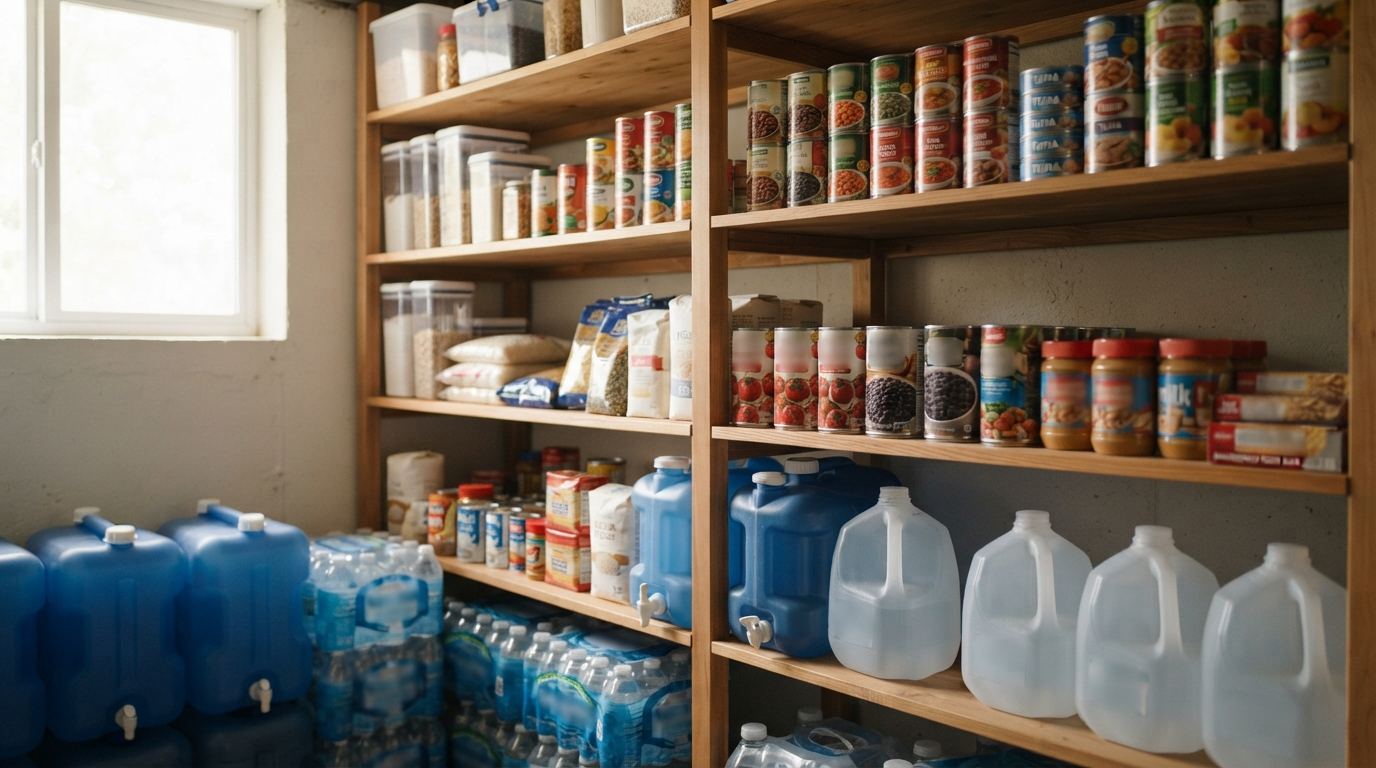
FEMA says to store 2 weeks of food and water, but most households have only 3 days or less. Here is a practical 2026 guide to what and how much to stock.
This article contains affiliate links. If you buy through these links, we may earn a small commission at no extra cost to you.
After Japan's 7.1 quake, survivors were rescued from the collapsed Kyushu mall as late as the fifth day, and the standard US guidance is built for exactly that gap. FEMA asks households to be self-sufficient for two weeks, and health experts put the practical minimum at three days of food and water per person. Most American households have under three days, often under one.
Here's the uncomfortable math: a major disaster in your region means supermarkets restock on a 48-hour cycle and truck shipments stop when roads do. You're not stocking for the apocalypse. You're stocking for a week where Walmart is closed. That's a very achievable goal.
How Much Water, Exactly
The rule is 1 gallon per person per day, that covers drinking, cooking, and minimal hygiene. Plan for two weeks:
| Household | Daily | 3 Days | 2 Weeks |
|---|---|---|---|
| 1 person | 1 gal | 3 gal | 14 gal |
| 2 adults | 2 gal | 6 gal | 28 gal |
| Family of 4 | 4 gal | 12 gal | 56 gal |
Add half a gallon per day per pet, and extra for hot climates and for anyone with medical needs. During the July heat wave that coincided with outages in Oregon, the people who suffered were the ones who ran out of water on day two.
Store it: The cheapest system is the Reliance Aqua-Tainer 7 Gallon Water Container…, 7-gallon jugs you fill, label, and rotate. Fill clean soda bottles if you're on a budget; just avoid milk jugs (they degrade and leak). Rotate stored water every 6 months, and keep it out of direct sunlight.
Purify it: If you're starting from lakes, pools, or rainwater (and plenty of people do in a prolonged event) you need a filter, not just iodine tablets. The Sawyer Squeeze Water Filtration System filters 100,000+ gallons and costs about $46. The LifeStraw Personal Water Filter is the $13 backup that fits in a go bag. The Grayl GeoPress Water Purifier is the premium option that removes viruses too, the other filters don't. We compared all of them side by side in our emergency water filter guide. Boiling works in a pinch but eats fuel you may not have, and if local authorities issue a boil water advisory, treat your stored tap water accordingly.
How Much Food, Exactly
Two weeks per person of food that needs no refrigeration and minimal cooking:
- Canned goods: 15–20 cans per person, beans, chili, soup, tuna. Pop-top lids save your can opener (get one anyway; they're $3). A Campbell's Chunky Classic Chicken Noodle Soup, 18.6… case covers the soup: twelve 18.6-ounce cans for about $24, hearty enough to eat cold from the can when there's no way to heat it.
- Dry staples: 10 lb of rice or pasta per person, plus shelf-stable options like oatmeal, peanut butter, crackers, and dried fruit. A Premium Original Saltine Crackers, 12 Boxes (48 oz) case covers the crackers: twelve sealed 4-ounce boxes for about $8, the base for the peanut butter and tuna pouch meals. A sealed box keeps about six months, so the case empties long before it goes soft. The dried fruit is the easy part: a Sun-Maid California Sun-Dried Raisins, 2 x 32 oz… two-pack of 32-ounce resealable bags runs about $10, and sealed raisins keep about a year, so the bags get used up long before they go hard.
- The "no cook" rule: aim for half your storage to need zero preparation, power may be out and your stove may be gas-lighted-out of service. PB&J supplies, canned fruit, protein bars.
- Baby food, formula, and pet food, one month if you can swing it; formula shortages are common during disasters. Households with an infant should keep a month of formula too: a sealed tub like Enfamil NeuroPro Infant Formula 20.7 oz, about $38 for 20.7 ounces, gets used and replaced like any other staple, and it mixes with bottled water or tap water you have boiled and cooled while an advisory is up. Babies on solids get their own case: Gerber Organic 2nd Foods Pouches Variety Pack…, eighteen 3.5-ounce organic fruit and veggie purees for about $22. The pouches are shelf-stable until opened, need no bowl, spoon, or refrigeration, and each cap is date-stamped, so the case rotates through ordinary snack days. For the dog, a sealed Wag Wholesome Grains Dry Dog Food 30 lb bag stores the same way as your dry staples and rotates into regular feedings, so the emergency stock never goes stale. A 44 lb bag covers a large dog for about a month; 30 lb suits a medium dog over the same window.
- Salt, oil, spices, coffee, tea, comfort items matter when people are stressed. Don't skip them. For coffee, instant is the storage format that works: the Maxwell House Instant Coffee, Original Roast, 8 oz… runs about $8, needs nothing but hot water (no brewer, no filter), and keeps about two years sealed. Keep one extra jar and rotate it through ordinary mornings. Tea stores the same way: the Lipton Black Tea Bags, 100 ct (Pack of 2) is two 100-count boxes for about $19, the sealed bags hold their flavor about two years, and a cup needs nothing but hot water. Keep one box in the cupboard and the other on the emergency shelf. Salt is the easiest item on the line because it never expires: a 26-ounce canister of iodized salt like the Morton All-Purpose Iodized Salt, 26 oz runs about $2 and covers both the shaker and the emergency shelf, so the stash version is just the next canister you would buy anyway. Store the iodized version; it supplies iodine, which plain sea salt doesn't. Oil is the one item on this line that ages. It does not go bad the way dairy does, it just fades: a sealed bottle keeps about two years, an opened one is best within a few months, so buy the size you actually cook with and let the kitchen drain it. Olive oil is also the fat for the no-cook meals, since it dresses a bean salad or a tuna pouch with no heat at all. A 32-ounce bottle of extra-virgin like the Bertolli Extra Virgin Olive Oil, Rich Taste, 32 fl… runs about $13. Spices follow the same buy-what-you-cook rule at a smaller scale: refill the one you actually use instead of collecting jars that go stale. In most kitchens that is black pepper, and a 16-ounce bottle like the McCormick Pure Ground Black Pepper, 16 oz runs about $16, keeps its bite about two years sealed, and feeds the shaker for months.
Build a list, buy 2–3 extra items every grocery run, and within a couple of months you're at two weeks without a big single expense. That's how most preppers actually get there.
Rotate, Don't Hoard
Rotation is the part everyone skips, and it's the part that prevents your "emergency stash" from becoming a museum of 2019 canned goods. The easiest system: first in, first out. When you buy canned goods, put them behind the older ones. Check dates twice a year (do it when you change your clocks) and donate or eat anything within 6 months of expiring.
Rule of thumb for shelf life: canned goods 2–5 years, dry pasta and rice 2 years, peanut butter 6–9 months, protein bars 1 year. Write the purchase month on each can in marker, nobody remembers.
A Two-Week Starter List (Family of 4)
| Item | Amount | Shelf Life |
|---|---|---|
| Water | 56 gal | 6 months (rotate) |
| Canned beans/chili | 40 cans | 3–5 years |
| Tuna/chicken pouches | 30 pouches | 3 years |
| Rice or pasta | 40 lb | 2 years |
| Peanut butter | 4 jars | 9 months |
| Oatmeal | 15 lb | 2 years |
| Protein bars | 80 bars | 1 year |
| Canned fruit | 30 cans | 2 years |
| Pet food | 2 weeks | 1–2 years |
This fits in a closet shelf or two, costs roughly $200–300 spread over a few months, and covers a family for the gap between the disaster and the supply chain waking up.
For the 80-bar line, a six-flavor CLIF BAR Variety Pack (6 Flavors, 16 Count) box is an easy start. It runs about $21 for 16 bars and carries a year of shelf life, so the box empties long before it expires.
The canned bean line is the cheapest protein you can build a meal around: a Bush's Best Black Beans, 15 oz Cans (12-Pack) case is twelve 15-ounce cans for about $18, and beans hold three to five years in a cool pantry. They eat cold straight from the can, stretch a pot of rice, or mash into a dip, and they earn their keep in weeknight dinners, so the stock rotates itself. Four cases cover the table's 40 cans.
The tuna/chicken pouch line is the easiest protein to keep. A Safe Catch Elite Wild Tuna, 3 oz Pouches (12-Pack) case is twelve 3-ounce pouches for about $38: no can opener, nothing to drain, so it eats cold straight from the bag. Safe Catch says it tests every fish to a mercury limit 10 times stricter than the FDA's, which matters if tuna turns into a daily meal during a long outage. The chicken half of the line works the same way: a Swanson Original White Chunk Chicken, 2.6 oz… case is twelve 2.6-ounce pouches for about $23, fully cooked with nothing to drain, so it eats cold straight from the pouch on crackers or over rice.
The peanut butter line keeps itself. A Skippy Creamy Peanut Butter, 40 oz jar costs about $6, needs no cooking, and holds six to nine months, so it empties through ordinary breakfasts instead of aging on the shelf. Two jars cover the list's four. The jelly half of the pair keeps the same way: a Smucker's Squeeze Grape Jelly, 20 oz bottle (about $3, 4.8 stars from 6,000-plus ratings) needs no refrigeration until it is opened and holds about a year sealed.
The rice and pasta line costs the least per calorie in the table. A Carolina Long Grain Rice, 25 lb Bag bag is 25 pounds for about $33; sealed in a cool closet it keeps about two years, and cooking it takes nothing but water and heat. The pasta half is a Barilla Spaghetti (8-Pack) case: eight pounds for about $15, the same two-year shelf life, and it boils in a single pot. Two bags of rice cover the list's 40 pounds, or swap in pasta if your family prefers it.
The oatmeal line handles breakfast both ways: hot cereal when you have heat, overnight oats when you do not. A Quaker Old Fashioned Rolled Oats, Two 64 oz Bags… box is two 64-ounce bags, eight pounds for about $14, and the sealed bags keep about two years. Two boxes cover the list's 15 pounds.
The canned fruit line is the simplest on the shelf: kids eat it cold straight from the can, which is what the no-cook half of this list is for. A Amazon Grocery Yellow Cling Sliced Peaches, 15 oz… box is six 15-ounce cans for about $12, and five boxes cover the table's thirty cans.
Winter Note: Stored Water and Frozen Pipes
Garage and shed storage has one winter failure: freeze. Water expands by about 9% when it turns to ice, and a full 7-gallon jug is the one that splits, quietly, then leaks all over the floor when it thaws in March. Keep stored water somewhere that stays above freezing, leave a little headroom in each container, and after a deep freeze, check every jug for cracks or bulges before you put it back in the rotation. If the house's own supply lines freeze, that is a different problem with its own fix: our frozen pipe thawing guide walks through the safe order, open the faucet, heat from the faucet toward the freeze, no open flames. The same 55°F minimum that protects pipes protects stored water in an attached garage, so the winterize steps pull double duty.
Where the Experts Land
FEMA: two weeks, minimum three days. The Red Cross: three days minimum, two weeks preferred. State emergency managers: build to the two-week standard in stages. The CDC: same for water, with filters as a fallback.
The pattern is consistent, and the reason is consistent too: after disasters, the first week is when needs are highest and supply is lowest. A week of stored food and water turns a dangerous waiting game into a manageable inconvenience. Start with three days, that's this weekend's project. Add a little each grocery trip, and in a few months you'll be at two weeks without noticing the cost.
Pair your stock with our power outage guide (cold chain failure is how most stored food gets wasted) and our bug out bag checklist for the portable version of this plan.