
What to Do When a Power Line Is Down: Distance, Live Wires, and Electrocution Risk
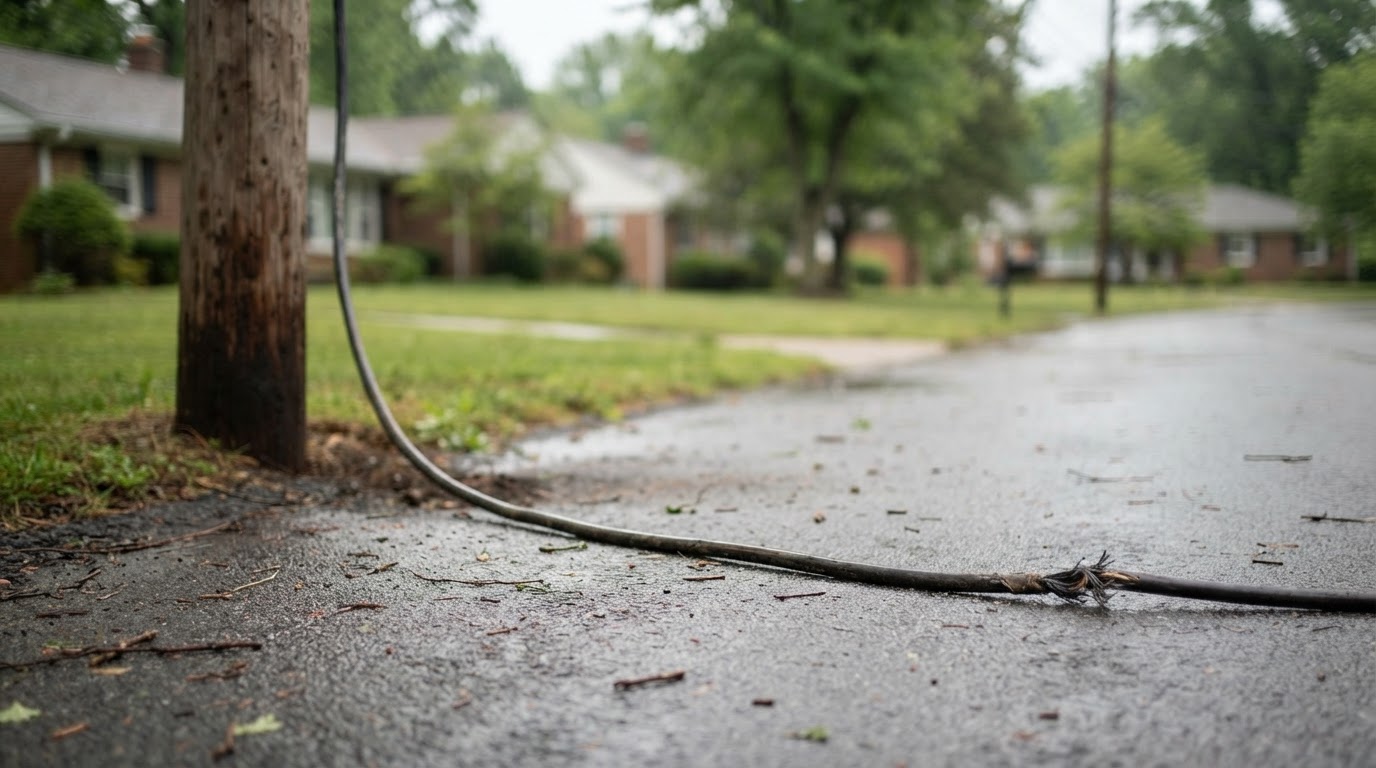
A downed power line can energize the ground around it, up to 35 feet. Stay back, keep others away, call 911, and never touch anything the wire touches.
This article contains affiliate links. If you buy through these links, we may earn a small commission at no extra cost to you.
A downed power line is live until a utility crew says otherwise, and the ground around it can be too. The Electrical Safety Foundation International's rule is to stay at least 35 feet away, about three car lengths, and keep everyone else back as well. Then call 911 and report the line to the utility. Never touch the wire or anything it is touching.
Most people hurt by downed lines never meant to touch one. They walked too close, let a dog wander, or grabbed a gate a line was touching. Here is what the safety agencies teach, in the order it happens.
How far is far enough
Electricity from a broken line fans out through the ground in every direction, and voltage drops with distance. That is why the margin is measured in tens of feet: ESFI puts the energized zone at up to 35 feet around the wire. Some utilities quote 30 feet, so 35 covers both. Two details make it worse.
- Wet ground carries current farther than dry ground. Puddles and standing water near a downed line are part of the hazard, and utility guidance says not to walk through flooded areas near one (CenterPoint Energy).
- A line that looks dead can wake up. Circuits do not always turn off when a wire falls, and automatic reclosers try to reset a faulted circuit on their own, according to OSHA's guidance on working around downed wires. A wire can re-energize without warning while you are standing near it.
What never to touch
The rule covers more than the wire. Anything a live line is touching can carry current: a chain-link fence, a metal gate, a guardrail, a car, a tree. Utility safety guidance calls out fences because they run long distances and people grab them without thinking.
So the perimeter goes around every object the line touches.
- Warn people away from the whole zone, and mean it about kids and pets. A dog does not know what the wire is.
- Do not use a stick or board to move the line or knock it off a fence. Current does not care what tool you brought.
- Do not stand in puddles near the line. If the ground is wet, give the zone more room.
If a line falls on your car
Stay inside. As long as you are in the car and not touching the ground at the same time, the vehicle's shell is between you and the current. That is the guidance FEMA gives: remain in your vehicle and wait for help. Call 911 and tell them where you are.
The exception is fire. If the car catches fire you have to leave, and there is a technique. Open the door, jump clear without touching the car and the ground at the same time, land with your feet together, then shuffle or hop away keeping both feet on the ground, per FEMA and utility instructions. Shuffling keeps your feet at the same voltage instead of letting current run in one leg and out the other. Do not run, and do not reach back into the car.
If you walk up on a car a line has already hit, do not approach it. Stay outside the zone and call 911.
Who to call, and in what order
Call 911 first when anything is sparking, burning, blocking a road, or has hurt someone. Dispatchers send the fire department and notify the utility. FirstEnergy's guidance is blunt: stay at least 30 feet away and call 911 immediately.
Report it to the utility as well. Every utility runs an emergency line for downed wires, and the report helps crews prioritize the circuit. Give the address or nearest cross street and what you can see from where you stand. Do not walk closer to read a pole number.
If a line is touching someone, do not touch the person or anything they are touching. They may still be energized and you become the second victim. Call 911 and keep everyone back until the utility confirms the line is de-energized (Garland Power & Light).
The mistake that turns an outage into a fatality
When the grid is down and the house is dark, people improvise. Two improvisations are deadly.
The first is backfeeding: plugging a portable generator into a wall outlet to power the house. The CPSC's safety alert is explicit. It is an electrocution risk to utility workers and to neighbors on the same transformer, and it bypasses the household breakers meant to protect you. The legal way to connect a generator to house wiring is a transfer switch or breaker interlock installed by an electrician. Until you have one, run cords. Our generator carbon monoxide guide covers keeping the exhaust outside.
The second is treating the downed line as a house problem you can solve. You cannot re-energize your house through a fallen line, and driving over one to get home makes you part of the circuit. Never drive over a downed line, and do not let a wire across your driveway become a shortcut.
Marking the scene without becoming part of it
At night the danger doubles: drivers cannot see the wire, and a dark road invites someone to drive into the zone. Warn traffic from outside the perimeter. A set of rechargeable LED road flares like the Ecoangel USB-C Rechargeable LED Road Flares, 3-Pack (about $20) marks a road closure without an open flame, and you can set them well back from the wire where you want cars to stop or turn around. Never walk toward the line to place one.
For news while you wait, a battery radio beats a phone. Restoration estimates and road closures come over local AM/FM and NOAA weather radio, and cell networks are often congested after a storm. The Midland ER310 Emergency Radio runs on a hand crank or solar as well as its battery, so updates keep coming on day three.
When the power returns, give it a moment before you trust it. Restoration can include brief surges as crews switch circuits. A plug-in meter like the P3 P4400 Kill A Watt Electricity Usage Monitor (about $31) shows the voltage at an outlet, so you can confirm a steady 120 volts before reconnecting computers and TVs.
The short version
Stay 35 feet back and keep others back with you. Call 911, then the utility. Touch nothing the line touches, including fences and cars. Stay in your car if a line hits it. Never backfeed a generator and never drive over a wire. Wait for the utility, because only they can make it safe.
Frequently asked questions
How far should I stay from a downed power line?
At least 35 feet, about three car lengths, per the Electrical Safety Foundation International. The ground around the line can be energized that far out, and wet ground can carry current farther, so give the zone room and keep others back too.
The line looks dead. Can I move it with a wooden broom?
No. Circuits do not always turn off when a line falls, and automatic reclosers can re-energize a wire without warning, according to OSHA. Current can also reach you through anything the wire is touching or through the ground itself, so wood is not protection.
Can I plug my generator into a wall outlet to power the house?
No. The CPSC calls that backfeeding, and it puts utility workers and your neighbors at risk of electrocution while bypassing your household circuit protection. The safe connection is a transfer switch or breaker interlock installed by an electrician.