
Raising Chicks in a Brooder: Heat, Feed, and Pasty Butt
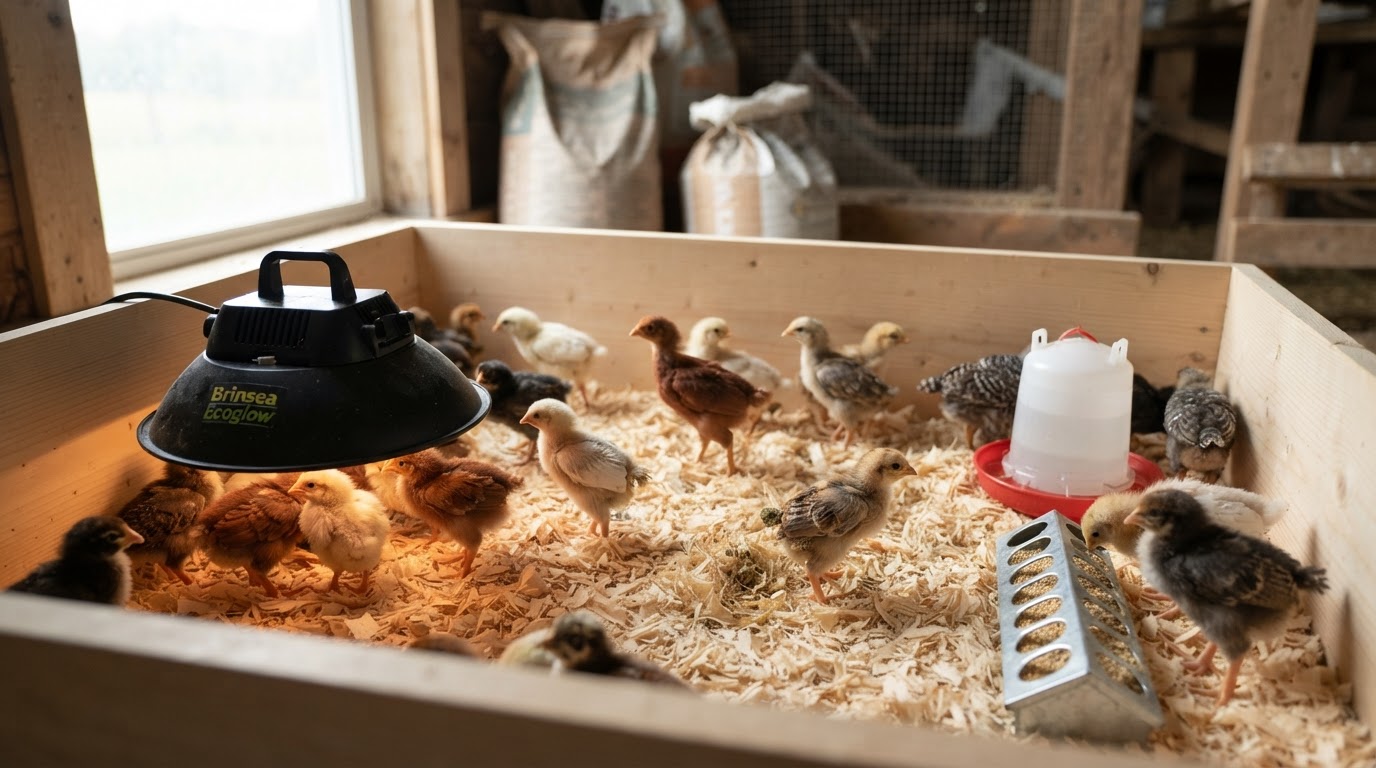
Raise day-old chicks to hardy pullets: brooder heat plate safety, medicated starter feed, water, and pasty butt care in one tested first-month survival plan.
This article contains affiliate links. If you buy through these links, we may earn a small commission at no extra cost to you.
Day-old chicks need three things: contact warmth, clean water and the right crumbles. A heat plate covers the first with far less fire risk than a lamp. This plan runs the first month, from brooder box to feathered pullets ready for the starter-flock routine in our backyard flock guide.
Quick answer: Brood in a draft-free tub on pine shavings with a heat plate at chick-back height. Feed medicated starter to unvaccinated chicks, water fresh daily, check vents every day, and read chick behavior instead of chasing air temperature.
Set a draft-free brooder first
Chicks chill fast and pile when cold, which smothers the weakest. Use a sturdy tub or stock tank with solid low walls: draft free at chick level, ventilated above. Bed with a few inches of pine shavings, the same bedding from our starter flock guide. Skip newspaper, which turns slippery and splays legs, and skip cedar, whose fumes irritate chick lungs, per extension guidance.
Hold the room above 60F so the plate only warms the contact zone. The plate below suits 15 to 20 chicks, per the ZenxyHoC product listing, with legs that rise as chicks grow. Set it low enough that chicks brush it standing, high enough that they walk under freely. Read the chicks, not the thermometer: huddled tight under the plate means too cold or drafty, sleeping spread around the edges means too hot, and an even mix of eating, drinking and napping under and out means right, per extension behavior guides.
Plate beats lamp on fire safety
Heat lamps cause a share of coop and brooder fires every year, per eXtension poultry network guidance. A 250-watt bulb over dry shavings with a clamp that slips is the classic setup. Plates run far cooler, contact only, with no bulb to fall. The anti-roost cone on the plate below keeps chicks from sleeping on top and fouling it, per the product listing.
If you must use a lamp, perhaps for a large batch in a cold barn, anchor it twice with chain plus clamp, keep it above chick reach, and never trust the clamp alone. For lamp fire detail, see our winter flock guide.
Feed medicated starter, water fresh daily
Chicks need 18% protein starter crumbles, not layer feed. Layer calcium damages chick kidneys. The medicated starter below adds amprolium to help prevent coccidiosis plus prebiotics and probiotics, per the Purina label, in a 25-pound bag that runs a starter batch for weeks. Feed it free choice from day one through the starter phase, then switch to layer crumbles near first eggs, per Purina feeding guidance.
One rule decides medicated or not. Chicks vaccinated against coccidiosis at the hatchery must get non-medicated starter, since amprolium negates the vaccine, per extension guidance. Unvaccinated hatchery and feed-store chicks suit medicated starter. When in doubt, ask the hatchery which they shipped and keep the answer with your records.
Water matters as much as feed. Dip each beak on arrival so chicks learn the source. The set below gives chick-size feeder and waterer with adjustable legs and anti-drown design, per the ZenxyHoC product listing. Raise both to back height as chicks grow so shavings stay out. Dump, scrub and refill daily. Chicks on crumbles alone need no grit; add it only when treats or range start, per Manna Pro feeding directions in our flock guide.
Pasty butt checks and feathering out
Check every vent daily for the first 10 days. Dried droppings cap the vent and kill fast, and shipping-chilled or overheated chicks paste up most, per extension guidance. Soften with a warm damp cloth, wipe gently, dry the chick and return it to warmth. Never pull dry matter. A dab of petroleum jelly around a repeat offender helps while the gut matures.
Chicks feather out over 5 to 6 weeks, per extension growth guides. Raise the plate weekly, watch them spend more time out from under it, and remove heat when fully feathered and nights are mild. Move pullets to the coop on a warm day with food and water they already know. Expect first eggs months later, not weeks: most layers start between 18 and 24 weeks depending on breed, per extension guides.
Starter checklist
See Gear Worth Buying for the four picks referenced below.
| Item | Why | Source |
|---|---|---|
| Draft-free tub on shavings | Warm chicks do not pile | Household tub |
| Heat plate at back height | Contact warmth, low fire risk | see pick below |
| Feeder and waterer at back height | Clean feed, no drowning | see pick below |
| Medicated starter, unvaccinated chicks | Coccidiosis cover | see pick below |
| Daily vent checks, 10 days | Pasty butt kills fast | Hand and warm cloth |
| Feather check before moving out | Off heat near 6 weeks | Flock behavior |
Gear Worth Buying
- ZenxyHoC Chick Brooder Heat Plate with Anti-Roost… (See current price): 10 by 10 inch contact plate with adjustable legs and anti-roost cone.
- ZenxyHoC 2-in-1 Chick Starter Set: Feeder and… (~$17.99, 4.5 stars): chick feeder and waterer with adjustable legs and anti-drown design.
- Purina Start and Grow Medicated Chick Feed… (~$34.99, 4.8 stars): medicated starter crumbles with amprolium for unvaccinated chicks.
- Small Pet Select Pine Shavings Chicken Bedding, 141L (~$35.99, 4.5 stars): pine bedding for brooder floor and first coop fill.
Source notes: Brooding, pasty butt and feathering per extension and eXtension poultry guides. Feed rules per Purina label and feeding guidance. Heat-lamp fire risk per eXtension.
Frequently asked questions
Is a heat plate safer than a heat lamp?
Yes for most brooders. Plates give contact warmth chicks move toward and away from, with no hot bulb over bedding. Heat lamps start coop fires every year, per eXtension poultry network guidance, and clamp lamps slip. Anchor any lamp twice if you must use one.
Should I use medicated chick starter?
Medicated starter with amprolium helps prevent coccidiosis, per the Purina label. Use it for unvaccinated hatchery chicks. Do not feed medicated starter to chicks vaccinated against coccidiosis, since it negates the vaccine, per extension guidance. Follow the label and switch to layer feed near lay.
What is pasty butt and how do I fix it?
Dried droppings seal the vent so chicks cannot pass waste. Check vents daily for the first 10 days, per extension guidance. Soften with a warm damp cloth and wipe gently. Never pull dry matter. Chilling, overheating and shipping stress raise the risk.