
How Cold Is Too Cold for Dogs and Cats? Winter Pet Safety (2026)
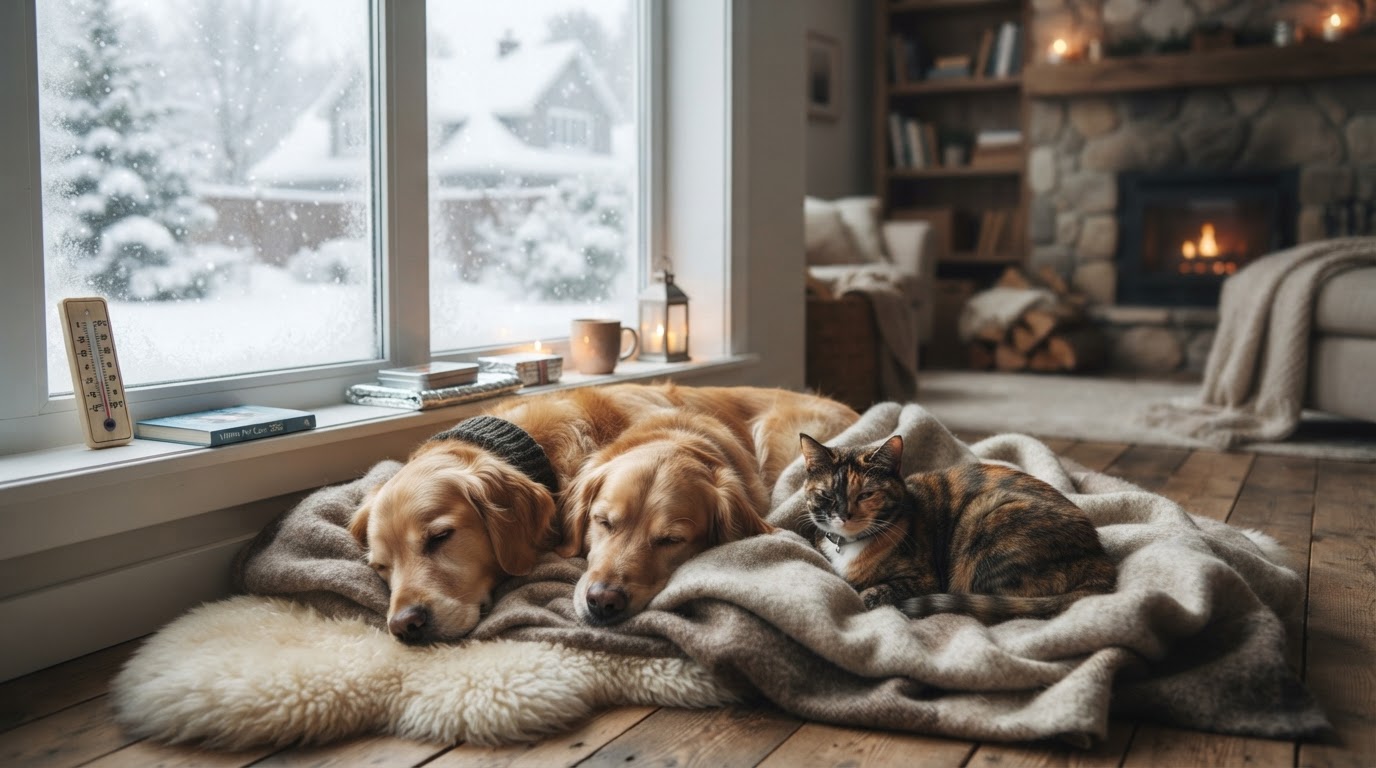
How cold is too cold for dogs and cats: coat and size thresholds, frostbite and paw care, antifreeze and ice melt, and keeping pets warm in a power outage.
This article contains affiliate links. If you buy through these links, we may earn a small commission at no extra cost to you.
Most healthy adult dogs are fine to about 20°F for a normal walk, and none should linger below 0°F. Cats come inside at freezing. Small, short-coated, puppy, and senior animals tap out around 45°F; cold-adapted breeds like huskies go lower. The rule that covers every animal: if it's too cold for you to stand around in, it's too cold for them.
The Temperature Table: Where Your Pet's Line Sits
| Pet | Comfortable | Watch it | Danger |
|---|---|---|---|
| Small or short-coated dog (Chihuahua, Frenchie, min-pin), puppies, seniors | Above 45°F | 45 to 20°F: coat or short trip | Below 20°F: minutes only |
| Medium dog (Lab, beagle, Aussie) | Above 32°F | 32 to 20°F: keep walks short | Below 0°F |
| Large or cold-adapted dog (husky, malamute, German shepherd, Pyr) | Above 20°F | 20 to 0°F: watch feet and ears | Below 0°F |
| Cat | Indoors | Below 45°F if unsheltered | At or below freezing: no outdoor time |
Coat beats size: a short-haired 70-pound pointer gets cold faster than a fluffy 20-pound mutt, and wet fur and wind move the line up. Watch your own dog's cues: shivering, lifted paws, reluctance are the real signals.
For the 45 to 20°F band, a coat is the fix. The Kuoser Waterproof Dog Coat, Warm Reversible Dog… runs about $21 in a medium, waterproof on the solid side with a double-layer fleece lining and a leash hole at the back; measure your dog and size up when in doubt.
Where the Cold Gets Them First: Paws, Ears, Tails
Wind strips heat off a dog's ears and feet, so a 25°F day with a stiff breeze is a different walk than a calm one. Watch the frostbite spots: paw pads, ear tips, tail tips. Skin goes pale, gray, or waxy, feels cold and numb, then hurts as it warms. Bring the animal inside, dry it, and warm the spots with lukewarm compresses. Never rub frostbitten skin or use hot water; both damage injured tissue. Dark skin, blisters, or limping over a day means a vet visit.
The bigger everyday problem is sidewalk salt: it packs between the pads, burns the skin, and upsets the stomach when licked off. Rinse paws in lukewarm water after every winter walk; walk on grass where you can. Booties for dogs that tolerate them; paw balm for the rest. The QUMY Dog Shoes & Snow Boots for Winter (4-Pack) runs about $29, with anti-slip rubber soles and reflective straps; fit them on a calm day first so the first walk is not the first time the dog has seen them. For indoors on hardwood and tile, the DOK TigerToes Premium Non-Slip Dog Socks run about $18 with a grip that holds when the sock twists. For dogs that will not wear anything, the Burt's Bees for Pets Nose and Paw Balm is a beeswax stick at about $7 that seals cracked pads against salt burn; swipe it on before the walk.
This is where a kit earns its keep: the Dr. Brahmsy Pet First Aid Kit (about $35) is vet-reviewed and its bandages handle a split paw from a cold walk like any other cut.
The Three Winter Hazards That Aren't the Cold
Antifreeze. Ethylene glycol tastes sweet, which is the problem: roughly a quarter cup can kill a 30-pound dog, and it moves fast. Within half an hour the animal looks drunk and wobbly, seems to recover, then fails. Treatment is measured in hours, not days. Check the driveway for puddles, store jugs sealed and high, use propylene-glycol formulas, and treat any suspected lick as an emergency vet trip.
Car engines. Cats crawl into warm engine bays on cold nights. Bang the hood before you start on frigid mornings; two seconds has saved a lot of cats.
Ice melt. The pellets you spread on your own walk are the same risk as the sidewalk salt. Use a pet-safe formula at home: Safe Paw Pet-Safe Snow and Ice Melt (8 lb) is salt- and chloride-free at about $30 for an 8-pound jug, covering roughly 800 square feet of walk. Wipe every animal's paws before it comes inside. The guide to walking on ice without falling covers treating your walkway and staying upright on it.
Warmth at Home, and Through a Power Outage
Indoor pets lose heat the way you do: from the floor up. A bed next to a window is the coldest spot in the room, and a blanket underneath lifts it off the draft. The Arcturus Military Wool Blanket (80% Wool, 66" x 90") from the car kit works lined into a crate too: 80% wool stays warm even damp.
Under a duvet you'd never know the bedroom hit 55°F, but your cat will. A thermometer like the Antonki Room Thermometer and Indoor Hygrometer, 2… (about $9 for two) makes the pet's sleeping room legible. Below about 60°F, the pet should be somewhere warmer.
When the power goes out in winter, pets come into the sealed room with you. The winter storm survival guide has the full no-heat plan; the pet version is a crate with a wool layer, food and meds in from the garage, and everyone huddling in the one warm room. Never leave an animal in a garage or mudroom overnight in a deep freeze, and keep a three-foot clearance around any space heater.
Before the warnings drop, the pet emergency kit should be inside the house, not in the shed. When the winter storm watch becomes a warning, that's the bring-the-cat-in signal.
Outdoor Dogs and Feral Cats
An outdoor dog needs an insulated shelter off the ground with a flap door and straw bedding: straw stays warm when wet, blankets freeze stiff. A purpose-built house like the GUTINNEEN Large Insulated Outdoor Dog House (about $180) is the insulated version of that shelter: dense insulation, a PVC door curtain that blocks wind, and raised feet that hold the floor off frozen ground. Water freezes; check twice a day, and use plastic bowls, since cold metal grabs a tongue. Where an outlet reaches the shelter, a heated bowl like the K&H Thermal-Bowl Heated Water Bowl, 96 oz (about $28, 4.6 stars from 10,000-plus ratings) keeps 96 ounces drinkable through a cold snap: it is thermostatically controlled, so it draws power only when the water needs it, and the cord is wrapped against chewing. Dogs outside in deep cold burn up to a third more calories. The Wag Wholesome Grains Dry Dog Food 30 lb bag has a production-date guarantee and rotates into regular feedings. Check ears and feet daily.
Feral cats are harder. A styrofoam cooler or tub with a door hole and straw keeps a colony alive through a cold snap, but below freezing no outdoor shelter is warm enough. Trap-and-bring-in beats well-meaning-but-cold.
When It's an Emergency: Hypothermia in Pets
Dogs run about 101 to 102.5°F normally, and hypothermia starts below roughly 99°F. Signs come in order: shivering that won't stop, then lethargy and stumbling, pale gums, shallow breathing, unresponsiveness. Bring the animal inside, dry it thoroughly, and wrap it in blankets with warm-water bottles in towels. No direct heat, no hot water, warm gradually. Anything beyond mild shivering is a vet visit.
For bleeding, choking, and other non-cold emergencies, the pet first aid guide covers what to do before you drive.
Before the First Freeze: The Checklist
- Know your pet's cold line, wind-chill version included
- Thermometer in the pet's sleeping room (Antonki Room Thermometer and Indoor Hygrometer, 2…)
- Paw station: towel, lukewarm water, balm or booties (Burt's Bees for Pets Nose and Paw Balm, QUMY Dog Shoes & Snow Boots for Winter (4-Pack))
- Antifreeze sealed away; driveway checked
- Pet kit indoors: food, meds, first aid, carrier
- Bed off the floor with a wool layer (Arcturus Military Wool Blanket (80% Wool, 66" x 90"))
- Outdoor water plan: heated bowl or twice-daily checks (K&H Thermal-Bowl Heated Water Bowl, 96 oz)
Prep is cheap and fast. The alternatives, a vet bill for frostbite or antifreeze, are neither.