
How Hot Is Too Hot for Dogs and Cats? Summer Pet Safety (2026)
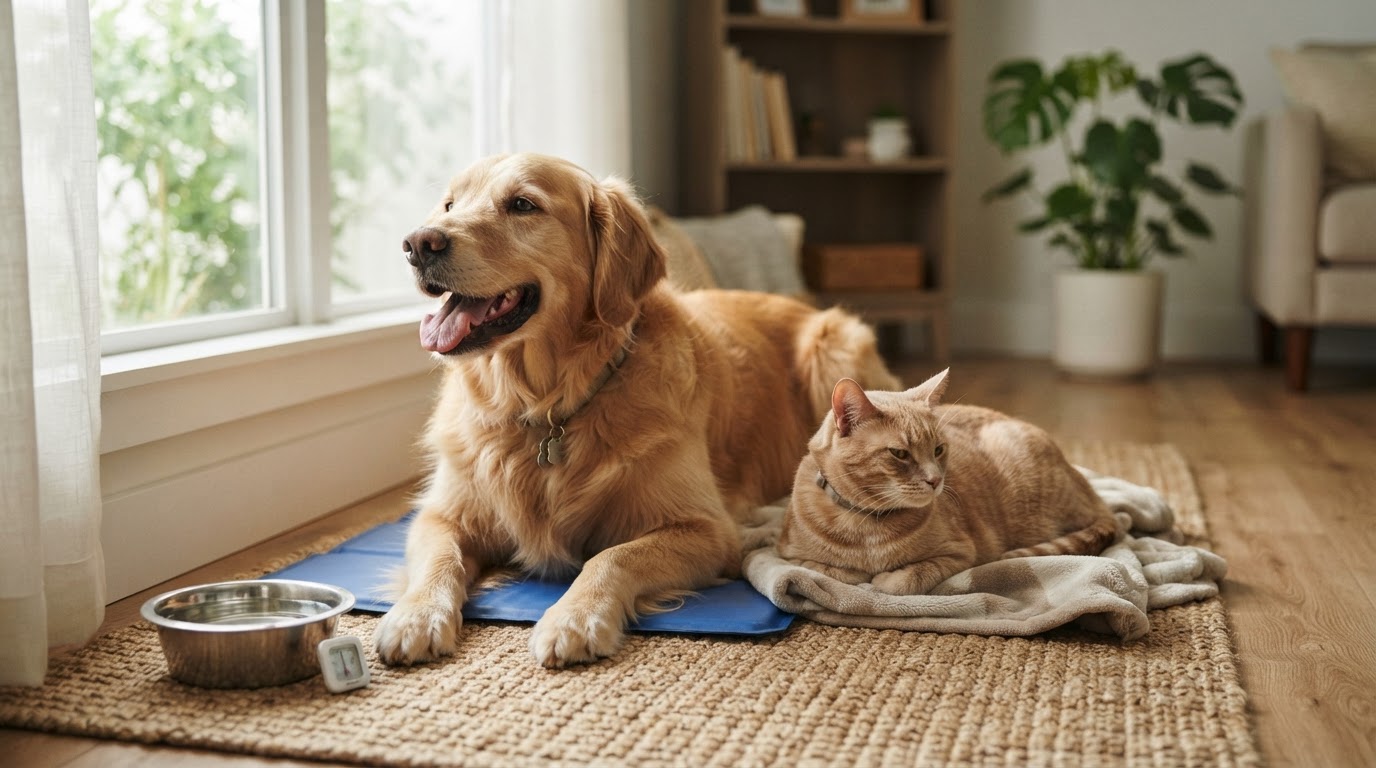
How hot is too hot for dogs and cats: pavement and parked-car limits, heat stress warning signs, and keeping pets cool without air conditioning or power.
This article contains affiliate links. If you buy through these links, we may earn a small commission at no extra cost to you.
There is no single safe air-temperature cutoff for every dog or cat. Humidity, exercise, sun, pavement, age, weight, coat, and face shape all change the risk. A short-nosed or elderly dog can struggle while a healthy dog nearby still looks comfortable. Watch the animal in front of you, test the surface, carry water, and end the outing when breathing or behavior changes.
The Pavement Check and the Parked-Car Math
Use the back-of-the-hand check as a rough screen, not a temperature measurement. If you cannot keep your hand on the surface comfortably for seven seconds, move to grass, shade, or indoors. Check again during the walk because sunlit pavement changes quickly.
A parked vehicle has no safe warm-weather window. The American Veterinary Medical Association says the cabin can rise about 19°F in 10 minutes, 29°F in 20 minutes, and 43°F in an hour. Cracking the windows makes little difference. Leave the pet at home or keep a person with the running, air-conditioned vehicle.
Decide From Conditions and Behavior
| Situation | Safer decision |
|---|---|
| Warm, humid day or hard exercise | Shorten the outing, stay near shade, and carry water |
| Short-nosed, elderly, overweight, very young, ill, or thick-coated pet | Go during the coolest part of the day and ask your vet about individual limits |
| Ground fails the hand check | Use grass or another cool surface, or move the walk indoors |
| Any pet in a parked vehicle | Do not leave the pet, even with cracked windows |
Heavy panting, slowing down, seeking shade, lagging behind, drooling, or refusing to continue are reasons to stop. Waiting for a universal number is less useful than noticing that your pet is no longer coping.
The Heat Traps People Miss
- The balcony. Concrete and deck boards bake and throw reflected heat; a grassy shaded spot beats the "shaded" deck corner.
- The crate in the wrong room. Crates trap heat and block airflow; against a sunny wall they heat up like a parking lot. Crate the dog where the air moves.
- Midday play. Fetch at 2pm piles exercise heat on top of ambient heat, and hot muscles plus hot air is how healthy dogs still collapse.
- The tie-out in full sun. A dog chained in a yard has no way to follow the shade. By noon the only shadow is under the dog.
- Sand and artificial turf. Beach sand at midday can pass 120°F, and turf runs hotter than grass. Pick another surface.
Cooling a Pet When the AC Is Out
Hurricane season is the classic case: the storm knocks the grid out and the first 90°F afternoon lands days later. The hurricane safety guide covers the storm; this is the pet half of the aftermath.
Pick the coolest room and block direct sun. Open opposite windows only when the outside air is cooler, and use a fan to keep air moving. The AMACOOL 10 Inch Foldable Rechargeable Oscillating… folds flat and has a 20,000mAh battery, which makes it useful during an outage.
For a pet that is overheating, move into shade or air conditioning and wet the body with cool or room-temperature water while air moves across the coat. A clean household towel works; a towel from the Sukeen 4 Pack Cooling Towels (40" x 12") can help apply water, but remove and re-wet it once it warms. Do not wrap the whole pet in a wet towel, and do not use an ice bath. If heatstroke signs appear, start cooling and call a veterinarian while you arrange transport.
Water Is How They Cope
Dogs lose heat mainly through panting, so carry water on warm walks and offer it often. Turn back if the dog slows, pants harder than usual, or stops taking water. A collapsible bowl like the Dexas Pets Collapsible Travel Cup (Large/2 Cup) keeps the dog away from puddles that can carry parasites or harmful algal toxins. Keep the cup and a water bottle in the go bag; the pet emergency kit has the full list.
Cats Need a Quieter Check
Cats may hide, groom repeatedly, sprawl on cool surfaces, or become restless before the problem is obvious. Open-mouth breathing or panting in a cat is not normal and needs prompt veterinary advice, especially with drooling, abnormal gums, vomiting, weakness, or collapse. Keep an indoor cat in the coolest ventilated room with several water bowls. Do not force water into the mouth or keep soaking a cat that panics; call the veterinarian and arrange transport.
The Dogs at Highest Risk
Short-nosed breeds, seniors, overweight dogs, puppies, and dogs with heart or breathing problems overheat sooner. Thick coats can add risk, but shaving a double-coated dog can remove protection from sun and heat. Brush out loose undercoat and ask a groomer or veterinarian before clipping it short.
Paw Care After the Walk
After a warm walk, inspect pads and between the toes. For dry, intact pads, Burt's Bees for Pets Nose and Paw Balm can help moisturize them. Do not put balm on a blister, open wound, or burn; call your veterinarian for those injuries.
When It Stops Being "Hot" and Starts Being an Emergency
Heavy panting that does not ease, thick drool, abnormal gum color, vomiting, weakness, confusion, a wobbly walk, seizures, or collapse can mean heatstroke. Move the pet to shade or air conditioning, start cooling with cool or room-temperature water and airflow, and call a veterinarian immediately. Transport the pet even if it seems to recover because internal injury may not be obvious. The pet first aid guide covers the trip to the clinic.
The Summer Checklist
- Check pavement before and during the walk
- Use the coolest part of the day and choose grass or shade
- Carry water and a collapsible cup (Dexas Pets Collapsible Travel Cup (Large/2 Cup))
- Keep a fan and clean towels ready for an outage (AMACOOL 10 Inch Foldable Rechargeable Oscillating…, Sukeen 4 Pack Cooling Towels (40" x 12"))
- Know whether age, health, weight, coat, or face shape raises your pet's risk
- Never leave a pet in a parked vehicle
Winter has its own version of this guide: the cold weather pet safety article covers the freezing half of the year. Summer safety is mostly timing, shade, water, and noticing when your pet's behavior changes.