
Backyard Chickens in Winter: Frostbite, Frozen Water, and the Heat-Lamp Trap
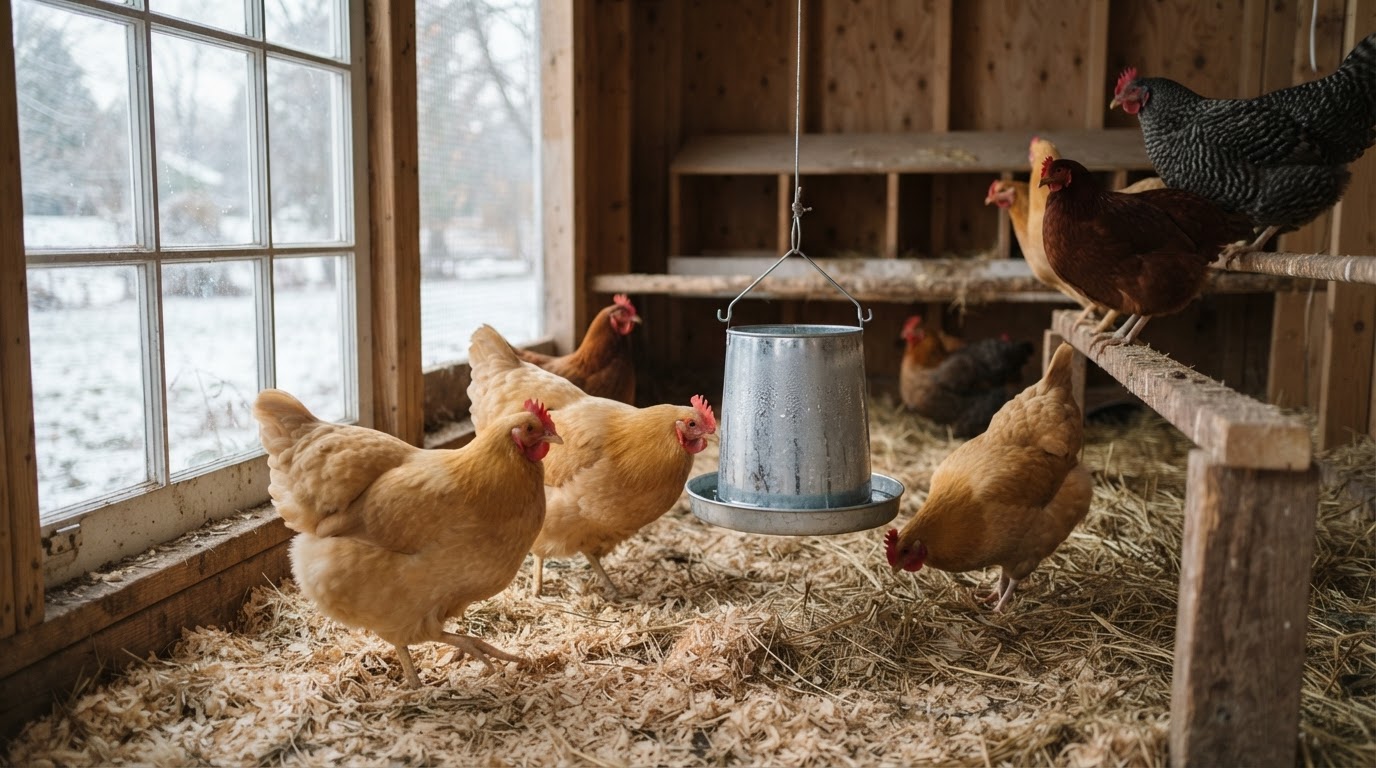
Backyard chickens handle deep cold better than most owners think. What they cannot handle: wet coops, frozen water, and heat lamps that burn coops down.
This article contains affiliate links. If you buy through these links, we may earn a small commission at no extra cost to you.
Chickens take cold better than most owners expect. An adult hen in a dry, draft-free coop rides out sub-zero nights without a heat source, and Ohio State and University of New Hampshire extension guidance both say most flocks need no supplemental heat. The real threats are wet bedding, wind across the roost, frozen water, and the heat lamp someone installs to help.
Quick answer: Keep the coop dry and ventilated, not heated. Give every bird a dry roost off the floor, check water twice a day, and skip the heat lamp. A rubber bucket beats a dead heated waterer in an outage.
Cold is rarely the killer. Wet and drafty is.
The difference between a flock that sails through January and one that fights frostbite all winter is moisture management, not temperature. Chickens exhale water vapor, droppings add more, and a sealed-up coop traps that moisture against combs and wattles while ammonia builds in the litter. Ohio State's poultry team says humid air creates more frostbite risk than dry air.
- Ventilate without drafting. Air should move above the birds' heads, never across them. Morning condensation on the coop windows means ventilation must increase, per the eXtension poultry network. A tarp blocking wind on a problem wall stays below the roofline so moisture can escape.
- Deepen the litter. Maryland extension recommends three to four inches of pine shavings or straw; it insulates the floor and gives birds somewhere dry to sit. Top it up through the winter and postpone the big cleanout until spring.
Feed matters too: chickens burn more calories staying warm, New Hampshire extension says they can eat up to 25 percent more feed in cold weather, and late-afternoon scratch grain gives them something to digest overnight, when they generate the most body heat.
Frostbite: combs, wattles, and toes
Frostbite hits the parts that stick out: comb tips, wattles, and toes. Extension poultry guidance says risk climbs when temperatures drop into the single digits and below, fastest in cold, poorly ventilated coops with damp bedding. Roosters and large-comb breeds like Leghorns are first in line.
- Get every bird off the floor. At least six to eight inches of roost space per chicken (Ohio State's figure) lets birds sit on their feet and tuck them under their feathers.
- Use wood, not metal or plastic pipe. Metal conducts cold straight into feet; a flat 2x4 works well.
- Petroleum jelly helps mild cases. Coat combs and wattles before a deep cold snap. It is a thin barrier, not a fix for a wet coop.
Signs a bird is too cold: huddling, standing on one foot, or fluffing feathers constantly, per New Hampshire extension. If you find gray, black, or waxy patches, bring the bird somewhere warm and let it warm slowly. Soak frostbitten feet in slightly warm, not hot, water; never rub the tissue, and never let a thawed bird freeze again, because refreezing does more damage than the first freeze.
Water is the twice-a-day job
Frozen water is the quiet emergency of winter chicken keeping. Consumption drops in winter, but birds still need water to survive, per Maryland extension, and a hen that cannot drink stops laying first. Ohio State extension says to change water twice a day, more often in a cold snap, and to check it in the evening so birds have liquid through the night. Automatic waterers freeze too.
- If power reaches the coop, a thermostatically controlled heated bowl keeps water liquid and draws current only when it needs to. The K&H Thermal-Bowl Heated Water Bowl, 96 oz (about $28) holds 96 ounces with a cord wrapped against chewing.
- Without power, extension's method is a low-walled rubber bucket: knock the ice out, refill, repeat. More work, but it never depends on the grid.
Skip the heat lamp
Heat lamps are the classic way a winter chicken problem turns into a house fire. The eXtension poultry network notes coops, and occasionally attached houses, are lost to heat-lamp fires every year, and New Hampshire extension advises against supplemental heat in most cases: the bedding is combustible and chickens knock things over.
Most flocks do not need heat; the exceptions are bantam breeds, which produce less body heat, and hens molting in deep winter. If you add heat anyway, use a purpose-built coop heater with safety controls on wiring kept out of reach: the Cozy Products Cozy Coop Chicken Coop Heater, 150W (about $55) is the flat-panel type, ETL-listed with zero clearance, that warms the birds pressed against it rather than the air. A dangling extension cord in a bedding-filled box is how fires start.
For eggs rather than warmth, the fix is light: laying slows when daylight drops below about 14 hours, and a low-heat LED on a timer to 14 to 16 hours a day adds no fire risk.
The storm and outage plan
A multi-day ice storm or power outage adds a few jobs:
- Water first. Fill every waterer before the storm; keep a spare bucket and jug in the house, not the coop.
- Collect eggs twice a day. Frozen eggs crack in the nest box, per New Hampshire extension.
- Do not seal the coop up. Without power, ventilation matters more, not less: the heat is gone, the moisture problem is not.
- Clear snow from the run. Extension guidance flags snow-packed runs as a frostbite risk to feet.
- Check the structure after. Fix roof leaks and seal gaps before winter; a tarp over a windward wall buys time, kept below the roofline.
A wire crate earns its keep for vet trips or when the flock waits out coop repairs: the Precision Pet One-Door Provalue Wire Dog Crate 30" (about $73) holds two or three standard hens and folds flat for the car.
The winter storm survival guide and watch-versus-warning guide cover the household side; the cold-weather pet guide covers dogs and cats, and small-pets transport covers carriers.
Before the first deep freeze: a 20-minute coop check
- Roof leaks patched, gaps sealed, tarp kept below the roofline
- Three to four inches of dry bedding, plus an extra bag stored
- Roosts sound, wood, six to eight inches per bird
- Water plan set for three days without power
- Extra feed, scratch, and grit on hand
Quick recommendations
- Heated water: K&H Thermal-Bowl Heated Water Bowl, 96 oz, ~$28
- Storm patch: Tarp 12x16 ft Heavy Duty 12-mil Waterproof, ~$35
- Moving birds: Precision Pet One-Door Provalue Wire Dog Crate 30", ~$73
Source notes: Winter poultry guidance from Ohio State, New Hampshire, and Maryland extension services, plus the eXtension poultry network (frostbite, ventilation, water, heat-lamp fire risk).
Frequently asked questions
Do backyard chickens need a heater in winter?
Usually not. Ohio State and University of New Hampshire extension guidance both say adult birds in a dry, draft-free, well-ventilated coop handle deep cold without supplemental heat. Watch bantams and molting hens, and if you do add heat, choose a purpose-built coop heater on sturdy wiring. Heat lamps start coop fires every winter, and they can also disrupt laying.
At what temperature do chickens get frostbite?
Risk climbs quickly in single digits and below, especially in a damp, poorly ventilated coop, according to the eXtension poultry network. Combs, wattles, and toes freeze first, and roosters or large-comb breeds like Leghorns are most vulnerable. Keeping the coop dry and giving birds a roost off the floor cuts the risk more than any heater.
How do I keep chicken water from freezing without electricity?
Use a low-walled rubber bucket: knock the ice out, refill with fresh water, and check twice a day, including in the evening so the flock has water overnight (Ohio State Extension). Automatic waterers freeze too. If an outlet reaches the coop, a thermostatically controlled heated bowl keeps water liquid without the fire risk of a lamp.