
How to Treat Anaphylaxis: Severe Allergy First Aid for 2026
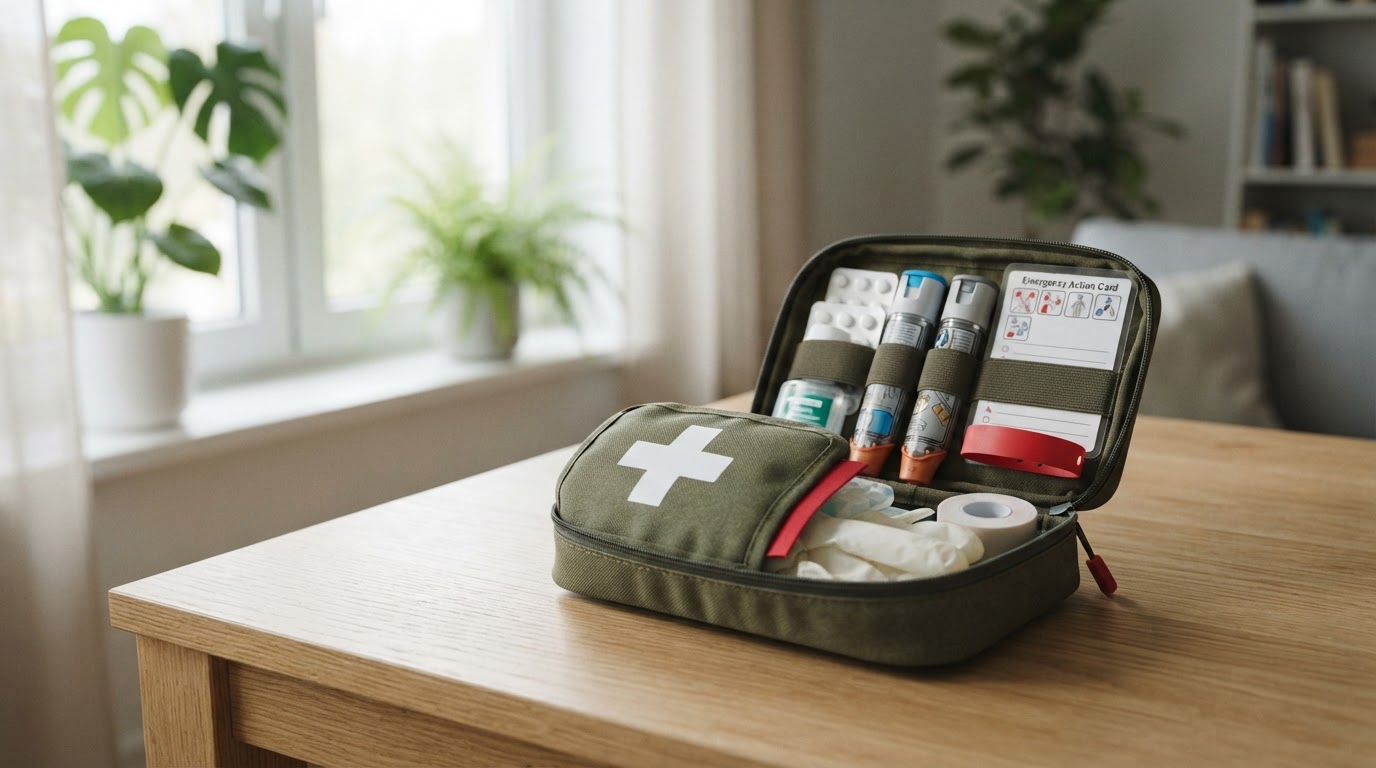
Severe allergy first aid in 2026: recognize anaphylaxis, inject epinephrine fast, and call 911. Plus how to build an allergy emergency kit that travels.
This article contains affiliate links. If you buy through these links, we may earn a small commission at no extra cost to you.
If someone near you is having a severe allergic reaction, the medicine that saves them is epinephrine, injected into the outer thigh within minutes. Give the shot first, then call 911. An antihistamine like Benadryl does not treat anaphylaxis; it treats hives, it acts slowly, and it cannot open a tightening airway. Epinephrine reverses the swelling itself and starts working in minutes. The timing, the dose, and the follow-up are where people get hurt, so the details below are worth reading now.
Anaphylaxis is a whole-body allergic emergency. Food allergies are the most common trigger in kids and the leading cause of anaphylaxis outside a hospital, per the ACAAI. The school year is when plans get tested: new classrooms, school nurses, a classmate's snack. If you or a family member carries an auto-injector, this is the version you want in your head before the incident.
If someone is reacting right now: inject the outer thigh, call 911, then read on.
How to Recognize Anaphylaxis: The Two-System Rule
The standard diagnostic criteria (NIAID) flag anaphylaxis when symptoms hit two or more body systems at once, or when a known allergen triggers skin symptoms plus breathing trouble or a blood-pressure drop. Reactions usually start within minutes of exposure; the ACAAI puts most symptoms inside a two-hour window.
| System | What it looks like |
|---|---|
| Skin and mouth | Hives, itching, flushing, or swelling of the lips, tongue, face, or throat |
| Breathing | Wheezing, coughing, hoarse voice, throat tightness, trouble swallowing |
| Stomach | Vomiting, diarrhea, cramping. In kids, sudden vomiting right after eating is a classic first sign |
| Heart and circulation | Dizziness, faintness, a weak or racing pulse, pale or clammy skin |
| Brain | Confusion, or a strong sense that something is very wrong |
The rule of thumb from allergists: when a known allergen drives any one of these symptoms, treat it as anaphylaxis. Do not wait for two systems, and do not wait for hives to spread.
The First Move: Epinephrine, Then 911
1. Inject the outer mid-thigh; through clothing is fine. Push until it clicks, hold per the device's own instructions (three seconds for an EpiPen, two for Auvi-Q), pull out, and massage the site. Skip hunting for label instructions mid-reaction; practice with the training injector when you refill your prescription.
2. Call 911 right away, even if the person says they feel better. The shot buys time; it does not replace the emergency room.
3. After five minutes with no improvement, give a second dose into the other thigh; the allergy practice parameters allow repeating epinephrine every 5 to 15 minutes. Standard adult auto-injectors carry 0.3 mg of epinephrine, child versions 0.15 mg. Carry two auto-injectors for exactly this reason.
4. Position for recovery. Lay the person flat with legs raised unless they are struggling to breathe; then sit them up or roll them onto their side. Pregnant women go on the left side, per ASCIA's anaphylaxis-in-pregnancy guidance (it keeps the uterus off the vein that returns blood to the heart).
5. Keep them still and close. Do not let them stand or walk alone, and give nothing to eat or drink. If they stop breathing or have no pulse, start CPR and keep going until help arrives.
Two honest notes. Epinephrine is not pleasant: a racing heart, shaking hands, and dizziness right after the shot are expected and pass in minutes. And if there is no auto-injector at all, call 911, keep the person lying down, loosen tight clothing, and monitor their breathing. That is the best of bad options, and it is why the kit below matters.
Why Benadryl Is Not the Answer
An antihistamine can calm hives. It cannot open an airway. Hives are miserable, but they are not what kills in anaphylaxis; the throat swelling and the blood pressure collapse are. Oral antihistamines are also slow, about 30 minutes just to start working per diphenhydramine's drug information, and a reaction can turn life-threatening inside that window. Give epinephrine first, and let a doctor add an antihistamine later.
The Second Wave: Biphasic Reactions
Up to one in five anaphylaxis episodes comes back, and the second wave usually arrives within eight hours; the ACAAI warns it can arrive as late as 12 to 24 hours after the first. Someone can feel completely fine after treatment and then rebound, and there is no reliable way to predict who will. So the rule is not "feel better and go to sleep." It is go to the ER and be observed.
Build the Allergy Emergency Kit Now
You cannot buy anaphylaxis preparedness in a pharmacy aisle, but you can build the box that holds it. The auto-injector is a prescription; your job is a labeled, unexpired one that is close by, with the plan next to it.
- Two auto-injectors, name and expiry written on the case in permanent marker.
- A backup antihistamine for mild symptoms only, marked "not a substitute for the shot." A 600-count bottle of Member's Mark Diphenhydramine 25 mg (600 Tablets) costs about $10 and covers hives for years, which is the whole point of a backup: the shot does what the pill cannot.
- A one-page action plan from your allergist, plus an allergy and medication list and emergency contacts, taped inside the lid.
- A cool, dark home. Epinephrine degrades in heat and must stay clear. A glove box in July is the wrong place. Check expiry twice a year at the clock changes and replace before it lapses, roughly every 12 to 18 months.
For a kid, kit number one lives with the school nurse with a plan on file, and kit number two stays with you in the daypack. The kit base just holds everything together:
| Kit | Best for | Why |
|---|---|---|
| First Aid Only 298-Piece All-Purpose Kit | Home base, ~$16 | 298 pieces in a soft case; tape the labeled epi-pen inside the lid for a one-hand grab |
| SurviveX Large First Aid Kit | Family kit, ~$103 | Waterproof, color-coded, findable in the dark; a place for a labeled med pouch |
| Adventure Medical Kits Mountain Series Hiker… | Daypacks, ~$34 | About a pound with a printed manual; fits a kid's backpack as the on-the-go base |
Whatever base you pick, the prescription meds and the printed plan are the actual kit. For a full comparison, see our best first aid kits of 2026 roundup.
Quick Recommendations
- The order is fixed: epinephrine into the outer thigh, then 911, then a second dose after five minutes if nothing changes. Memorize it.
- Carry two auto-injectors, keep them at room temperature, and check expiry at every clock change.
- Do not depend on Benadryl. It treats hives, not airways.
- The ER is not optional. Up to one in five reactions returns hours later.
- Take a certified first aid and CPR course if you can; this guide is education, not a substitute.
Epinephrine buys minutes, and minutes buy a hospital bed. Make sure the shot, the second dose, and the phone number are within arm's reach before the reaction starts. That is a ten-minute project this weekend, and it is the difference between a panic and a drill.
Frequently asked questions
What are the first signs of anaphylaxis?
The pattern that matters: skin symptoms (hives, flushing, itching) plus respiratory trouble (throat tightness, wheezing) or circulatory collapse (weak pulse, dizziness, fainting). Two body systems reacting at once after an exposure is anaphylaxis until proven otherwise: inject epinephrine first.
Do I still call 911 after using an EpiPen if symptoms improve?
Yes, always. Up to one in five reactions has a second wave (a biphasic reaction), usually within hours of the first; the ACAAI warns it can arrive as late as 12 to 24 hours after. Every epinephrine dose earns an ambulance ride; improvement is not resolution.
How long is an EpiPen good for, and does expired mean useless?
Most auto-injectors expire 12 to 18 months after you fill the prescription. Slightly expired epinephrine still works better than no epinephrine; the ACAAI advises using it when it is all you have during a reaction. Replace on schedule, rotate the oldest device into daily-carry use, and store spares at room temperature, never in a hot car.