
How to Treat a Burn: First Aid Steps for 2026
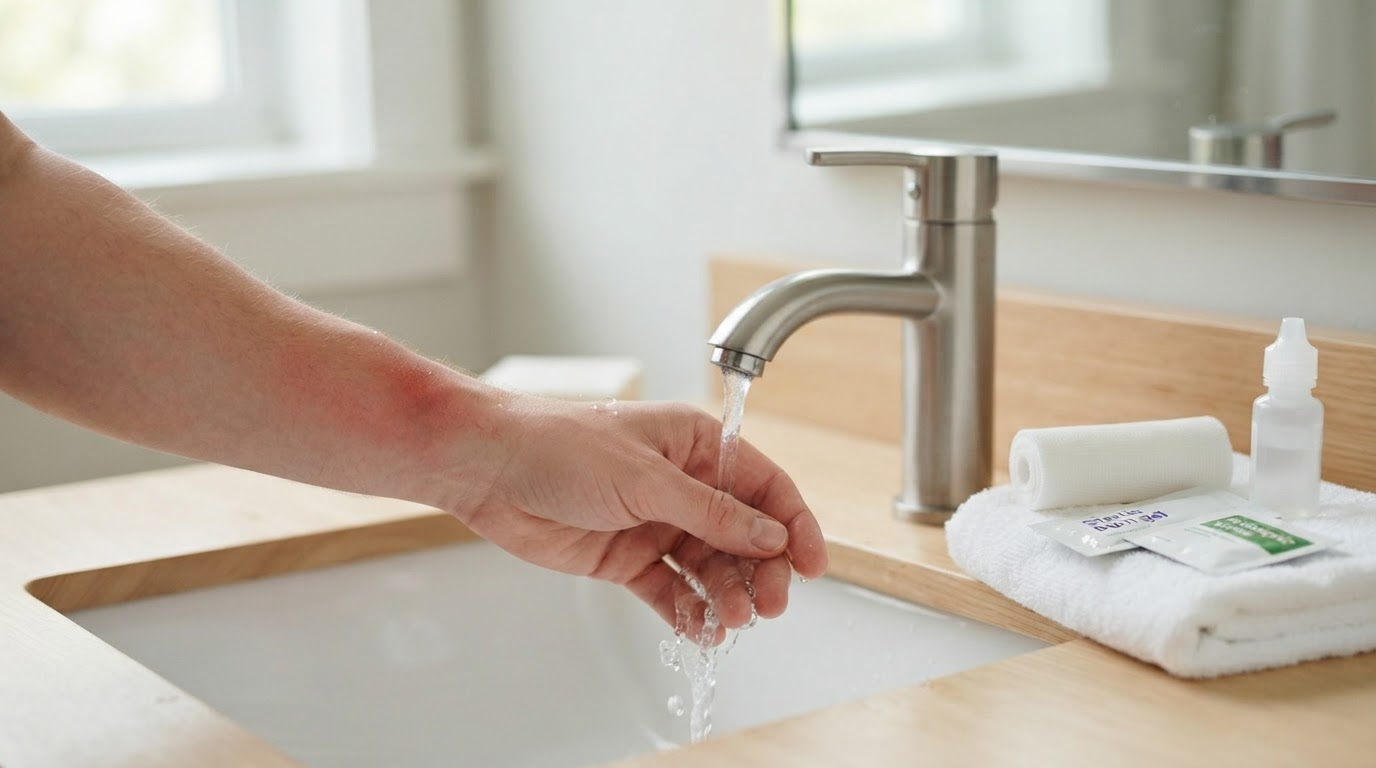
Cool a burn under running water for 20 minutes, cover it loosely, then know when to go to the ER. A practical burn-first-aid guide for 2026, step by step.
This article contains affiliate links. If you buy through these links, we may earn a small commission at no extra cost to you.
The single most useful thing you can do for any burn is run it under cool running water for 20 minutes. That is the whole answer in one sentence. Most kitchen, grill, and workshop burns heal fine at home with that, a loose dressing, and some ibuprofen. The part people actually get wrong is knowing which burns don't belong at home: burns to the face, hands, feet, or groin, any burn larger than the person's palm, and any burn that looks white or leathery all need an emergency room. Cool them first, then go.
With home medical supplies, the gap is usually not the brand. It is knowing, at 2am, what a second-degree burn looks like and what to do while the dressing drawer is open. Here's the field guide.
The 20-Minute Cool
For any burn, hot water, grease splash, or a stray flame, the clock starts immediately and lasts 20 minutes. Held under cool (not cold, not icy) running tap water, it does three things: pulls heat out of the skin, slows the swelling, and eases pain faster than any cream. The World Health Organization and most burn units recommend 15 to 20 minutes, and starting within 30 minutes of the injury makes the biggest difference in how much the burn deepens.
A few rules that matter:
- No ice. Ice or frozen packs constrict blood vessels and can freeze tissue on top of the burn, making the damage deeper. Cool running water only.
- No butter, no toothpaste, no oil. Every one of them traps heat and adds bacteria. They belong in the kitchen, not on the injury.
- Take off jewelry and tight clothing near the burn before it swells, but leave anything stuck to the wound alone.
- Stop cooling if the person starts shivering, especially a child. That's the body telling you it's done.
- After cooling, cover the burn loosely with clean cling wrap, a sterile dressing, or even a clean plastic bag so nothing rubs against the raw skin.
What Your Skin Is Telling You
Burns are graded by depth, and depth decides home care versus the ER.
- First degree: red, painful, no blisters. Think sunburn. It heals in a few days, and home care is enough.
- Second degree: blisters, a wet or weepy surface, intense pain. This is the gray zone. Small second-degree burns, smaller than a palm, heal fine at home. Anything bigger, or on face, hands, feet, groin, or a major joint, goes to the ER.
- Third degree: white, waxy, leathery, or charred, and sometimes the least painful of the three because the nerves are gone. Always an ER, always.
Two numbers help you decide fast. Your palm, fingers included, is about 1 percent of your body's surface. In an adult, second-degree burns covering 10 percent or more need burn-center consultation. The American Burn Association says all pediatric burns may benefit from burn-center referral because children have different care and dressing needs. You do not need to calculate this alone. If a burn covers a substantial area or you are unsure, call for medical guidance while you cool it.
Home Care, Step by Step
For a minor first- or second-degree burn, the full sequence takes about 25 minutes:
- Cool under running water for 20 minutes.
- Clean gently with mild soap and cool water. Don't scrub, don't break the blisters.
- Dry by patting, not rubbing.
- Cover with a sterile, non-stick dressing and change it daily. Plain gauze can stick to a weeping burn; a non-stick pad like the CURAD Sterile Non-Adherent Dressing Pads, 3 x 4… lifts off clean.
- Manage pain with ibuprofen or acetaminophen. A medicine-cabinet bottle such as Amazon Basic Care Ibuprofen 200mg (500 Tablets) keeps a deep buffer cheap. Aloe gel is fine on a first-degree burn once it has cooled.
- Watch for infection for the next few days: spreading redness, worsening pain, oozing, or a fever means a doctor's visit.
Leave blisters alone. The blister is a sterile bandage your body made; popping it invites infection and slows healing. And skip the old folk tricks: honey has some evidence for wound care, but on a fresh burn it belongs nowhere near until the ER or your doctor weighs in.
When It Stops Being Home Care
Go to the ER (or call 911) for any of these:
- Any third-degree area, however small
- A second-degree burn bigger than the person's palm, or on face, hands, feet, groin, or a major joint
- Chemical or electrical burns, which damage tissue deeper and slower than heat burns
- A burn plus other injuries, or a person who is confused or dizzy
- Smoke inhalation: soot in the nose or mouth, a hoarse voice, or trouble breathing
- A burn that shows signs of infection 48 hours later
When in doubt, an urgent care visit costs less than a bad outcome. Burns are the one injury where underestimating depth is the standard mistake, even among nurses.
What a Kit Actually Needs to Cover Burns
None of this works at 2am if the drawer is empty. A stocked first aid kit is the difference between a quick response and a trip to the pharmacy with a raw hand. The burn-relevant supplies you want are sterile non-stick dressings like the CURAD Sterile Non-Adherent Dressing Pads, 3 x 4… (100 pads, about $10), a roll of gauze, antiseptic wipes (MED PRIDE BZK Antiseptic Towelettes, Alcohol-Free…, alcohol-free, so the cleaning pass on blistered skin doesn't sting), medical tape, and OTC pain relievers.
| Kit | Price | Burn-relevant contents | Best for |
|---|---|---|---|
| First Aid Only 298-Piece All-Purpose Kit | ~$16 | 298 pieces: gauze, non-stick pads, antiseptic, tape, burn cream | Home and car on a budget |
| Adventure Medical Kits Mountain Series Hiker… | ~$34 | Compact trail kit with wound care, dressings, and a first aid manual | Kitchen drawer and daypacks |
| SurviveX Large First Aid Kit | ~$103 | professional-grade supplies, color-coded organizer, found in the dark | The main household kit |
The First Aid Only 298-Piece All-Purpose Kit is the honest budget winner: its label covers cuts, burns, and sprains, and at $16 it's cheap enough to keep one in the kitchen and one in the car. If you want one serious kit for the whole household, the SurviveX Large First Aid Kit earns the price with organized compartments, because in a real burn moment you don't want to dig through a tangle of wrappers by feel. For a kitchen drawer, the slim Adventure Medical Kits Mountain Series Hiker… sits flat and covers the basics. Pair any kit with a box of Water-Jel Burn Jel Packets, Box of 25 (3.5 g) you replenish each year, and you're covered: the single-use 3.5 g packets don't dry out or leak like a squeezed tube.
Roughly 450,000 people are treated for burns in US emergency rooms every year, the majority at home. Almost all of those are preventable with oven mitts, pan handles turned inward, and tap water at 120°F or lower. The 20-minute cool, a quick depth check, and a stocked drawer keep the run-of-the-mill burn from ever becoming an ER visit. Learn the three numbers: 20 minutes of cooling, a palm of skin, and when to go.
Related Guides
- Emergency wound care: the flush, dress, and daily check routine for cuts and scrapes, plus the infection signs that send you to a doctor
- Best first aid kits: the roundup behind the kit table above, with four picks compared on price and contents
- How to use a fire extinguisher: PASS, extinguisher classes, and when to fight a fire and when to leave