
5 Best Satellite Communicators for Emergencies in 2026
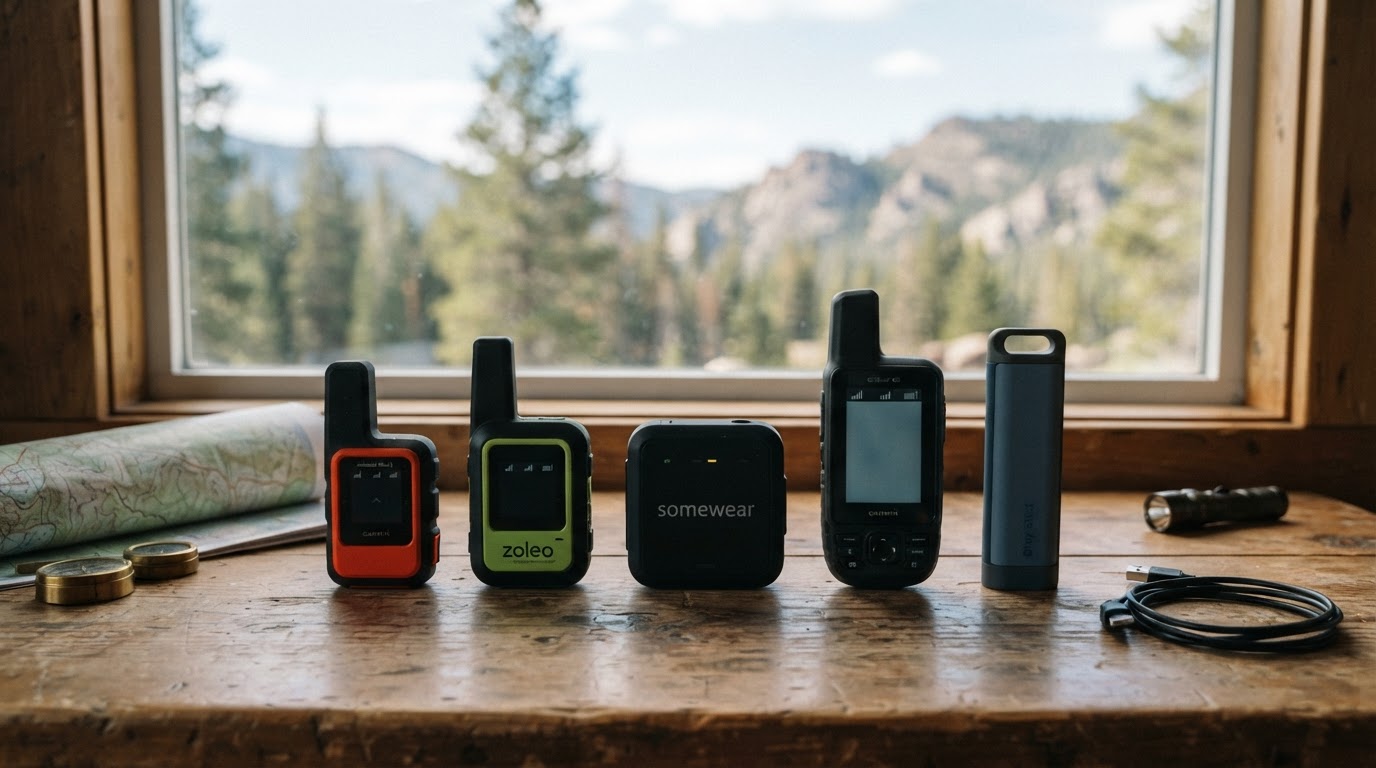
Cell towers fail in every major outage. Five satellite messengers compared from $49 to $324, plus the true subscription math nobody puts in the headline.
This article contains affiliate links. If you buy through these links, we may earn a small commission at no extra cost to you.
When cell service dies, most emergency gear keeps working and your phone becomes a flashlight. That is the gap satellite communicators fill: they talk to orbit, not to towers, so SOS, check-ins, and short messages go through from wildfire country, flood zones, and blacked-out suburbs alike. We compared five systems on what actually matters in an outage: standalone SOS, whether your phone is required, and the subscription cost nobody puts in the headline.
1. Garmin inReach Mini 2, Best Overall
Price: ~$324
The default serious pick. Two-way satellite messaging and an interactive SOS that talks back to rescuers, plus TracBack routing to reverse your route and a MapShare page so family follows along. No phone required for the core safety jobs.
Why it wins: Standalone everything. If the phone is dead, lost, or smashed, the Mini 2 still sends, still shares location, still calls for help.
Trade-offs: The priciest messenger here, and it still needs a paid Garmin plan on top. You are buying the standalone guarantee.
→ Garmin inReach Mini 2 Satellite Communicator
2. ZOLEO, Best Value Two-Way
Price: ~$199
Rating: ★★★★½
Two-way GPS messaging with an SOS button that fires immediately, no countdown delay, to 24/7 emergency monitoring, in a refreshed USB-C body. About $125 cheaper than the Garmin for the same core jobs.
Why it wins: Full two-way conversation at a mid-range price, with the fastest SOS trigger of the bunch.
Trade-offs: SOS and check-in work from the device, but the full messaging experience runs through its phone app. And like all of these, it needs a paid monthly plan.
→ ZOLEO Satellite Communicator
3. Motorola Defy Satellite Link, Best Budget
Price: ~$49
The cheapest way off the grid. A rugged fob that pairs with your phone for two-way satellite messaging, with SOS service plans from $4.99 per month, the lowest ongoing cost here by far.
Why it wins: Under $50 to try satellite messaging, and the plan pricing is honest about what SOS actually costs.
Trade-offs: It is a bridge, not a radio. No phone, no messages, no SOS. If your emergency plan involves a dead phone, this is not the device.
→ Motorola Defy Satellite Link
4. SPOT Gen4, Best for Tracking
Price: ~$100
Rating: ★★★★
The send-don't-chat option. Check-ins, GPS tracking updates while moving, and SOS over the Globalstar network, all from a device that never touches your phone.
Why it wins: Set-and-forget tracking. Family watches the dot move; if it stops somewhere strange, they know where to look.
Trade-offs: Built for sending, not chatting. If you want a conversation with rescuers or home, the inReach or ZOLEO is the tool.
→ SPOT Gen4 Satellite GPS Messenger
5. Starlink Mini, Best for Real Internet
Price: ~$309
A different animal: portable satellite broadband with dual-band Wi-Fi in a backpack-size kit. Video calls, weather maps, remote work, the whole internet, wherever the sky is open.
Why it wins: Nothing else here puts a household online. In a multi-day outage it keeps information flowing, not just SOS.
Trade-offs: It needs real power, wall outlet or a power station, not a USB sip, plus Starlink service on top. And there is no SOS button: this is connectivity, not rescue gear. Pair it with one of the messengers above for the actual emergency plan.
→ Starlink Mini Satellite Internet Kit
Comparison Table
| Model | Price | Phone needed? | SOS | Plan required |
|---|---|---|---|---|
| Garmin inReach Mini 2 | ~$324 | No | Interactive SOS | Garmin plan |
| ZOLEO | ~$199 | App for messaging | Instant SOS | Monthly plan |
| Motorola Defy Link | ~$49 | Yes | SOS | From $4.99/mo |
| SPOT Gen4 | ~$100 | No | SOS | Service plan |
| Starlink Mini | ~$309 | No (gives Wi-Fi) | None | Starlink service |
Pair It With Power and Local Radio
The messengers sip power: a small power station or even a power bank keeps them topped up for the whole outage, and our portable power station guide sizes that job. The Starlink Mini is a bigger load, so plan station capacity the way you would for a laptop. And remember these cover the far-away conversation; for local news, NOAA alerts, and the neighborhood, an emergency radio still earns its shelf. Satellites talk to orbit. Radios talk to the county. You want both.
Quick Recommendations
- The serious one: Garmin inReach Mini 2 Satellite Communicator
- Best value two-way: ZOLEO Satellite Communicator
- Cheapest way in: Motorola Defy Satellite Link
- Track me mode: SPOT Gen4 Satellite GPS Messenger
- Whole internet: Starlink Mini Satellite Internet Kit
No bars is a nuisance on a hike. In a disaster it is how people get stranded with no way to ask for help. One of the first four belongs in every go bag that leaves cell range; the fifth belongs in every home office that cannot afford to go dark.
Frequently asked questions
Do satellite communicators need a subscription?
Yes, every pick here. The inReach Mini 2, ZOLEO, and SPOT Gen4 each require their own plan on top of the device price, the Motorola Defy offers SOS plans from $4.99 per month, and the Starlink Mini needs Starlink service. The device price is the entry fee and the plan is the ongoing cost, so check current plan pricing before you buy, because it changes.
Can I call for help from the backcountry without my phone?
With the right device. The inReach Mini 2 and SPOT Gen4 send SOS, tracking, and check-ins from the device itself with no phone involved. The Motorola Defy needs your phone for everything, it is a satellite bridge, not a standalone radio. ZOLEO splits the difference: SOS and check-in work from the device, full two-way messaging runs through its phone app.
Will these work in a hurricane or a grid-down outage?
That is exactly what they are for: satellites do not care about local cell towers. Two conditions apply. The device must be charged, the pocket messengers sip power for days on a USB top-up while the Starlink Mini needs wall power or a power station. And it needs open sky: canyons, dense tree cover, and indoors block the signal, so step outside to send.