
Everyday Financial Resilience: Budget Systems That Survive Bad Months (2026)
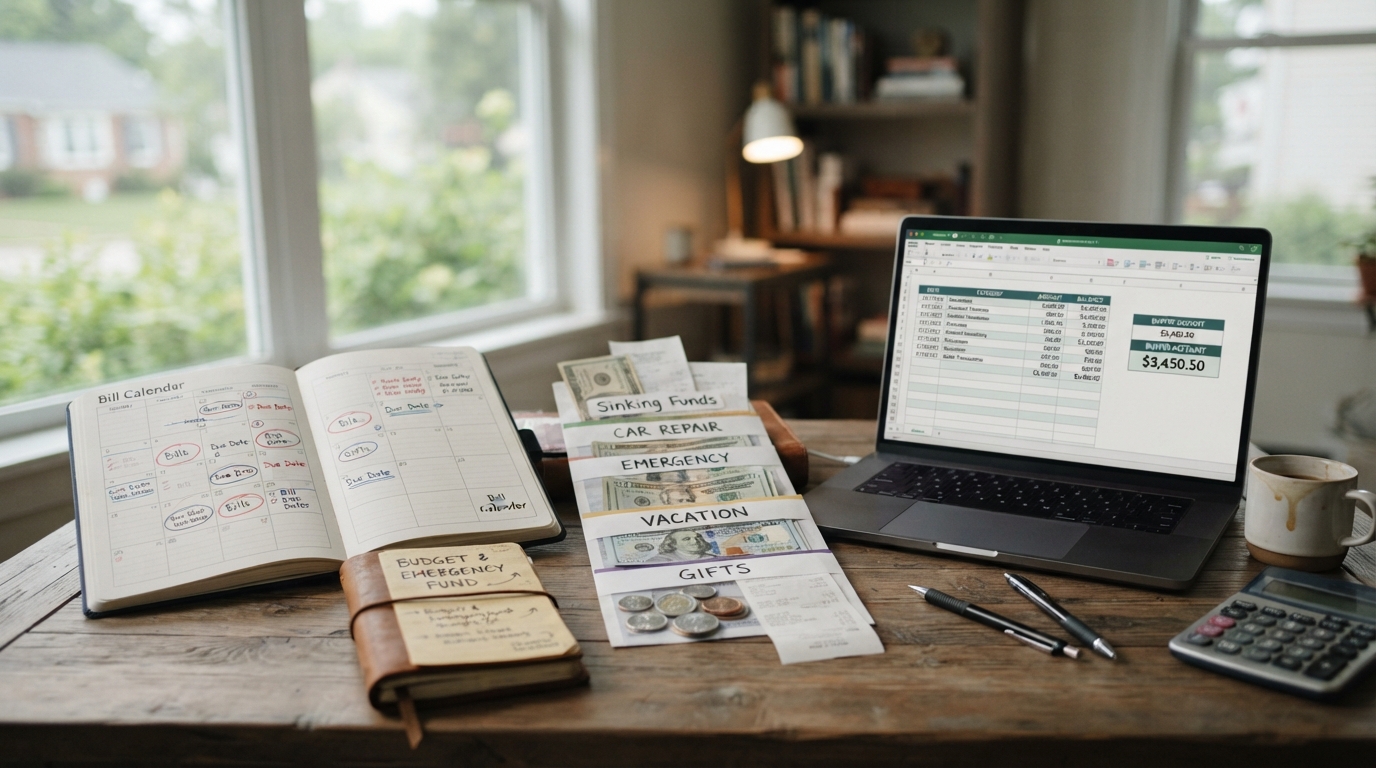
Financial resilience that holds up in a bad month: a buffer account, a bill calendar, sinking funds, and automation that keeps one setback from cascading.
This article contains affiliate links. If you buy through these links, we may earn a small commission at no extra cost to you.
Preparedness content loves the dramatic. But ask anyone who has been through a hard year (a layoff, a medical run, a divorce, a move that went sideways) and the story is never "the go bag saved us." It's "we had enough margin that one bad month didn't become four." That margin is built in ordinary months, with boring systems. This guide is about those systems: the small structural setups that make your finances default-resilient, so surviving a shock is what happens when you do nothing.
This pairs with our emergency fund guide: that one covers how much to save and where; this one covers the day-to-day machinery that keeps the fund intact and stops new emergencies from being manufactured.
The Buffer Account: One Week of Float
Before any budget system: open a second checking account at your main bank and keep one week of spending in it. All income lands there; bills are paid from it; every Friday, sweep everything above the one-week line to savings.
Why it works: it converts your financial life from "continuous tightrope" to "weekly checkpoint." Overdrafts, timing mismatches, and the paycheck-to-paycheck wobble all disappear because the buffer absorbs timing, not you. It's the financial version of keeping a week of water on hand, cheap insurance against variance.
The Bill Calendar: Kill the Surprise
Most "financial emergencies" that aren't medical are actually calendar failures: an annual renewal that arrived as a surprise. Fix it in 20 minutes:
- List every non-monthly bill: car registration, insurance renewals, domain names, Amazon Prime, HOA, propane fill, property tax.
- Write the month and rough amount next to each.
- Divide by 12 (or by months remaining). That's the monthly "bill" you owe your own sinking fund.
A $600 annual car-insurance premium is $50/month that was always leaving your pocket; the calendar just makes it visible before it's due instead of after.
Records That Survive an Outage
A bill calendar tells you what is due; a recovery folder proves what you own and who needs to be called. During the same 20-minute pass, gather identity copies, insurance declarations, vehicle records, medical contacts, and the instructions for recurring bills. A Sooez Accordion File Organizer with Zipper… (about $13) gives that paper set 12 zippered pockets, so the records stay sorted instead of becoming one loose pile. Keep passwords and full account numbers out of a grab-and-go folder; use a redacted contact sheet and your password manager instead.
Scan only the records you would need to replace, encrypt the files, and save a copy to a Samsung BAR Plus 128GB USB 3.1 Flash Drive (about $50). It provides offline access when a cloud login or internet connection is unavailable, but the drive is storage, not encryption. Keep the USB copy in a separate location from the paper set, and see our grab-and-go document binder for the full four-tab layout.
Sinking Funds: Budgeting for Reality
Sinking funds are envelopes for predictable-but-not-monthly costs. Five cover most households:
| Fund | Typical monthly seed | Absorbs |
|---|---|---|
| Car maintenance | $50–75 | Tires, brakes, registration, the 100k service |
| Home repair | $75–150 | Water heater, roof patch, the appliance that dies on a Sunday |
| Medical | $40–80 | Deductibles, dental, the vet |
| Gifts & travel | $40–60 | December without January's regret |
| Gear & prep | $25–50 | This site's whole product catalog, funded calmly |
The last row is the point: prep purchases should come from a sinking fund, not from panic or credit. A $240 prep purchase bought over four months of planned seeds is resilience; the same item on a credit card is the opposite. Our packs ladder is designed for exactly this cadence: one pack per month, no debt.
Automation: Make the Default the Good Outcome
Willpower is a terrible admin staff. Set the transfers once and let defaults do the work:
- Payday split: salary → buffer account → automatic sweeps to savings and sinking funds the same day. You can't spend what never sits in spending reach.
- Bill autopay for fixed bills (rent, insurance, internet) from the buffer account. Late fees are pure loss.
- Outage access: keep a Anker Power Bank 10,000mAh USB-C (about $21) with the cash stash. It can bring a dead phone back to roughly 80% once, enough to reach a bank, insurer, or employer while ATMs and card readers are disrupted. Print key phone numbers too; a charged phone is not a plan by itself.
- Annual audit when the clocks change, the same session where you rotate the emergency cash stash, counting it out of its SentrySafe 1210 Fireproof Box fireproof box: check beneficiaries, cancel unused subscriptions, re-price the two biggest insurance policies.
The Credit Score Is Also a Prep
Boring but true: in a real crunch, your credit score determines whether you can convert equity to cash (HELOC), get a reasonable rate on an emergency loan, or even pass a rental application after a relocation. Keep utilization under 30%, never miss minimums, and freeze your credit with the three bureaus until you need to unfreeze it: a frozen file is also fraud protection, which is its own preparedness win.
When Income Shocks Arrive
The systems above buy time; this is how to spend it:
- Cut to survival spending immediately: the same list from Tier 2 of the emergency fund. Deciding in advance what "cut" means removes the most painful decisions from the worst week.
- File what you're entitled to the same week: unemployment, insurance claims, assistance programs. Bureaucracy has queues; you want to be early in them.
- Tell the people you owe before they ask. Lenders have hardship programs; landlords prefer honesty to silence. Every one of these conversations is easier at day 5 than day 45.
The Compounding Part
Every system here makes the others cheaper: the bill calendar feeds the sinking funds, the sinking funds protect the emergency fund, the fund keeps you out of high-interest debt, and staying out of debt keeps your credit (and therefore your options) open. None of it requires apps, subscriptions, or a finance degree, just a second checking account, a calendar hour, and defaults pointed at the outcome you already wanted.
Start this week: open the buffer account, list your non-monthly bills, and seed one sinking fund. That's the whole first step, and it's the prep most likely to be used this year.