
How to Apply for FEMA Disaster Assistance (and Get the Money You're Owed) in 2026
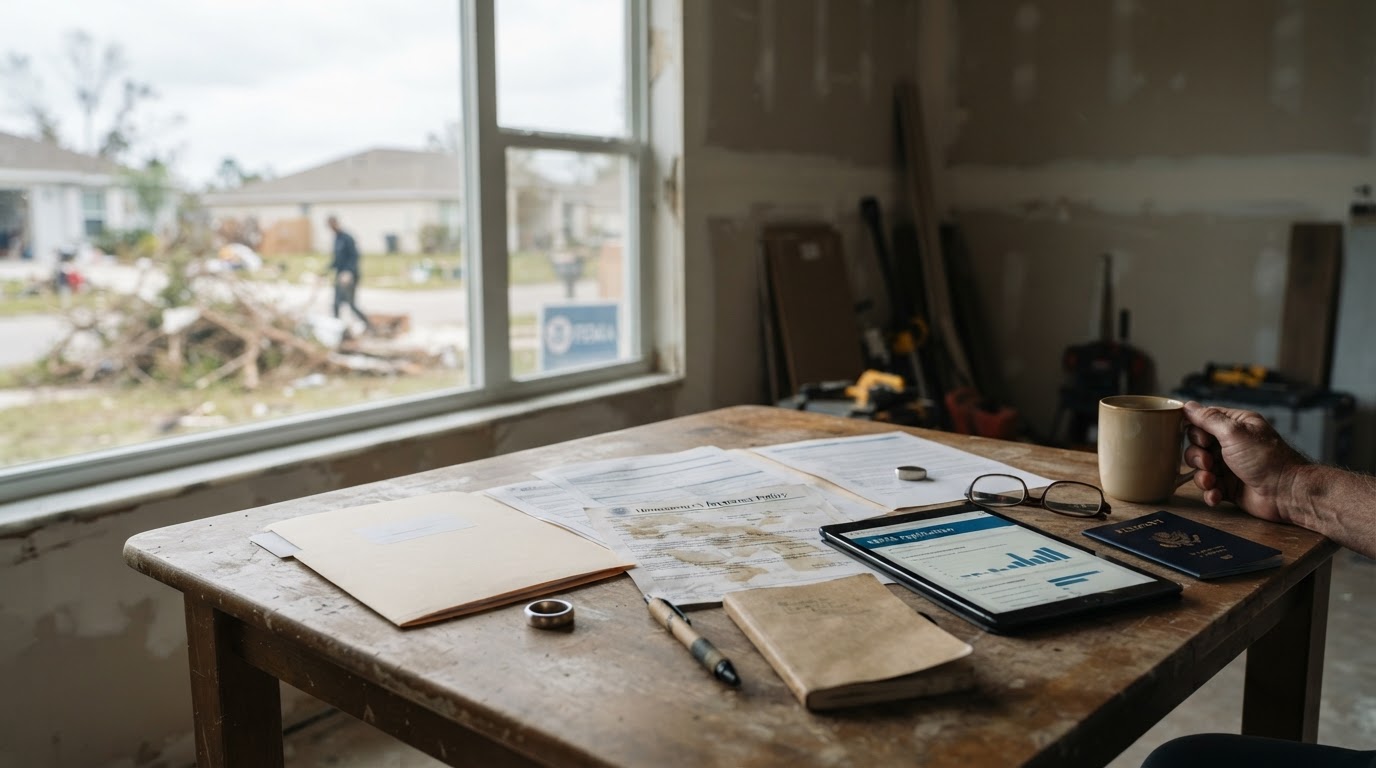
How to apply for FEMA Individual Assistance after a wildfire, flood, hurricane, or tornado: who qualifies, what to upload, the inspection, and the 60-day appeal
This article contains affiliate links. If you buy through these links, we may earn a small commission at no extra cost to you.
A declared disaster does not just damage your house. It opens a FEMA file with a hard deadline at the end, and plenty of eligible families never even start one, usually because they assume insurance rules them out or that the help is meant for someone worse off. FEMA's guidance says the opposite: apply even if you have insurance, and even if you think you will not qualify. The threshold is lower than most people think: serious need, U.S. citizen or qualified non-citizen, lived or worked in the declared area. That is the whole front-end test for Individuals and Households Program eligibility.
The flow does not change with the cause, whether wildfire, flood, hurricane, tornado, earthquake, or civil unrest. Apply within the same week you can: inspectors book up, and the appeal window is unforgiving.
Step 1: Confirm the declaration covers your county
Check the FEMA disaster declaration list at fema.gov/disasters first: your county has to be named in a Major Disaster Declaration for Individual Assistance to be active there. If it is not, FEMA cannot help directly, though SBA low-interest disaster loans may still apply.
Step 2: Apply at DisasterAssistance.gov or by phone
The fastest path is online at DisasterAssistance.gov. Set up an account, then fill out one form covering each household member, your pre-disaster address, insurance coverage, and current needs. It takes about 20 minutes with documents ready. Phone applications go through the FEMA Helpline at 1-800-621-3362.
- Social Security number, for each household member
- Pre-disaster home address
- Current mailing and physical address (shelters, rental, hotel all count)
- Insurance policy information: carrier, policy number, what is covered
- Bank account routing and account number (for direct deposit if approved)
- A working phone and email
The form wants details, not documents, so do not delay applying while replacements are on order. If the disaster destroyed your IDs, deed, or policy pages, our guide to replacing lost documents lists the office and the order for each.
Apply even when you carry insurance: Individual Assistance fills what your insurer does not cover (temporary housing, personal property gaps, medical and dental, funeral, serious other needs). Insurance rules you out of duplicative payments, not out of the program.
Step 3: Save the registration number and write everything down
When you finish the application you get a registration number. Save it: it is the key to every follow-up call and every appeal. Track the date and time of every call, who you spoke to, and what they said. Keep receipts for every disaster-related purchase from the day of the event forward, whether or not you end up filing. The FEMA app and your online account both store your status and documents.
Step 4: The inspection
A FEMA inspector will visit to verify damage. FEMA says an inspector may call within 10 days to schedule the visit, so keep your contact number current. Inspectors are contractors, not FEMA employees, and they carry ID; do not let anyone inside who cannot show it. The inspector photographs damage and verifies occupancy. If your home is unlivable, say so on the call and again at the inspection: that triggers Serious Needs Assistance and transitional housing. Be honest about the damage; padding the loss is the fastest way to get denied and flagged for fraud review.
Step 5: Read the decision letter carefully, then appeal if needed
FEMA's initial decision is often wrong. Most denials come down to paperwork: missing signatures, mismatched addresses, undocumented damage, or a missing insurance denial letter. You have 60 days from the date on the decision letter to appeal, and every appeal gets a human review: FEMA says decisions usually come within 30 days, though they can take up to 90. The appeal can include new documentation: photos from after the inspection, contractor estimates, a rental lease if you had to leave, or a caseworker's letter. If the 60 days have passed and you have a strong reason (hospitalization, evacuation, lost mail), request a late-filing exception in writing; FEMA grants these more often than people expect.
What FEMA actually pays
Individual Assistance breaks into a few programs, and most applicants only hear about one:
- Housing Assistance: temporary rental, repair, replacement, or direct lease. Capped but real.
- Other Needs Assistance: personal property, medical, dental, funeral, child-care, moving and storage. Available with or without homeowners insurance.
- Disaster Unemployment Assistance: a federal program for workers whose income stops because of the disaster. Apply through your state's unemployment office, not FEMA.
- Serious Needs Assistance: $770 per household, paid in the first days after the event (FEMA's fact sheet; the cap adjusts each fiscal year). It is the payment most applicants never hear about.
Renters qualify as fully as owners, and so do households with insurance or cleanup underway, as long as the inspector can still verify damage with photos and records.
The paperwork that actually helps
File once, file well. The four-document kit that moves fast:
- A one-page household fact sheet with names, SSNs, pre-disaster and current address, and a damage summary.
- Photos or video of every damaged room, item, and the outside of the home, dated if possible. Cloud-shared albums count.
- Insurance denial letter, or proof that you filed a claim and are waiting.
- Receipts and contractor estimates for repair, temporary housing, and emergency purchases since the event.
A Sooez Accordion File Organizer with Zipper… is the right home for paper: 12 pockets, a zipper, and tabs so the four sections do not bleed together. A Samsung BAR Plus 128GB USB 3.1 Flash Drive stores the digital copy and opens on any computer without cloud login. The same habit feeds the SBA loan application, the next stop for uncovered repair costs over the FEMA cap. For originals, a SentrySafe 1210 Fireproof Box keeps deeds, passports, and policy pages through the next disaster.
Related Guides
The hazard-specific recovery pieces are linked below; start with whichever matches your situation:
- Replacing lost documents after a disaster: the order to replace IDs, birth certificates, deeds, and policy pages when the originals are gone
- Flood insurance and damage documentation: NFIP vs private, the 30-day NFIP waiting period, and how to document so an adjuster says yes
- Flood recovery: mold and the first 72 hours: drying, contractor scams, and the FEMA inspect-and-appeal timeline for flood-specific cases
- Returning home after a wildfire: re-entry safety, ash cleanup, and what to photograph before you touch anything
- Tornado aftermath cleanup: debris order, PPE, and tarping before the next storm
- Tornado damage insurance claims: wind vs flood coverage, wind/hail deductibles, and the documentation order that feeds the FEMA packet
- The grab-and-go document binder: the four-tab binder that feeds the FEMA packet before the disaster