
Get Home Bag: The Essential Checklist for 2026
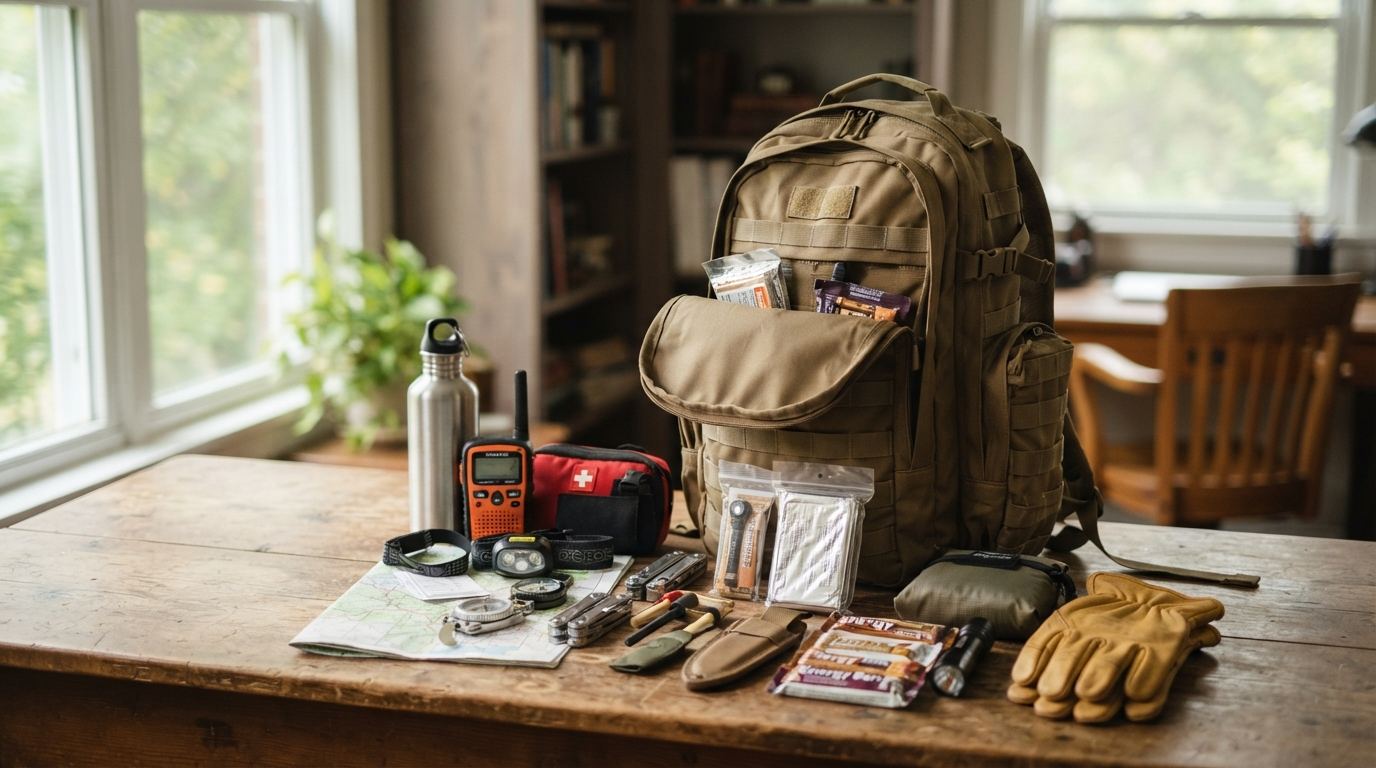
What to pack to get home on foot when roads close: water, NOAA radio, first aid, light, and 10 more essentials. A practical get home bag checklist for 2026.
This article contains affiliate links. If you buy through these links, we may earn a small commission at no extra cost to you.
A bug out bag sits at home waiting for you. A get home bag sits in your office, your car, or your backpack, because the most likely emergency for most people is being away from home when something goes wrong and having to walk back.
The best get home bag costs about $85, fits in a daypack, and weighs under 5 pounds. It's built around one rule: the average adult walks about 3 mph, so a 10-mile commute is a 3-hour walk. Water, a NOAA radio, a small first aid kit, and light carry you through. Here is the list.
What to Pack: The 12 Essentials
The list below is ordered by how badly you will miss the item if it is missing. Everything fits in a standard 20-liter daypack with room to spare.
| Priority | Item | Why it earns its spot |
|---|---|---|
| 1 | Water (32-64 oz) | Walking 15 miles burns ~2 quarts; you cannot ration dehydration away |
| 2 | Filter (2 oz backup) | Makes any stream, puddle, or garden hose drinkable |
| 3 | NOAA weather radio (RunningSnail MD-090 Emergency Radio, ~$36) | Tells you if the route ahead is safe before you commit |
| 4 | First aid kit | Blisters and cuts end an 8-hour walk fast |
| 5 | Flashlight + spare battery | Dusk hits at 4pm in winter; a dark shoulder is invisible to traffic |
| 6 | Map of your area | Your phone's GPS dies with your battery; paper does not |
| 7 | Power bank | Your phone is your map, light, and ride-signal once it has charge |
| 8 | Multi-tool or knife (Leatherman Wingman Multi-Tool) | Cutting seat belts, opening barriers, improvising shelter |
| 9 | Whistle (Fox 40 Sonik Blast CMG Whistle, ~$8) | A 115 dB whistle carries further than your voice and uses no battery |
| 10 | Cash ($40-$60 in small bills) | When card readers and ATMs are down, cash buys a taxi or a meal |
| 11 | Rain shell (Frogg Toggs Ultra-Lite2 Rain Jacket (Men's), ~$25) | Hypothermia starts at 50°F once you are wet and tired |
| 12 | Comfortable walking shoes | The #1 thing that ends get-home attempts. Leave a pair in the car |
The shoes you commute in are the shoes you will walk home in, and footwear is the row people skip. Keep a walkable pair where the bag lives, like the Skechers Men's Go Walk Flex Hands Up Sneaker (about $57, 4.6 stars from 8,000+ ratings): a breathable mesh slip-on with a cushioned memory foam insole that goes on without bending or tying. Break it in on a weekend walk before you need it.
Water: The Item You Cannot Skip
A walking person loses about a quart of fluid per hour in mild weather. For a 3-hour walk that is 3 quarts, and for a full-day trek more than you can carry comfortably, which is why the filter matters as much as the bottle.
Carry 32-64 ounces in the bottle you already own, and add a LifeStraw Personal Water Filter: it filters 1,000 gallons, weighs 2 ounces, and turns any questionable water source into something you can drink. Street hydrant, creek, even a toilet tank, all usable with a straw filter that small.
First Aid: Stop a Walk Before It Stops You
The medical risk on a get-home walk is not trauma; it blisters, cuts, and twisted ankles, the stuff that turns a 3-hour walk into a 7-hour ordeal. The Adventure Medical Kits Mountain Series Hiker… is sized for this: a lightweight trail kit with real bandaging, blister care, and antiseptic, small enough to carry daily. If you would rather spend less, a First Aid Only 298-Piece All-Purpose Kit clipped to the outside of the pack covers the basics for about $16.
Either way, add a few items the kits often lack: a pair of wool socks (blister insurance), 2-3 energy gels or a protein bar, and a small tube of sunscreen. On the gels, a 24-count box of GU Energy Original Energy Gels… (about $49) keeps the pack stocked: take three, and the rest rotate through long walks so nothing goes stale. On the socks, spend once: Darn Tough Hiker Quarter Merino Wool Socks… are 63% merino wool with cushion underfoot and a seamless toe. Merino keeps insulating when your feet sweat, which is when cotton starts blistering. On the sunscreen, the Sun Bum Original SPF 50 Sunscreen Face Lotion… fits a side pocket: SPF 50 in a 3 oz squeeze bottle.
Communication: Radio First, Phone Second
Cell service can be disrupted during a disaster. During the 2011 Tōhoku quake, call capacity collapsed within minutes. A NOAA weather radio does not depend on that network, and it can provide road and hazard updates on a get-home route: which roads are closed, and where the danger is.
The RunningSnail MD-090 Emergency Radio is the budget pick that earns its slot: AM/FM/NOAA, a hand crank so it never needs a fresh battery, a flashlight, and USB charging out. It weighs about a pound and clips to the outside.
One warning from that radio matters more than the rest: if the thing closing your route home is not weather but a crowd, the playbook changes completely. Our guide to driving into civil unrest covers the decisions behind the wheel, from turning around early to leaving a car you cannot keep.
Light, Map, and Power: The Trip Home Is Longer at Night
Plan for the walk to take twice as long as you think, and for part of it to happen in the dark. A headlamp or small flashlight with a spare battery is non-negotiable: walking a dark shoulder is how people get hit. The Petzl Tikkina Headlamp (300 Lumens) (about $20, 300 lumens) is the classic pick: three AAAs, a tilting head, and single-button operation. Keep a spare set of batteries in the pack. A paper map of your metro area costs nothing and works when the phone dies. A map only helps if you can read it against the ground, which is what the Suunto A-30 NH USGS Baseplate Compass is for: about an ounce, with a luminous needle and baseplate scales, no batteries needed.
A 10,000 mAh power bank recharges a dead phone to about 80% once, which is usually enough to arrange a ride once you reach cell coverage. If you do not have one in a drawer, the Anker Power Bank 10,000mAh USB-C hits that exact spec with USB-C fast charging at a price that will not sting.
Why This Bag Is Different From a Bug Out Bag
A bug out bag assumes you are leaving home, may need shelter, and carries days of food. A get home bag assumes you are already out, you have a destination (home), and you mostly need to reach it safely on foot within a day. That's why it's lighter, cheaper, and more water-focused. It is not a replacement for our full bug out bag checklist or a budget go-bag build, it's the bag that lives where you spend your days.
The 15-Minute Assembly
Grab what you already own: a spare water bottle, a rain shell, an old power bank, a paper map. Buy the three items worth spending on: the LifeStraw Personal Water Filter, the RunningSnail MD-090 Emergency Radio, and the Adventure Medical Kits Mountain Series Hiker…, about $85 total. Pack them in a daypack and leave it at your desk or in your car.
The Bottom Line
The most likely emergency you will face is not a hurricane or an earthquake; it's being stuck on the wrong side of a disaster and needing to reach your family. A 5-pound bag with water, a NOAA radio, first aid, and light turns a 15-mile panic into a 3-hour walk. Build it this weekend.