
How to Build a Bug Out Bag on a Budget (About $100)
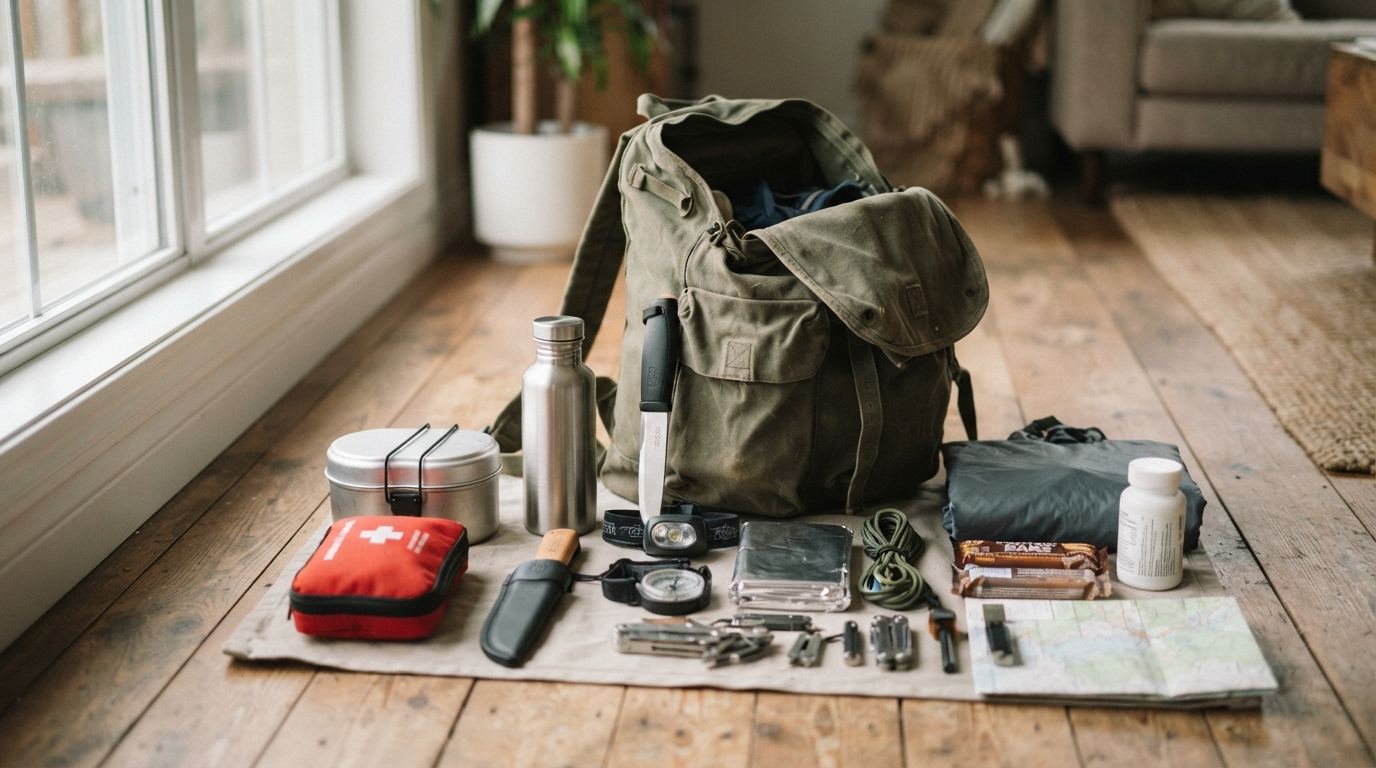
Build a complete bug out bag for about $100. Repurpose gear you already own, spend on three essential buys, and skip the overpriced gear that slows you down.
This article contains affiliate links. If you buy through these links, we may earn a small commission at no extra cost to you.
An evacuation order is not the time to choose gear. Use a backpack you already own, fill most of it from home, and spend about $100 on a radio, first-aid kit, and water filter. That gives you a practical 72-hour bag at the $100 mark.
How to Build a Bug Out Bag for About $100
The budget method has three steps: repurpose what you already own, buy the three missing essentials, and skip gear that does not solve a real gap. Our complete checklist covers a larger build; this guide keeps the first pass around $100 by reusing the backpack, clothing, food, and bottles already in your home. If you are starting from zero rather than upgrading, what to buy first for preparedness sets the order for your first $100.
Step 1: What to Repurpose From Home
Walk your house before you buy anything. Most of a functional bug out bag is already sitting in your hall closet, kitchen drawer, or dresser:
| Item | Cost | Repurpose or Buy |
|---|---|---|
| Backpack (old school bag, gym bag, or hiking pack) | $0 | Repurpose, any bag with two shoulder straps works |
| 3 days of clothes (socks, underwear, layers) | $0 | Repurpose, raid the dresser, roll tight |
| 3 days of ready-to-eat food (bars, pouches, pull-tab cans) | $0 | Repurpose, choose food you already eat |
| Trash bags & zip-lock bags | $0 | Repurpose, rain cover, waterproofing, sanitation |
| Water bottles | $0 | Repurpose, fill old bottles; don't buy fancy ones |
| Basic tool (multi-tool or kitchen knife) | $0 | Repurpose, good enough to start |
| First aid basics (bandages, pain reliever, a week of daily meds) | $0 | Repurpose, raid the bathroom cabinet |
| Cash, copies of IDs, phone charger, power bank | $0 | Repurpose, already in your desk drawer |
| Emergency radio | ~$36 | Buy, NOAA alerts, flashlight, hand crank |
| First aid kit | ~$16 | Buy, real coverage, soft case |
| Water filter | ~$46 | Buy, suitable freshwater, not floodwater |
| Total | ~$100 | About $100 |
Step 2: The 3 Things Worth Buying
1. Emergency radio, RunningSnail MD-090 Emergency Radio (~$36). When cell service is unavailable, your phone may not connect. This one receives NOAA, AM, and FM, doubles as a flashlight, and has USB, solar, and hand-crank charging. Its 4,000mAh battery can top up a phone, but treat that as enough for an emergency call rather than all-day phone power.
2. First aid kit, First Aid Only 298-Piece All-Purpose Kit (~$16). The soft case has 298 pieces for minor cuts, burns, and sprains, and it tucks into a pack corner. You will restock and customize it later. Add your family's medications in a labeled pouch: a week of daily prescriptions plus the OTC medicines you actually use. If anyone has a severe allergy, carry two unexpired auto-injectors with a printed plan and read our anaphylaxis first aid guide before you need it.
3. Water filter, Sawyer Squeeze Water Filtration System (~$46). Sawyer rates the filter for up to 100,000 gallons with proper cleaning, and it screws onto standard bottles. It removes bacteria and protozoa from suitable freshwater. It does not remove viruses, salt, fuel, pesticides, or other chemicals, so never use it to make floodwater or contaminated runoff safe.
The three current buyboxes total $97.71. If you need to cut the first purchase further, carry a flashlight from home and add the radio later.
What to Skip (At First)
- Expensive knives ($60–$150). A $10 kitchen knife or a $15 multi-tool does 90% of the job. Upgrade when the budget allows.
- Tactical packs and packing cubes. A $300 pack doesn't hold water better than your old school bag.
- "Survival" gear bundles. Impulse kits eat your budget without adding real capability.
- Freeze-dried food. Start with canned goods and granola bars you already own, then rotate them.
The Upgrade Path (Later)
Once the $100 bag exists, improvements compound. Add a bigger water container for the car, the Reliance Aqua-Tainer 7 Gallon Water Container… (~$52 for a 2-pack) adds two 7-gallon containers with spigots. Upgrade to a purpose-built pack, a dedicated trauma kit, and longer-shelf-life rations as budget allows. See our food and water storage guide for the full plan.
A Bag Without a Plan Is Just Luggage
Spokane evacuees had minutes to move; Japan survivors walked out with what they carried. The bag matters, but so does knowing where you'd go, how family meets up, and what you're driving out with. Run through the wildfire evacuation checklist this weekend, it's free, and it's the other half of the equation. If the household runs with a dog or cat, add the animal's layer too: carrier, harness, ID, and shelter rules in our evacuating with pets guide.
Quick Recommendations
- The $100 build: repurpose your backpack, clothes, food, and bottles, then buy RunningSnail MD-090 Emergency Radio, First Aid Only 298-Piece All-Purpose Kit, and Sawyer Squeeze Water Filtration System, about $100 total.
- If you buy only one thing: the Sawyer Squeeze Water Filtration System, water is the first resource you'll run out of.
- Skip first: expensive knives, tactical packs, and any bundle with the word "survival" on it.
- Next step: pack it tonight, then read the complete bug out bag checklist and upgrade from there.
The best bug out bag is the one already packed when the evacuation order drops. About $100 and done today beats perfect and never finished.