
Christmas Trees and Holiday Lights: What Actually Starts Fires
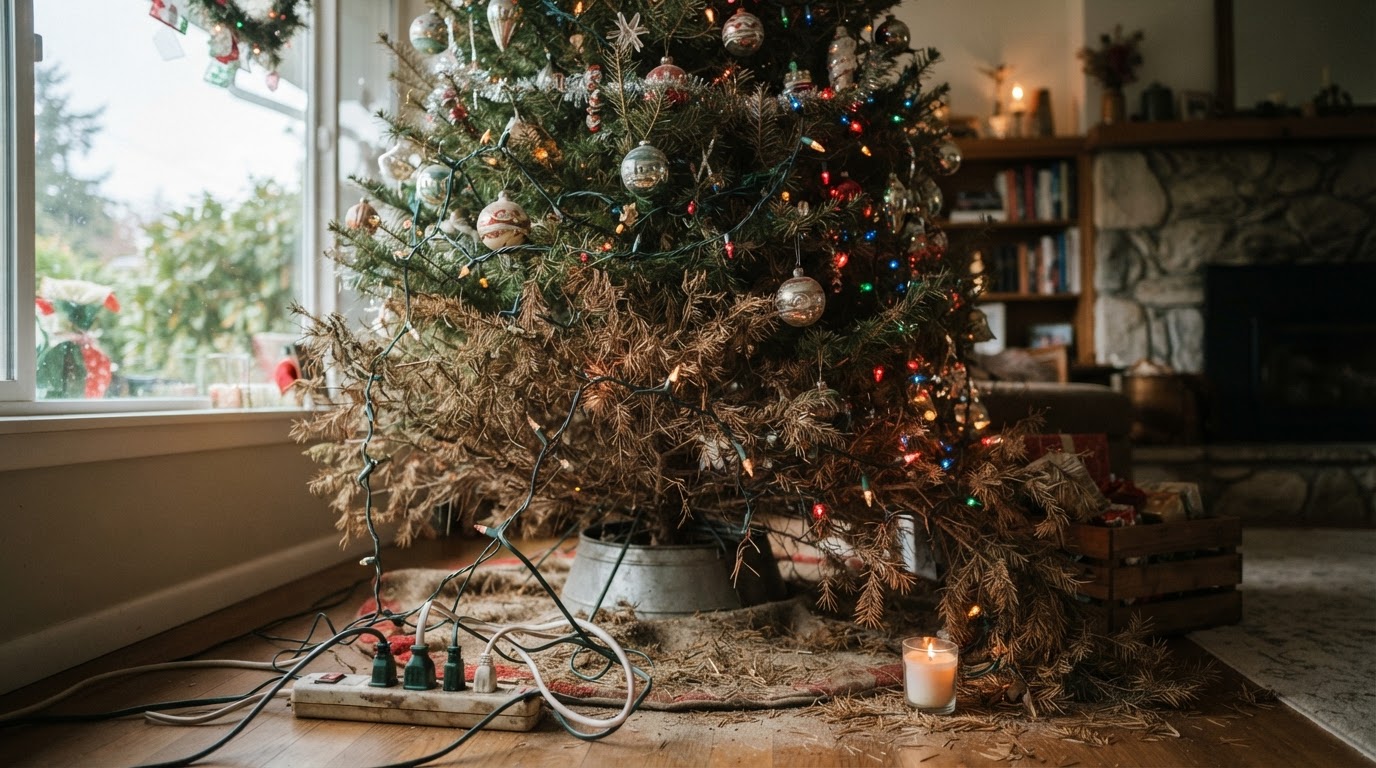
Dry Christmas trees and overloaded light strings cause hundreds of December home fires. NFPA data, plus the watering, lighting, and candle rules that stop them.
This article contains affiliate links. If you buy through these links, we may earn a small commission at no extra cost to you.
December is one of the leading months for home fires in the United States, according to the National Fire Protection Association, and decorations are a measurable slice of it. Between 2020 and 2024, Christmas trees started an average of 143 home fires a year: about 7 deaths, 13 injuries, and $15 million in damage. Other decorations started 835 a year, with 3 deaths, 29 injuries, and $18 million in damage. Tree fires are rare but serious. Decoration fires are common and almost entirely preventable.
Quick answer: Buy a fresh tree, water it daily, and keep it at least 3 feet from every heat source. Use only UL- or ETL-listed lights, throw out any string with cracked sockets or bare wire, never put electric lights on a metal tree, plug outdoor lights into GFCI outlets, and turn every string off before bed. Dry trees leave right after the holiday: over a third of tree fires happen in January.
Start with a fresh tree, then keep it wet
A fresh tree resists ignition. A dry tree is kindling with ornaments. At the lot, bend a few needles: they should flex, not snap. Bounce the trunk lightly on the ground. A shower of green needles means that tree already dried out in the supply chain, so pick a different one.
Cut a half inch off the trunk base before setup, unless it was cut the same day. Sap seals the cut within hours, and a sealed butt barely drinks. The National Christmas Tree Association recommends about a quart of water per inch of trunk diameter each day. Use a stand that holds at least a gallon, check the level daily, and never let the water fall below the cut. A welded-steel stand with a 1.2-gallon reservoir like the Good Tidings Cinco C-148 Classic Tree Stand (about $43, fits live trees to 10 feet) covers a fresh tree's heavy first-week drinking without refills twice a day.
Keep the tree at least 3 feet from every heat source, per the NFPA: fireplaces, radiators, heating vents, candles. Keep doorways and hallways clear. In fire-lab demonstrations widely cited by fire services, a dry tree turns fully involved in under a minute. Keep the escape path clear for guests; our home fire escape plan covers the review.
Get it out promptly. Over a third of tree fires occur in January, per the NFPA: leftover trees keep drying while the lights keep heating. When the needles go, the tree goes to the curb, not the garage. Never burn branches or needles in the fireplace; they flare and invite a chimney fire.
Lights: listed, inspected, matched to the location
The CPSC's holiday guidance starts with the label. Use only lights tested by a recognized lab such as UL or ETL. On most store strings, a red holographic UL mark means indoor and outdoor use, while a green mark means indoor only. Indoor strings have no weather sealing, and wet December weather finds every gap.
Inspect every string before it goes up, new or old. The CPSC names the defects: broken or cracked sockets, frayed or bare wires, loose connections. Throw out damaged sets. Replace burned-out bulbs with the same wattage. Never put electric lights on a metallic tree: the CPSC warns the tree can become charged from faulty lights and shock anyone touching a branch.
Follow the package limit on linked strings; exceeding it overheats the first cord. When the limit cramps the design, run a second feed from the outlet instead of a longer chain. Make the feed cord a heavy outdoor-rated one rather than thin indoor cords chained across wet ground. A 12-gauge outdoor cord like the Plugtul 12-Gauge Outdoor Extension Cord, 50 ft (about $45) carries its rated load, with a lighted end showing the far outlet is live.
Fasten outdoor strings with insulated staples or hooks, never nails or tacks. Keep connections off the soil and on GFCI-protected outlets; a portable outdoor GFCI adapter like the Tower Manufacturing 30439005 Portable GFCI Adapter (about $29, auto-reset 15-amp, plugs straight into a grounded outlet) covers a porch outlet that lacks one.
Turn everything off when you sleep or leave. The CPSC says this plainly: lights can short and start a fire, and an unattended short is the one that burns the house. A timer removes the decision. A weathertight plug-in timer like the Southwire Woods Outdoor 24-Hour Mechanical Timer (about $18, dual outlets for two feeds) shuts the strings off on its own dial, so bedtime is covered even when nobody remembers.
Candles get stricter rules in December
Candles start roughly a third of decoration fires over the year, about half in December, per NFPA data. They peak now: 12 percent of the year's candle fires happen in December and 10 percent in January.
Keep every candle at least 12 inches from anything that can burn, per the NFPA: garland, the tree skirt, curtains, the wrapping paper that migrates across the room all month. Never place candles on or within 3 feet of the tree. Blow each one out when you leave the room. Keep them out of bedrooms, where more than a third of candle fires start. One attended candle in a sturdy holder beats five scattered tea lights.
Stage the fire tools before you need them
Put a multipurpose ABC extinguisher on the wall along the way out of the tree room, a few steps from the hazard, so nobody reaches across flames to grab it. The Kidde FA110G Home Fire Extinguisher (1-A:10-B:C) (about $20, UL-rated 1-A:10-B:C) is the standard home unit. Learn PASS now from our extinguisher guide: fight only a small contained fire with a clear exit behind you, and leave the moment it outgrows the first spray.
Keep a fire blanket by the kitchen for the holiday cooking load. The BOZZYS Emergency Fire Blanket (40 x 40) (about $10) smothers a small pan or wrapping-paper flare without powder. A burning tree itself is a leave event, not a fight: get everyone out, close the door, call 911 from outside. If anyone is burned, cool running water for 20 minutes comes first, per our burn first aid guide. Grease fires from the holiday kitchen follow the no-water rule in our grease fire guide.
The 60-second holiday fire checklist
- Fresh tree: needles flex, trunk cut today, stand holds a gallon or more
- Water checked daily, level always above the trunk cut
- Tree at least 3 feet from fireplace, vents, radiators, and candles
- Every string UL- or ETL-listed; red mark for anything outdoors
- Strings inspected: no cracked sockets, bare wire, or loose connections
- No electric lights on a metal tree; replacement bulbs match wattage
- Linked strings within the package limit; heavy outdoor-rated feed cord
- Outdoor lights on GFCI, connections off the ground, insulated fasteners
- All lights on a timer, off at bedtime and when the house is empty
- Candles 12+ inches from anything burnable, out when the room is empty
- Extinguisher staged on the exit path, blanket in the kitchen, exits clear
- Dry tree out in January: to the curb, never into the fireplace
Frequently asked questions
How often should I water a Christmas tree?
Check the stand every day and never let the water drop below the cut on the trunk. Grower guidance from the National Christmas Tree Association calls for about a quart of water per inch of trunk diameter daily, and a fresh tree can drink a gallon or more a day in its first week. Heavy needle shedding means it has dried past the point where watering catches up.
Can I leave holiday lights on overnight?
No. The Consumer Product Safety Commission says to turn off all holiday lights when you go to bed or leave the house, because a short in an unattended string is a fire nobody catches early. Put the outdoor strings on a timer so off is automatic.
Is an artificial tree safer than a real one?
Mostly, but not automatically. NFPA data shows fires involving fresh trees are more common, and a dry real tree burns fast. An artificial tree still carries the same electrical load in its lights, so it gets the same rules: listed lights, no damaged strings, three feet from heat, and everything off overnight.