
Home Fermentation Starter: Salt, Safety, and Crunch
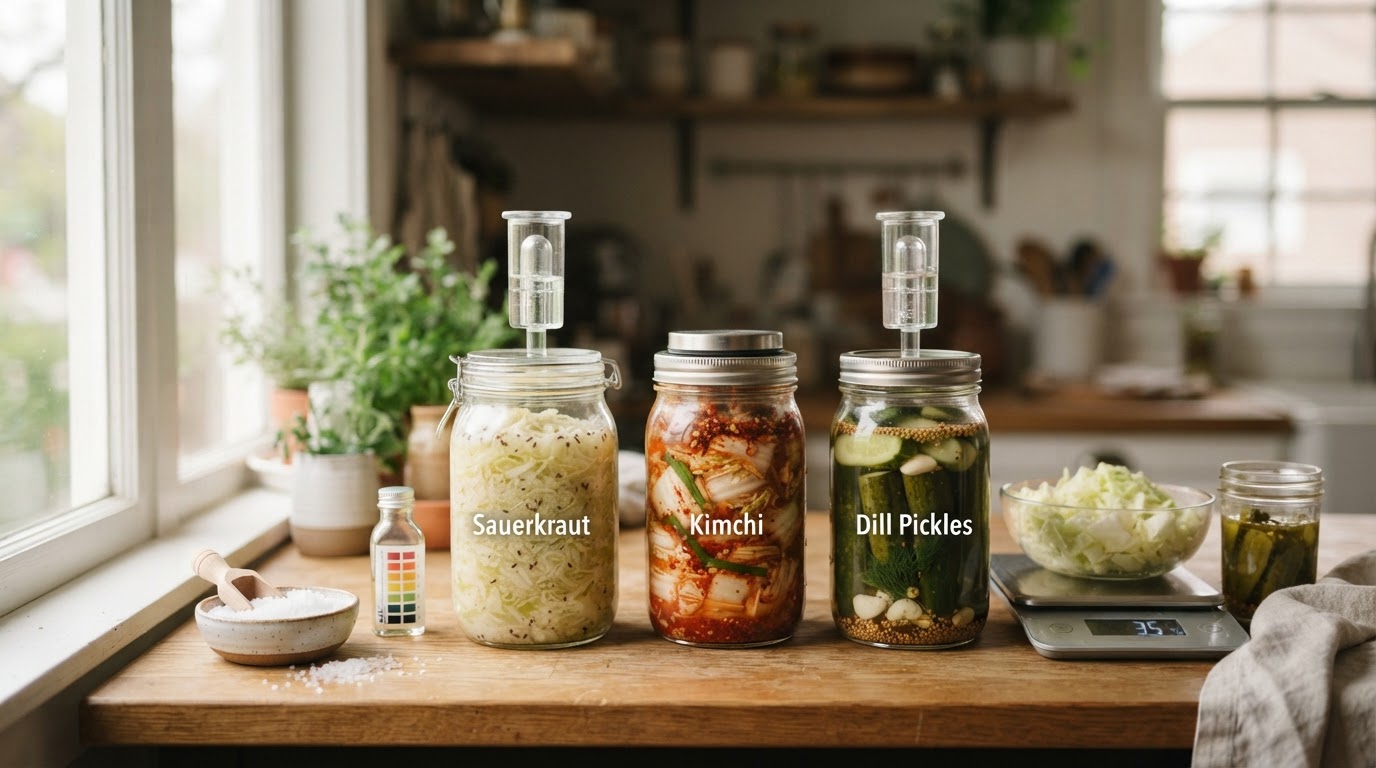
Ferment crunchy sauerkraut, kimchi and pickles at home: exact salt ratios, pH safety rules, jars, weights and cold storage in one tested starter plan.
This article contains affiliate links. If you buy through these links, we may earn a small commission at no extra cost to you.
Salt plus time turns cabbage into kraut with no heat and no pressure canner. This starter covers the two safety levers, salt ratio and acidity, plus the gear that keeps vegetables submerged. For shelf-stable jars instead, see our home canning and drying starter.
Quick answer: Salt shredded vegetables at 2% by weight, pack tight, keep everything under brine with weights and an airlock, ferment at room temperature until tangy, then refrigerate. Toss moldy or slimy batches.
Salt ratio: weigh it, do not spoon it
Spoons lie. Kosher crystals, fine pickling salt and table salt all pack differently per spoon, so volume measures swing the batch. Weigh the trimmed vegetables in grams, multiply by 0.02, and weigh that much salt. That 2% rate suits sauerkraut and kimchi, per NCHFP and extension guidance. Massage it in and rest until the leaves release juice.
Use plain non-iodized salt with no anti-caking agents. Iodine and additives can cloud brine, stain and slow cultures, per NCHFP guidance. The 14-ounce pickling salt below is non-iodized and kosher for this job, per the Sea Salt Superstore product listing. Never cut salt to taste before fermenting. Low salt invites mush and spoilage while cultures establish.
Cucumber pickles, dilly beans and pepper brines each need their own tested strength, so follow a tested recipe exactly instead of reusing the kraut ratio. Our calorie garden starter covers growing the cabbage, cucumbers and peppers to fill these jars.
Submerge everything under brine
Vegetables above the brine meet air, and air grows mold. Pack shredded veg tight, pour in the drawn juice, and top with extra 2% brine only when needed to cover. Glass weights from the kit below pin everything down, and airlocks vent gas while blocking air, per the IceFun product listing. Four 32-ounce jars let you run staggered batches, per the listing.
Ferment at cool room temperature out of sun. Warm rooms rush soft pickles, cold rooms stall for weeks. Taste from day 3 on. Kraut turns tangy in 1 to 4 weeks depending on temperature and cut, per extension guidance. Move jars to the fridge when you like the tang. Cold slows but never stops the culture, so eat within months and keep lids tight.
Read the batch before you eat
Safe ferments smell clean and sour, stay crunchy, and hold color. A thin white kahm film is yeast, not mold. Skim it, keep the veg submerged, and carry on. Fuzzy spots in white, green, black or pink, pink brine, slime ropes, or a rotten smell end the batch. Bag it and start over. Never taste to decide when mold shows, per extension guidance.
Acid is the second safety lever after salt. Finished ferments should test at or below pH 4.6, the acid line for shelf-stable foods, per FDA guidance. Home pH strips read close enough for a go or no-go check. If a batch never sours after weeks, or brine goes cloudy with off smells early, discard it. For jarred goods, run the seal check in our canned food shelf life guide.
Garlic and herb oils play by stricter rules. Oil seals out air without acidity, which suits botulism. Keep all garlic or herb oils refrigerated and use within days, or freeze them, per CDC guidance. Never store them on the counter. The same caution covers roasted peppers packed in oil.
Starter checklist
See Gear Worth Buying for the two picks referenced below.
| Item | Why | Source |
|---|---|---|
| Kitchen scale in grams | Salt math needs weight | Household scale |
| Non-iodized pickling salt | Clean brine, strong culture | see pick below |
| Jars, weights and airlocks | Submerged veg, vented gas | see pick below |
| Cool room-temp spot | Even ferment, firm crunch | Counter away from sun |
| Fridge space for finished jars | Cold holds the tang | Household fridge |
Gear Worth Buying
- IceFun 4-Pack Fermentation Kit with 32 oz Jars… (See current price, 4.5 stars): four 32-ounce jars with glass weights, airlocks and lids for staggered batches.
- Sea Salt Superstore Pickling and Curing Salt… (See current price): 14 ounces of non-iodized pickling salt for clean brines.
Source notes: Salt ratios, submersion and spoilage signs per NCHFP and extension fermentation guides. Acid line per FDA guidance. Garlic-in-oil rule per CDC. Product specs per maker listings.
Frequently asked questions
What salt ratio ferments vegetables safely?
Use 2% salt by total vegetable weight for sauerkraut and kimchi, per NCHFP and extension guidance. Weigh the vegetables, multiply by 0.02, and weigh the salt. Brined pickles follow tested recipes exactly, since strength varies by style.
How do I know a ferment is safe to eat?
It should smell pleasantly sour, stay submerged, and reach pH at or below 4.6, per FDA guidance on acid foods. White kahm film can be skimmed. Fuzzy mold in any color, slime, or rot smell means the batch goes in the trash, per extension guidance.
Is fermenting safer than canning?
Different risks, not less care. Ferments fail from mold and soft texture, not botulism, when salt, submersion and acidity are right. Garlic or herbs in oil at room temperature can grow botulism and must stay refrigerated, per CDC guidance.