
Hurricane Categories 1-5 Explained: What Each One Really Means
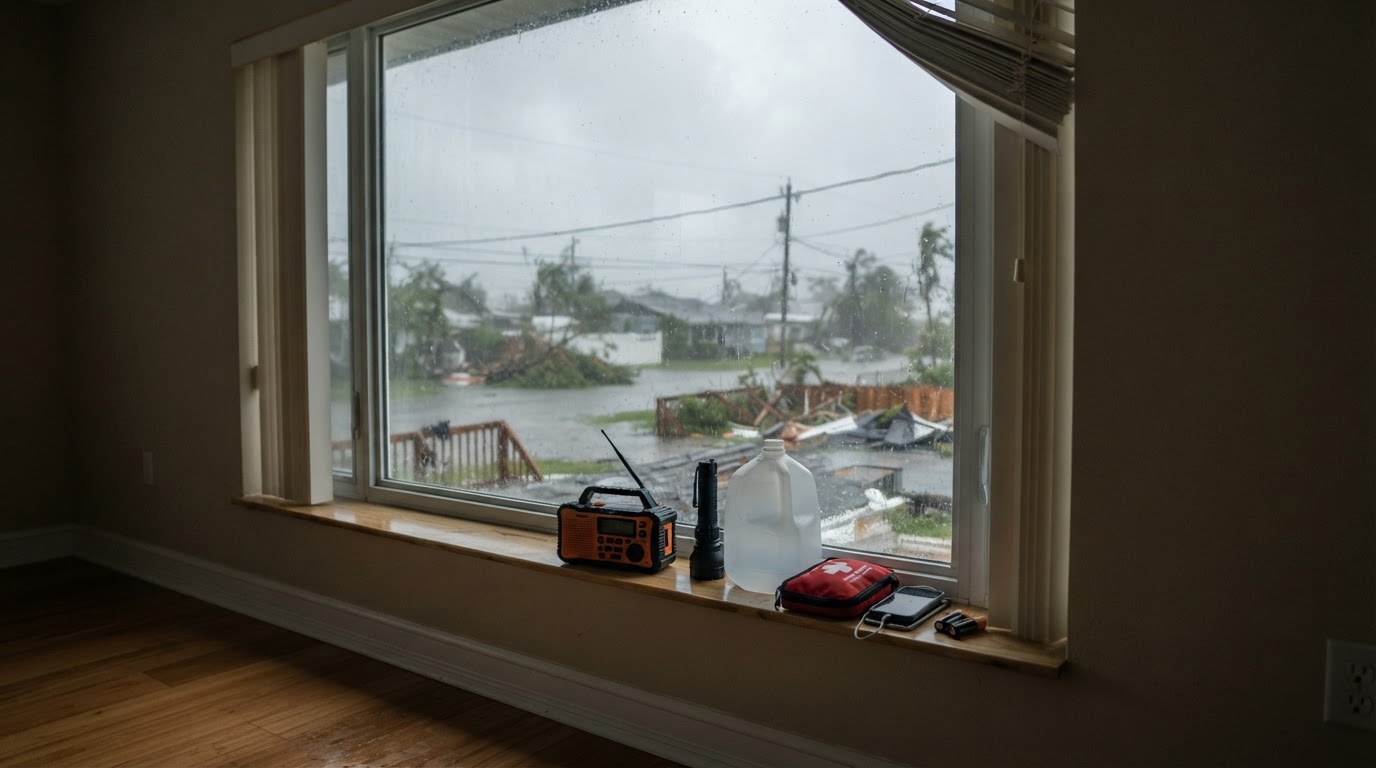
Hurricane categories 1-5 explained: Saffir-Simpson wind speeds for each level, why storm surge and rain still kill, and how to respond safely to every storm.
This article contains affiliate links. If you buy through these links, we may earn a small commission at no extra cost to you.
A hurricane category tells you only maximum sustained wind, not whether your neighborhood is safe. Use it to judge wind damage, then let storm surge, flood forecasts, tornado threats, and evacuation orders determine your action. Categories 3 through 5 are major hurricanes, but a slow Category 1 can still flood a home or cut power for days.
NOAA called the 2026 Atlantic season below-normal, thanks to El Niño and a heavy plume of Saharan dust. Then Tropical Storm Bertha still slammed the Gulf Coast in July. Peak season (mid-August through October) is just beginning, and quiet seasons still produce landfalls. Before the next storm forms, know what "Category 4" or "Category 1" actually means.
The Saffir-Simpson Hurricane Wind Scale rates hurricanes 1-5 by sustained wind speed only. It does not measure rainfall, storm surge, or tornadoes, and even a Category 1 can be deadly. That's the part the hype graphics don't show you.
Hurricane Categories 1-5 Explained
Here's the scale NOAA uses, based on 1-minute sustained winds:
| Category | Wind Speed | Damage | Expected |
|---|---|---|---|
| Cat 1 | 74-95 mph | Very dangerous winds | Minor damage; power outages likely |
| Cat 2 | 96-110 mph | Extremely dangerous winds | Major roof damage; widespread outages |
| Cat 3 | 111-129 mph | Devastating (major hurricane) | Homes damaged; long outages |
| Cat 4 | 130-156 mph | Catastrophic | Severe damage; weeks without power |
| Cat 5 | 157+ mph | Catastrophic | Total destruction; uninhabitable areas |
Everything above Category 3 counts as a "major hurricane." Categories 4 and 5 cause the same level of damage; the scale tops out because structures are simply gone at those speeds.
Wind Category Isn't the Whole Story
The scale's own name is the giveaway: it measures wind, and nothing else. Some of the deadliest storms in recent memory were "only" Category 1 or 2 at landfall.
Storm surge is the real killer. Since 1963, it has caused roughly half of all direct hurricane deaths in the US, more than wind, rain, and tornadoes combined. Hurricane Katrina was a Category 3 at landfall, and its surge drowned more than 1,000 people. Hurricane Ike (2008) was a Category 2 with a surge footprint of a Category 5.
A Category 1 can still flood you. Slow-moving storms drop relentless rain regardless of category, and a storm that stalls can produce catastrophic inland flooding. Hurricane Harvey was Category 4 over water but dumped 60 inches as a weakened tropical storm. Your hurricane category tells you about roofs, not rivers.
Tornadoes complicate it further. Hurricanes spawn tornadoes, usually in the outer rain bands, and the risk has nothing to do with the category number.
How to Respond at Each Level
Category 1 (74-95 mph): Treat it as a real threat, not a "weak" storm. Secure loose items, top off fuel, charge devices, and stock up on water. Expect power outages that could last days. If you live in a flood-prone or mobile home, the winds are enough to warrant evacuating before the storm. Follow hurricane safety before, during, and after guidelines now, not when the siren sounds.
Category 2 (96-110 mph): This is a "damaging" storm. Outdated building codes can fail, and the surge threat is serious. Complete storm prep early: supplies, documents, and gas. If you're on the coast or in low-lying ground, plan to leave when evacuation orders come.
Category 3 (111-129 mph): Major hurricane. Expect structural damage and prolonged outages. You should be in your evacuation zone response plan before landfall. Make sure your emergency gear is charged and ready. A NOAA radio provides an independent alert path when cell service is disrupted. The Midland ER310 is our top pick for staying informed; the setup below explains where it fits.
Category 4 (130-156 mph): Catastrophic. Most trees snap, power is out for weeks, and areas can be uninhabitable for months. Leave if you can. If you ride it out, you'll need to survive unassisted: water, food, and medicine for at least two weeks.
Category 5 (157+ mph): Rare and overwhelming. Buildings blow apart, and evacuation is not optional. If you're ordered out, go.
The Category-Response Setup
The category number is not a shopping list. For a structurally safe home outside an evacuation zone, the useful setup covers three failure modes: alerts, short-outage power, and water. Use one main radio at home; the budget radio is a second-location option, not a reason to buy duplicates.
| Role | Catalog-backed choice | Why it fits |
|---|---|---|
| Main alerts | Midland ER310 Emergency Radio | About $80, rated 4.6, with NOAA alerts, hand-crank and solar charging, and an SOS flashlight. Stage it where the household gathers. |
| Second location | RunningSnail MD-090 Emergency Radio | About $36, with AM/FM/NOAA, hand-crank charging, USB charging, and a flashlight. Keep it in a car or upstairs room. |
| Small-load power | EcoFlow RIVER 3 Portable Power Station | Its 245Wh battery accepts wall, car, and solar charging. Use it for phones and radios when the grid fails; runtime changes with wattage and settings. |
| Water | Reliance Aqua-Tainer 7 Gallon Water Container… | The 2-pack holds two 7-gallon jugs, about 14 gallons total, with spigots. That covers 14 person-days at FEMA's one-gallon-per-person-per-day planning baseline, before pets or hot-weather needs. |
For Category 1 or 2, stage the alert source and water before the forecast tightens. For Category 3 and above, stage the complete setup early, add food and medicine, and follow evacuation orders. If your address is in an evacuation zone, no product replaces leaving; the hazard map and official order outrank the category number. Use the food and water storage guide to scale supplies for everyone in the household.
Quick Recommendations
- Know your level: The category tells you wind damage, nothing more. Always check your local flood and surge forecast.
- Prep for the lowest level: Even in a "quiet" season, Category 1 storms form. Have two weeks of basics ready now.
- Stay informed without power: The Midland ER310 Emergency Radio can keep NOAA alerts available when cell service is disrupted.
- Budget pick: The RunningSnail MD-090 Emergency Radio is a solid backup for cars and kits. See our full best emergency radios for 2026 roundup.
The category number is one line of the forecast. The storm surge, rainfall, and your location matter just as much: prepare for the worst storm, not the highest number.
Frequently asked questions
What does a Category 3 hurricane mean?
Sustained winds of 111 to 129 mph. Major-hurricane territory: structural damage to small homes, trees snapped, power out lasting weeks in places. Categories describe wind only; water from surge and rain is often deadlier, regardless of category.
What should I do if a Category 4 or 5 hurricane is coming?
Category 4/5 means catastrophic wind plus extreme surge: evacuate if you are within a surge zone, period. Well-built homes inland can shelter in place with full preparation, but mobile and manufactured homes are unsafe at any category above 1.
Do hurricane categories include storm surge or rain?
No. The Saffir-Simpson scale rates maximum sustained wind only. Hurricane Harvey made landfall as a Category 4 storm but killed most of its victims in flooding after downgrading. Always read the surge forecast alongside the category.