
Hurricane Evacuation: Know Your Zone, Beat the Traffic, Pack for Three Days
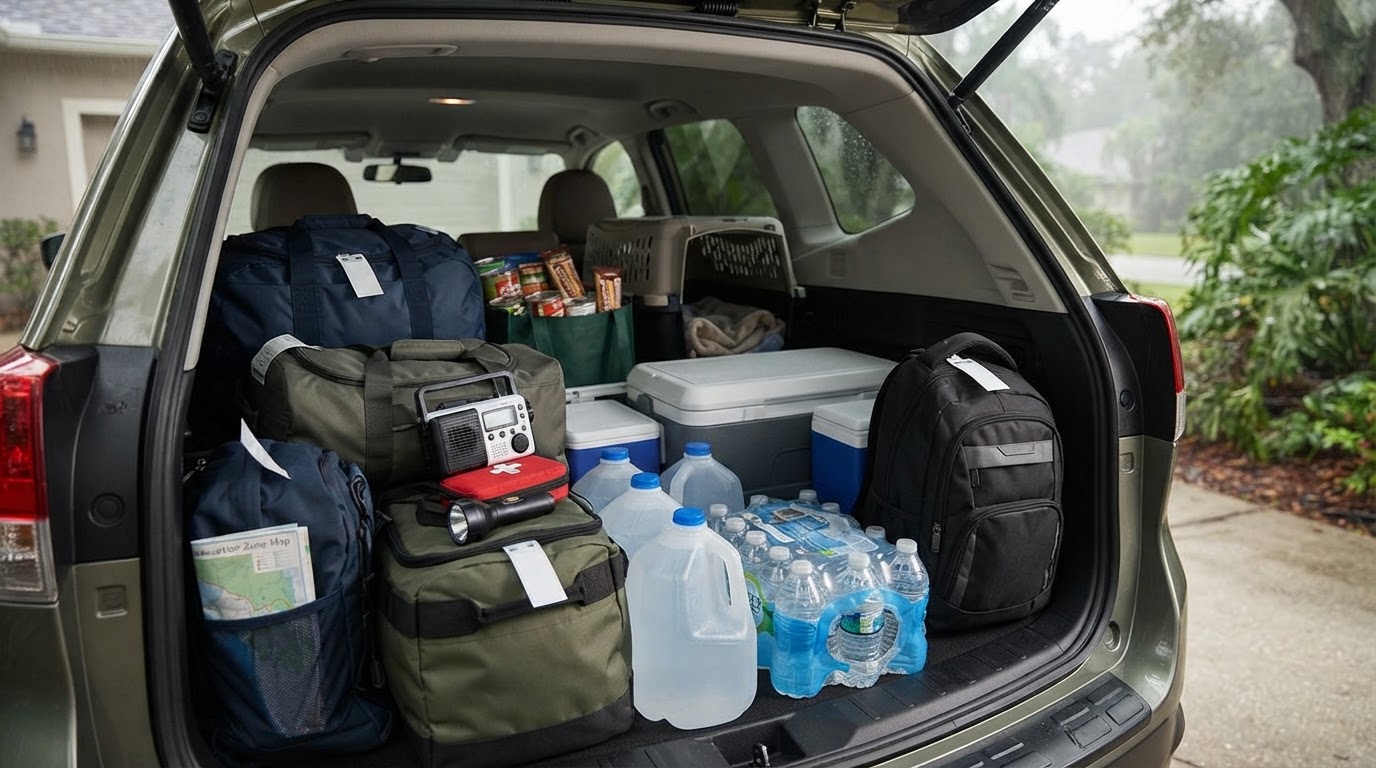
Ordered to evacuate for a hurricane? Leave at the watch, not the warning: zones, timing, routes, pets, and a three-day packing list that fits in the car.
This article contains affiliate links. If you buy through these links, we may earn a small commission at no extra cost to you.
When officials order your zone to evacuate, go: orders are drawn around storm surge, and surge flooding is a major killer in hurricanes, according to the National Weather Service. Everything below exists so that the order never catches you deciding. Know the zone now, leave at the watch, and pack for three days away.
Know Your Zone Before June
Your evacuation zone decides everything else. Counties draw these maps around storm surge risk, not wind speed, which surprises people with sturdy houses: a brick home three miles inland can sit in a surge zone while a wood-frame house on high ground does not. Find your county emergency management site, enter your address, and write the zone letter on paper. Do it before hurricane season, because the lookup sites slow to a crawl once a watch is posted.
Surge deserves the respect. The category number on the news describes sustained wind near the center; it says nothing about how far water pushes inland. Ike came ashore as a Category 2 and still threw 15 to 20 feet of surge onto the Bolivar Peninsula. Judge the water threat by the surge forecast and your zone letter, not the category. Our storm surge guide explains why water kills more reliably than wind, and what each category means covers the wind side.
Watch Means Pack, Warning Means Go
The National Hurricane Center issues a hurricane watch about 48 hours before tropical-storm-force winds are expected and a warning at about 36 hours, because once winds reach tropical storm force it may no longer be safe to prepare, let alone drive. Storm surge watches and warnings run on the same 48- and 36-hour clocks. Treat the watch as your departure window and the warning as the deadline you are already behind.
Do not wait to see if the storm gets scarier. Storms can jump categories the day before landfall: NOAA credits early warnings and the evacuations they triggered for the lives saved when Hurricane Laura's unsurvivable surge arrived in 2020. Leave during the watch and you drive in daylight on dry roads with open gas stations. Wait for the warning and you compete with everyone who waited, on roads that are starting to flood.
Where to Go: Close Beats Far
You do not need to outrun the storm, only the water. NOAA's evacuation guidance is explicit that you do not necessarily need to travel hundreds of miles to be safe; the destination needs protection from wind, surge, and inland flooding, not distance. Rank your options now:
- A friend or relative one county inland, outside any surge zone and away from rivers that flood.
- An inland motel along your route, booked refundable at the watch. Rooms within an hour of the coast sell out first.
- A designated public shelter outside the flood zone. Spare, but staffed and dry.
Map two driving routes to whichever you pick, because the obvious highway floods first or reverses direction under contraflow. Tell one out-of-state contact which route you took; local lines jam while long-distance calls often get through. Our family communication plan covers the check-in setup.
Pets decide the destination more than people admit. Most public shelters accept only service animals, according to the National Weather Service, so assume yours need their own plan: a pet-friendly motel identified now, or a friend outside the zone who has already said yes. Our evacuating with pets guide has the carrier, food, and records checklist.
Pack for Three Days in the Car
NOAA recommends keeping at least three days of supplies for hurricane evacuation: water, non-perishable food, medicine, and pet supplies, plus cash, flashlights, and a way to charge your phone. That fits in one load if you pack to the list instead of to the panic:
- Water and food: FEMA's rule is one gallon of water per person per day, so a family of four needs 12 gallons for three days. Add no-cook food nobody has to heat.
- Medicine: a full week's supply of every prescription, plus the paper list of drug names and doses. Pharmacies in the zone will be closed or stripped.
- Documents, kept dry: IDs, insurance policies, deeds, and medical cards go in a DocSafe Fireproof Document Bag (about $19), riding inside an Earth Pak Waterproof Dry Bag, 10 Liter (about $20) where flooding is possible, since the document bag resists splash and heat but is not immersion-rated.
- Cash in small bills: ATMs and card readers fail without power, so carry enough for fuel, a motel night, and meals.
- Phone power: an Anker Power Bank 10,000mAh USB-C (about $21) holds several phone charges, because evacuation traffic turns a four-hour drive into nine.
- Clothes and comfort: three days of clothes, sturdy shoes, blankets, and anything a baby or an older parent cannot go one night without.
Pack the car the week the season starts, not the day the watch posts.
Fuel Up at the Watch, Drive Like the Water Wins
The National Weather Service tells people in a watch area to fuel and service their vehicles, and it means immediately: gas stations run dry a day before landfall and do not restock until roads reopen. Fill the tank at the watch, and keep a pair of approved 5-gallon cans like the Midwest Can 5610 5-Gallon Gas Can, 2-Pack full through the season where you can store fuel safely.
On the road: never drive through floodwater. The National Weather Service's "Turn Around, Don't Drown" warning exists because six inches of moving water can stall most vehicles and a foot of it floats them, and the roadbed under the water may already be gone. If the route floods, stop, turn around, and take route two. That is what route two is for.
Coming Home Comes After the All-Clear
Return only when officials reopen the zone, not when the sky clears: downed lines stay live and floodwater stays toxic. Our hurricane safety guide covers the re-entry sequence: photograph damage before cleanup, run the generator outside only, and treat every wire on the ground as energized.
Your Evacuation Checklist
- Zone letter written down, two routes mapped
- Destination picked: friend, motel, or shelter
- Out-of-state contact knows the plan
- Pet plan confirmed (motel or friend, carrier packed)
- 12+ gallons water + three days no-cook food (family of four)
- Week of prescriptions + paper drug list
- Documents in DocSafe Fireproof Document Bag inside Earth Pak Waterproof Dry Bag, 10 Liter
- Cash in small bills
- Anker Power Bank 10,000mAh USB-C charged
- Tank full, spare fuel cans full (Midwest Can 5610 5-Gallon Gas Can, 2-Pack)
- Leave at the watch, in daylight, before the roads fill
Frequently asked questions
How do I find my hurricane evacuation zone?
Search your county emergency management website for its evacuation zone map and enter your address. Zones are drawn around storm surge risk, not wind, so a sturdy house miles inland can still sit in one. Look it up before hurricane season, not when a watch is already posted.
Should I leave during a hurricane watch or wait for the warning?
Start leaving during the watch. The National Hurricane Center issues a hurricane watch about 48 hours before tropical-storm-force winds arrive and a warning at about 36 hours, and roads can flood or jam inside that window. Waiting to see if the storm upgrades is how families end up sheltering in attics.
How far do I need to evacuate for a hurricane?
Usually tens of miles, not hundreds, according to NOAA: far enough inland to clear the surge zone and the worst flooding, at a destination protected from wind and water. A friend or motel one county inland beats a shelter five hours away, because shorter trips leave earlier and return sooner.
Can I bring pets to a hurricane shelter?
Most public shelters accept only service animals, according to the National Weather Service, so plan as if yours are not welcome. Line up a pet-friendly motel or a friend outside the zone now, and pack carrier, food, and vaccination records with the rest of the go bag.