
Iowa Ammo Plant Blast: What to Do Today
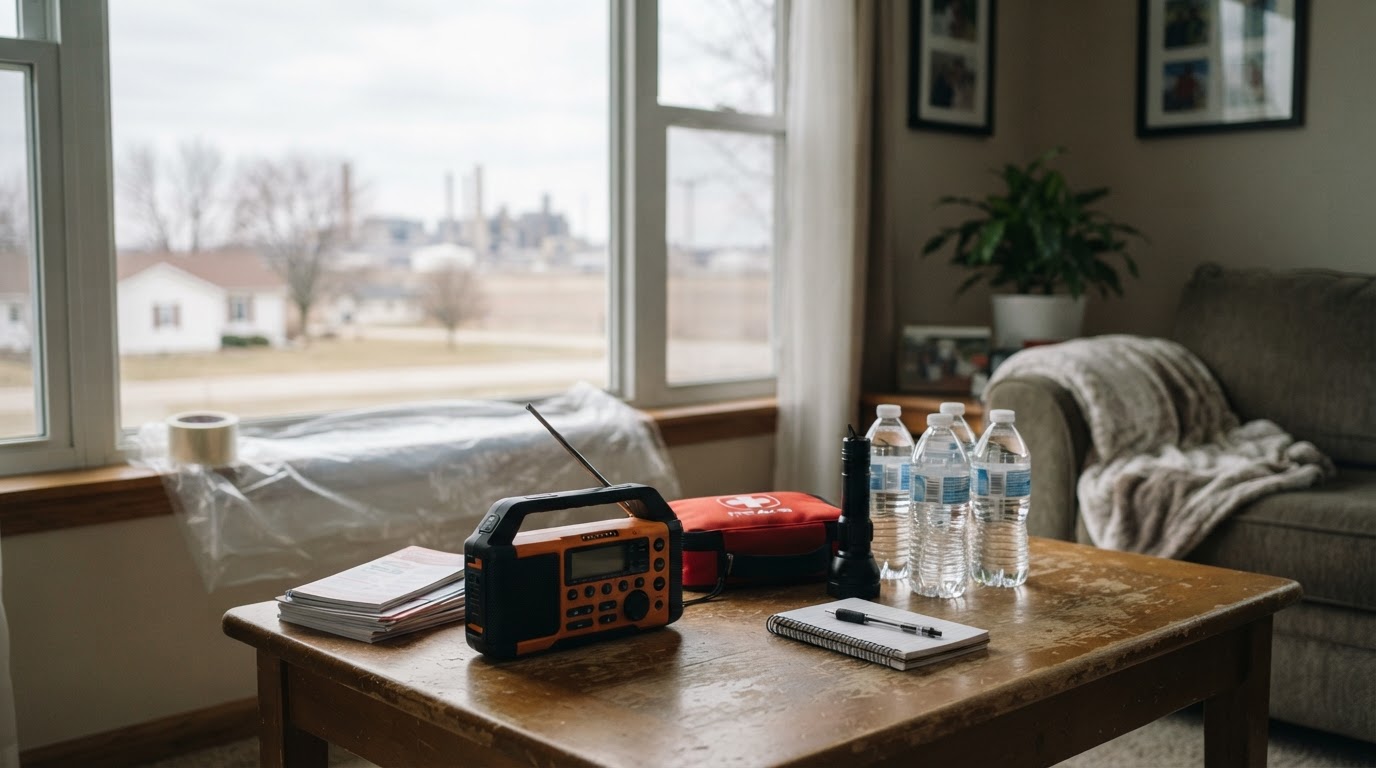
The Army will detonate unstable explosives at its Iowa ammo plant on Nov. 25. Some neighbors must leave, others should seal up indoors. Here is the plan.
This article contains affiliate links. If you buy through these links, we may earn a small commission at no extra cost to you.
On Wednesday, November 25, the U.S. Army will set off a controlled blast at the Iowa Army Ammunition Plant in Middletown, Iowa. The target is nearly five tons of degraded lead azide, an explosive compound that has grown unstable in storage. Left alone, it could go off on its own. The Army, FEMA, the EPA, and the CDC planned the shot for about 9:00 a.m. CT, timed to weather that carries the dust plume away from town, according to the Army public safety advisory.
This is a planned event, not an accident. Even so, it comes with real orders attached. Governor Kim Reynolds has proclaimed a disaster emergency for Des Moines, Lee, and Van Buren counties, and up to 100 federally activated Iowa National Guard soldiers are helping reach about 150 households near the plant, according to the governor's office. If you live anywhere near Middletown, today is the day to act.
Who has to move, and who stays inside
FEMA is supporting a recommended relocation for Middletown and the areas right around it, defined as a 5-mile cone stretching southwest of the plant. The Army drew the zone from blast and dust-dispersion modeling, then added a one-mile buffer. If you are inside that cone, the guidance is to leave starting Tuesday and stay out until officials give the all-clear by phone. Lodging support runs through Friday, November 27, with transport, shelter, food, and water for people who need it. Register at DisasterAssistance.gov or call the FEMA helpline at 1-800-621-3362 any time.
Outside the cone, the order is shelter in place. Residents 5 to 20 miles southwest of the plant should stay indoors with windows closed through the blast window, to avoid airborne lead dust as well as noise and vibration. The state has also issued guidance for livestock owners within 20 miles of Middletown. Federal health officials put it bluntly at Tuesday's briefing: pregnant women, children, and anyone with chronic illness who lives near the plant should relocate for the event. If you are close in and uneasy, err on the side of leaving.
If you were told to leave: what to do now
Treat this like any fast evacuation. Pack one bag per person with meds, documents, chargers, water, snacks, and a change of clothes, and load pets the same way you load people. Our bug-out bag checklist covers the full loadout; a sturdy 40-liter pack such as the Maelstrom 40L Hiking Backpack (about $34) swallows a three-day kit without a fight.
Lock your home, shut windows, and switch off HVAC so the system does not pull dusty outside air through the house while you are gone. Take photos of each room before you lock up. If the dust settles on your street, you will want a record of how things looked. Unplug non-essentials, same as any evacuation. Then drive out perpendicular to the southwest plume path rather than along it, and check in through official channels so nobody lists you as missing.
Do not go back early. Evacuated residents get a phone call when the all-clear is given, and re-entry is at your convenience after that. The lodging window runs through Friday for a reason. Dust sampling takes time, and the street in front of your house may still be an active work zone after the blast.
If you are sheltering in place: seal one room
Pick one interior room with few windows and make it your clean room for Wednesday morning. Close every window in the house first, then close interior doors. Set window AC units to recirculate or switch them off, and tape over the gaps that matter: under the clean-room door, around window frames, over vents you can safely cover for a few hours. A roll of painter-grade polyethylene like Frost King P1025 Polyethylene Sheeting, 4 mil, Clear (about $19) plus Gorilla Duct Tape, Black, 1.88 in x 35 yd (about $13) seals a standard door and two windows with material to spare. Full sealing technique is in our shelter-in-place guide.
Keep a battery radio or charged phone on the local emergency channel and the FEMA helpline number handy. Cell networks can bog down when everyone checks at once, and a pair of Midland GXT1000VP4 GMRS Two-Way Radios (pair) (about $90) keeps your household in contact if family members end up in different rooms or a neighbor needs help. Stay inside until the state says the air has cleared, not just until the boom fades. The sound passes in seconds. The dust question takes longer.
After the blast: the dust is the hazard
Lead azide leaves lead-containing dust where the plume touches down. Federal guidance says deposition on outdoor surfaces is expected inside parts of the dispersion area, and everyone, but especially infants, children, pregnant women, and people with heart or kidney disease, should skip outdoor activity in affected areas until officials update the guidance.
When cleanup guidance lands, expect wet methods, not dry ones. Do not dry-sweep or leaf-blow deposited dust back into the air. Damp-wipe hard surfaces, wash what the dust touched, and run HVAC only after filters are checked. A box of POWECOM KN95 Face Mask for Adults (10-Pack) masks (about $12) belongs on the shopping list for any dusty cleanup, and our chemical emergency guide walks through decontamination basics that apply to any hazardous dust.
Watch for the follow-up notices the way you would watch a boil-water advisory. The Army posts dispersion and deposition model status on the ammunition plant page, Iowa health officials are updating public guidance as sampling results come in, and FEMA's helpline stays open around the clock. The all-clear for your street is a street-level decision, not a county-wide one.
Why this matters beyond Middletown
Planned blasts with evacuation cones are rare, but the pattern is familiar: a short warning, a small mapped zone, and a much larger area told to shelter and wait. The same muscle memory covers chemical fires, derailments, and refinery releases. Know your zone before the alert, keep one bag packed, keep sealing supplies in the closet, and keep a radio that does not depend on the cell network. Middletown gets hours of notice. Most HazMat events give you minutes.