
Sump Pump Failure: What to Do When the Basement Starts Flooding
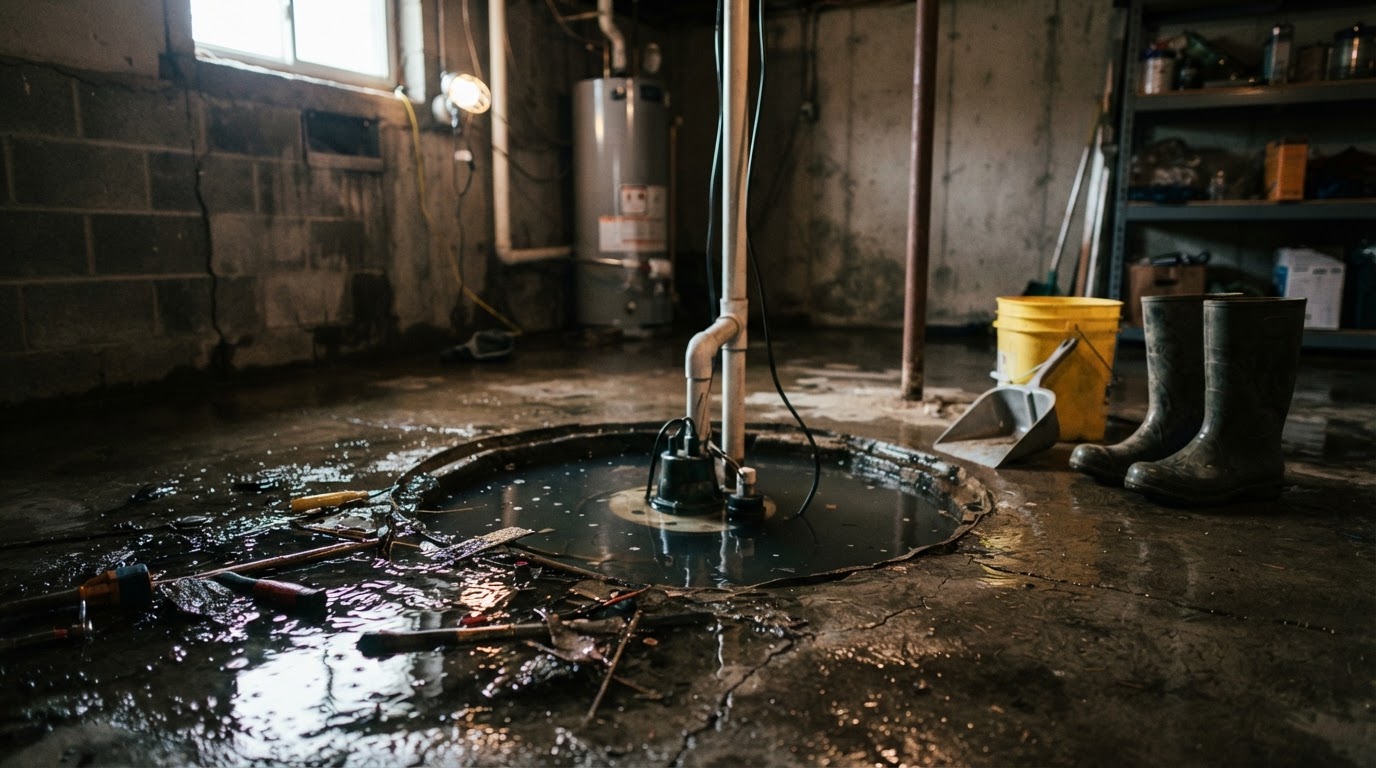
Your sump pump quit and the water is rising: how to diagnose the failure, stay safe, pull water out by hand, and know when it is time to call a plumber.
This article contains affiliate links. If you buy through these links, we may earn a small commission at no extra cost to you.
A failed sump pump is a race, and the first hour decides how much of the basement you keep. Some failures take two minutes to fix. Others mean the pump is done, and until help arrives, you are the pump. The order that works: find out why it stopped, stay out of the water, move water by hand, then fix the setup that let one pump stand between you and a flood.
Find out why it stopped
Look before you touch anything. Most failures fall into five buckets, and the first two are the ones you can fix yourself.
- The float switch is stuck. Silt, gravel, and debris jam the float against the pit wall, so the pump never gets the signal to run. Lift the float by hand and listen. If the pump kicks on, clear the pit and you just saved a service call.
- The discharge line is blocked or frozen. The pump runs and nothing moves. Check the outdoor outlet first. A frozen or buried line makes the pump cycle nonstop until it cooks itself.
- The check valve failed. Without a working valve, every gallon the pump lifts falls right back into the pit, and the pump cycles itself to death. If the line gurgles after each cycle, this is your suspect.
- The impeller is clogged. Silt and small debris stall the intake. Power off, pull the pump, and clean the intake screen per the manual.
- The motor is gone. If it hums without spinning, it has seized. Most sump pumps wear out after seven to ten years, and an old motor tends to die mid-storm, exactly when you need it. Nothing brings a seized motor back.
If the storm also took your power, the pump may be fine and the grid is the problem. That fix is different, and the backup power guide covers the generator and battery math for running a pit without the utility.
Keep yourself out of the water
Every year, flooded basements hurt people who went down to just check. The rules are short.
- Never wade into water near live outlets, cords, or the electrical panel. If you cannot reach the breaker without standing in water, get out and call an electrician or the utility.
- Do not touch a cord or appliance the water has already reached. Kill the circuit at the breaker if you can do it from dry ground. If you cannot, leave it for a professional.
- Treat every extension cord in the water as live until proven otherwise, which is also why the manual tools below keep their power connections elevated and dry.
If the water is rising faster than you can move it, stop treating this as a pump problem. That is a flood, and the flood safety plan takes over from here.
Pull the water out by hand
Once you are dry and safe, the goal is to buy time: move water out faster than it comes in, and keep it away from anything you want to keep.
The first tool out of the closet is a wet/dry vac. A 6-gallon unit like the Stanley SL18116P Wet/Dry Vacuum (6 Gallon) (about $57, 4.6 stars) pulls standing water out of carpet and floors fast, and it is the right machine for an inch or two across a room. Empty the tank before it fills, because a full vac stops pulling. For deeper water, drop a utility pump into the lowest corner: the VIVOSUN 1/10HP Water Transfer Pump with Hose Kit (about $45) moves up to 330 gallons an hour, with a strainer that keeps debris out of the impeller. Keep the pump in the water and its power connection out of it, and run the hose to a drain, a window well, or the yard. A bucket brigade works for inches, not feet, so treat it as the last resort it is.
Two honest caveats: both tools need power, so if the outage is part of your problem, run them from a generator or a heavy cord (the backup guide has the cord math), and neither tool fixes the reason the water is coming in.
When to call a plumber
Call when the motor hums but will not spin, when you have cleared the float and the pump still will not run, or when the water is too deep to see the pit. When you call, have four things ready: the pump's age and model, what you have already checked, how deep the water is, and whether the power is on. That saves the first fifteen minutes of the visit.
If the water reached drywall, carpet padding, or insulation, the clock on mold starts when the water stops rising. EPA guidance gives wet materials 24 to 48 hours to dry before mold begins, and the flood recovery guide walks through the drying order and what has to be cut out.
Protect what you can while it is wet
Save in order: people, then the things that are hard to replace (documents, medications, electronics), then the things that are merely expensive. Lift what you can from dry ground, move it high, and do not stack wet cardboard, which wicks water upward.
Before you clean anything, photograph it. Wide shots of the room, close shots of the water line on the walls, and a slow video pan. Insurance claims are built on that documentation, and the claims guide shows how to inventory the damage so the claim pays.
The fix that ends the cycle
Once the water is out, the failure has taught its lesson for free: one grid-dependent pump is a single point of failure, and storms are exactly when it fails. The permanent answer is a second pump that needs neither you nor the grid.
- Battery backup. A 12-volt backup pump mounts beside the primary pump in the same pit and switches on when the line dies. It ships without a battery, so pair it with a sealed AGM like the PumpSpy 12V 75Ah AGM Sump Pump Battery (about $200, 4.6 stars) and it runs for hours.
- Water-powered. The Liberty Pumps SumpJet SJ10 Water-Powered Backup… (about $228, 4.6 stars) uses municipal water pressure instead of electricity. No battery to maintain, and it starts on its own when the power drops. For a finished basement, it is the closest thing to set-and-forget.
The backup guide covers the full ladder, including when a generator is the right answer. Whatever you pick, test it in the dry season: pour a bucket into the pit monthly and watch both pumps run.
Frequently asked questions
Why did my sump pump stop during the storm?
The common causes are a stuck float switch, a blocked or frozen discharge line, a failed check valve, a clogged impeller, or a motor that has finally seized. A power outage can also stop the pump with nothing wrong with it at all, so check the breaker before you blame the pump itself.
Can I remove the water myself?
Yes, for shallow water. A wet/dry vac handles an inch or two across carpet and floors, and a small utility pump drains deeper water from the lowest corner. Keep every power connection elevated and dry, and if the water is near outlets or the electrical panel, leave it and call for help.
When is it time to call a plumber?
Call when the motor hums without spinning, when the float is clear and the pump still will not run, or when the water is too deep to see the pit. Have the pump model, its age, and what you have already checked ready, because that shortens the visit.