
Colorado Hit by Two Floods: Aid Plea and Next Steps
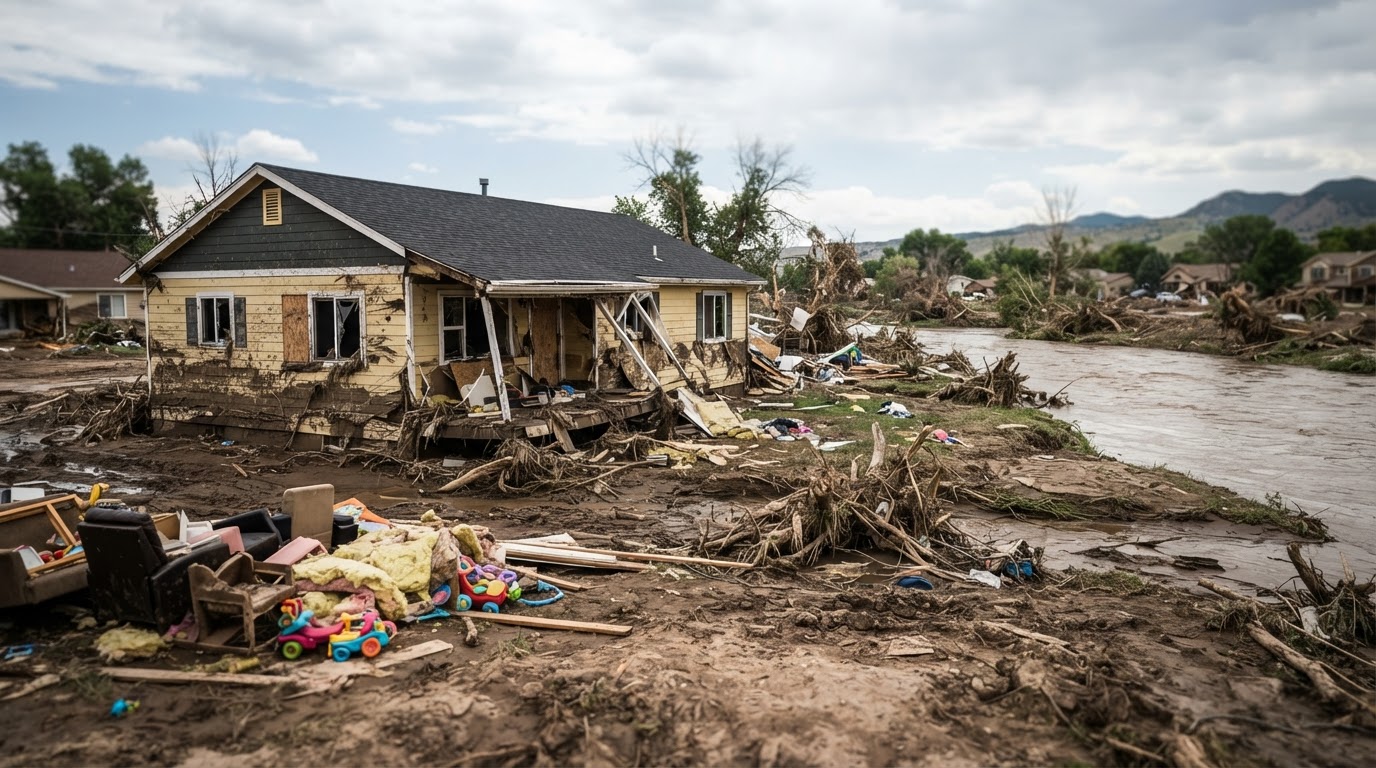
Colorado asked Washington for a second disaster declaration after repeat floods wrecked 271 homes. What the aid covers and how survivors should document damage.
This article contains affiliate links. If you buy through these links, we may earn a small commission at no extra cost to you.
Colorado asked the White House for federal disaster aid a second time on Thursday, after back-to-back floods tore through the same southwestern counties days apart. Governor Jared Polis submitted the second Presidential Major Disaster Declaration request for flooding that began October 31 across southwestern Colorado and the San Luis Valley. His first request, for flooding from October 22 through 25, is still waiting on a federal decision. Read the full request on the Colorado governor's site and track state response through Colorado emergency management.
The numbers explain why the state could not fit this into one request. Joint state and federal teams validated $28.5 million in public infrastructure damage from the second storm alone, plus 271 primary homes destroyed or left uninhabitable and 136 more damaged across the four counties seeking household aid. At the height of the flooding, more than 6,300 residents were under mandatory evacuation orders and over 3,300 homes were cut off. Hundreds of Coloradans are still displaced, and the state warns some households may stay without road access until spring while others have no home to return to. Start with general flood know-how in our flood safety guide.
Two storms hitting the same ground is what made this so destructive. The Animas River at Durango rose from about 4.5 feet to 9 feet, and the San Juan River near Pagosa Springs crested near 17 feet. La Plata County alone estimates $56 million in damage, including about $9 million to roads and bridges. The second storm landed on soil the first storm had already saturated, so water that might once have soaked in ran straight into homes, roads, and phone lines instead. That compounding pattern is the part worth remembering wherever you live: the second storm is often worse than the first, even when it drops less rain.
The request splits aid two ways, and the split matters to residents. Public Assistance covers the public side: debris removal, emergency work, and repairs to roads, bridges, water systems, utilities, and public buildings in Archuleta, Conejos, La Plata, Mineral, Montezuma, and Rio Grande counties. Individual Assistance is the household side: money and services for people in Archuleta, Conejos, La Plata, and Rio Grande counties, including housing help, crisis counseling, disaster unemployment aid, and legal services. The state also asked for statewide hazard-mitigation funding to harden flood-prone infrastructure before the next storm. Our FEMA assistance guide walks through how Individual Assistance works once a declaration is signed.
If you are in the affected area, do this now
Photograph everything before you clean anything. Adjusters and FEMA inspectors decide from what they can see, so shoot every room, every waterline on the walls, the outside of the house from all four sides, and the serial plates on dead appliances. Keep a simple log with dates: when water entered, when it left, what you threw out, what you paid for. Save every receipt for lodging, fuel, rentals, and repairs, since many of those costs are reimbursable once aid unlocks. Our damage documentation guide has the full photo checklist.
Protect the papers that prove who you are and what you owned. Deeds, insurance policies, medical records, and IDs decide how fast your claim moves, and floodwater takes them first. Keep originals in a sealed fireproof pouch stored up high, and keep phone photos of each document as backup. DocSafe Fireproof Document Bag The DocSafe fireproof document bag at about $22.98 holds letter-size papers and seals against water, which is exactly the combination a flood demands.
Treat every flooded well as contaminated until a test says otherwise. The state pushed hundreds of well test kits into the region through county emergency offices, so call yours and ask for one. Until your water passes, drink bottled water or bring tap water to a full rolling boil for at least one minute. General water-storage habits that make weeks like this easier live in our flood emergency kit guide.
Start mold control within the first day or two. Flood-soaked drywall, carpet, and insulation grow mold fast, and winter heating season makes damp indoor air worse. Cut out soaked porous material, dry what remains with airflow and heat, and treat hard surfaces with a dedicated mold-killing product rather than plain soap. Concrobium Mold Control Spray (32 oz, 2-pack) The Concrobium two-pack at about $26.96 covers roughly 800 square feet across the pair and works without bleach fumes in a closed-up house. Our mold recovery guide covers the safe cleanup order.
Expect scammers before you expect inspectors. Fake FEMA callers, door-to-door contractors demanding cash up front, and bogus aid websites appear after every major flood. Real FEMA inspectors never charge a fee and always carry photo ID, and the only place to apply for federal aid is DisasterAssistance.gov. File there directly once Individual Assistance is approved rather than through anyone who contacts you first.
The lesson for everyone else: winter plus displacement
This is Colorado's 13th declared disaster this year, with the state already committing over $128.2 million to the previous twelve, and recovery now runs straight into mountain winter. Damaged roads plus snow mean some families could stay cut off for months. That combination is worth a look at your own setup: a home that survives the storm can still fail you in the cold weeks after, when the furnace runs on damaged wiring or the pipes freeze in a wall that never fully dried. Our home winterizing guide covers the pre-freeze checks that matter most.
Two habits travel well out of this story. First, keep your recovery paperwork ready before the water rises: photos of every room, a home inventory, and policy numbers somewhere you can reach from a motel. Second, treat back-to-back storms as the planning case, not the single dramatic night. Stock for the week after the flood, when stores run short, crews are booked solid, and the second storm is already on the radar. General flood readiness, including what belongs in the kit, is in our flood safety guide from Ready.gov alongside our own checklists.
Frequently asked questions
Has the federal aid been approved?
Not yet. The first request, covering the October 22 to 25 flooding, is still waiting on a federal decision, and the second request went in on November 20. Individual Assistance only unlocks after the president signs a declaration, so document your damage now instead of waiting.
Which counties would the declarations cover?
Public Assistance for roads, bridges, and utilities is requested for Archuleta, Conejos, La Plata, Mineral, Montezuma, and Rio Grande counties. Direct aid to households is requested for Archuleta, Conejos, La Plata, and Rio Grande counties.
Why did Colorado file two separate requests?
The National Weather Service treats the storm that started October 22 and the one that started October 29 as two distinct weather events. Federal rules need one request per event, and because both storms hit the same communities, the state says both must be approved or big gaps in recovery funding stay open.
My well flooded. Is the water safe to drink?
Assume it is not until it is tested. Floodwater carries sewage, fuel, and farm runoff into wells. The state sent hundreds of well test kits to the region, so ask your county emergency office for one, and drink bottled or properly boiled water until your well passes.