
Alternative Heating Safety: Space Heaters, Fireplaces, and CO Risk
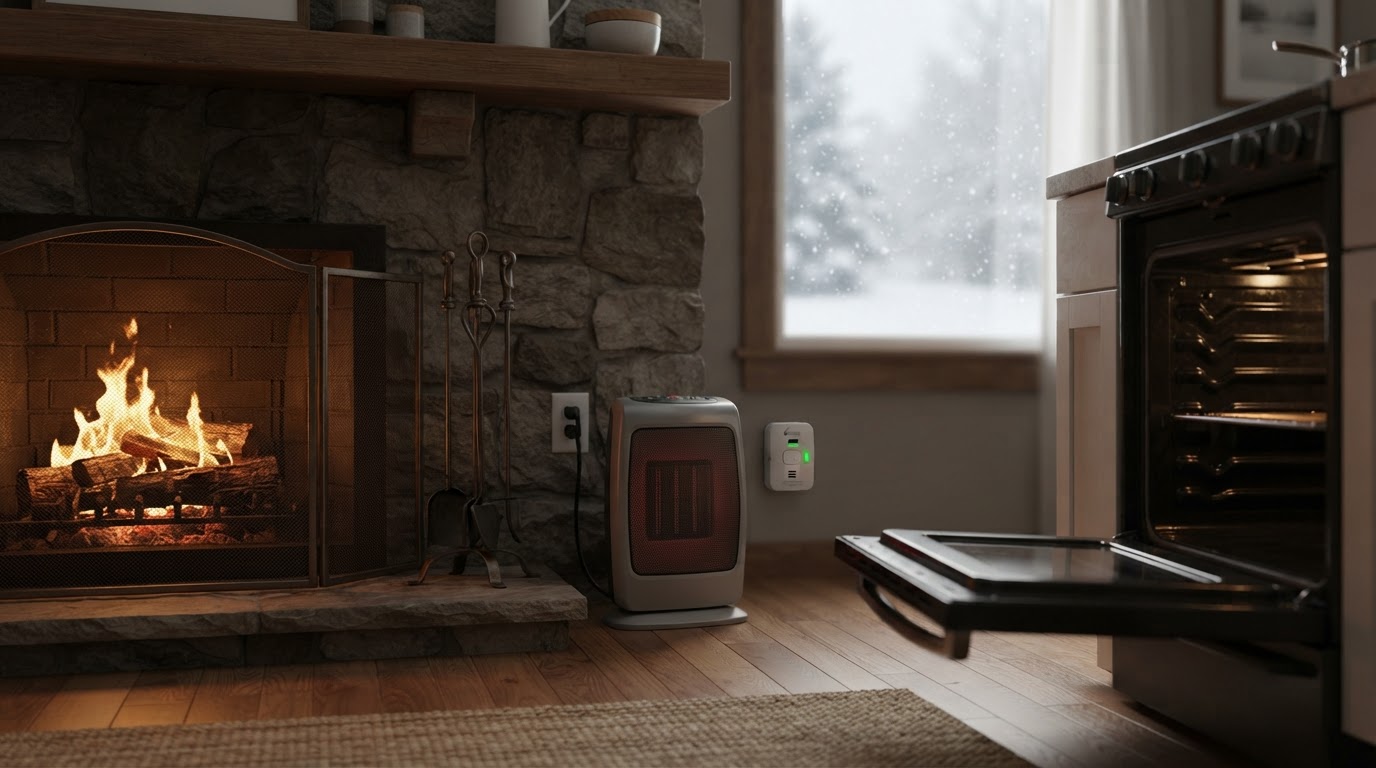
Space heaters, fireplaces, and kerosene heaters: the clearance rules, the carbon monoxide risks, and why the oven is never a heater in a winter storm.
This article contains affiliate links. If you buy through these links, we may earn a small commission at no extra cost to you.
When a winter storm takes out the furnace, three heat sources carry most homes: an electric space heater, a fireplace or wood stove, and a fuel-burning heater. Each one is safe when it follows the fire agencies' rules, and each has its own way of going wrong. The short version: three feet of clearance and a wall outlet for electric heaters, a screen and a metal ash can for the fireplace, ventilation and a carbon monoxide alarm for anything that burns fuel, and never the oven.
Electric space heaters: clearance, cords, shut-offs
CPSC estimates portable heaters are involved in an average of 1,600 home fires a year from 2020 through 2022, with about 70 deaths and 150 injuries. The countermeasures are unglamorous and they work.
- Three feet in every direction. CPSC's rule is three feet between the heater and anything that can burn: drapes, bedding, furniture, laundry, paper. That includes the top and the bottom of the unit, so nothing draped over it and nothing stored under it.
- Wall outlet, never an extension cord. A 1,500-watt heater pulls more current than most cords and strips are rated to carry, which is why overheated cords sit behind a large share of heater fires. If a plug or cord feels warm to the touch, shut it down.
- Buy the shut-offs. Tip-over and overheat protection are the two features worth paying for. The GiveBest Portable Ceramic Space Heater (about $27) has both, plus 750W and 1500W settings so it can run on a circuit that is already carrying a fridge.
NFPA guidance adds one more habit: turn the heater off when you leave the room or go to bed. A heater that runs unattended for hours is the common thread in serious heater fires.
Fireplaces and wood stoves: the screen and the ash can
A wood fire is the oldest backup heat there is, and its risks cluster around two moments: the burn and the cleanup.
- Screen it. A metal screen or glass door keeps sparks on the hearth, and the three-foot zone applies here too. Keep rugs, firewood, and furniture clear of the opening.
- Burn dry wood, nothing else. Seasoned firewood burns hot and clean. Wrapping paper and cardboard throw sparks and flare up fast, so they go in the recycling, not the firebox. Open the damper before you light anything.
- Respect the ash. Embers in ash can stay hot for days. Chimney-safety guidance is specific: shovel ash into a metal container with a tight lid, carry it outside right away, and set it on a non-combustible surface at least 10 feet from the house, the deck, and anything else that burns. Never vacuum ash, and never bag it. In practice, that container is an ash bucket: the JupiterForce Ash Bucket with Lid and Shovel, 5.15… (about $18) is galvanized steel with a lid for the walk outside and a shovel that stores in a side pocket.
- Keep an extinguisher within reach. A multi-purpose home extinguisher like the Kidde FA110G Home Fire Extinguisher (1-A:10-B:C) belongs near the hearth, not in the garage behind the paint cans.
Kerosene and propane heaters: ventilation is the price of admission
Anything that burns fuel makes carbon monoxide, and kerosene and propane heaters burn fuel in the same room you are breathing in. The CDC attributes more than 400 U.S. deaths a year to unintentional carbon monoxide poisoning from non-fire sources, and space heaters and other fuel-burning appliances are a recurring part of that count.
The rules that cover both fuel types:
- Indoor use only for models labeled for it, and only in a room with ventilation, following the manufacturer's clearance and venting instructions.
- Refuel outside, after the unit cools. Fuel spilled on a hot surface is a fire, and refueling a running heater is how that happens.
- Never overnight and never unattended. A fuel-burning heater plus a sleeping household is a bad pairing.
- Check your local code. Some jurisdictions restrict or ban kerosene heaters in dwellings.
The oven is not a heater
Every winter, fire departments repeat one warning: never use your oven or gas range to heat a home. A gas oven can pour carbon monoxide into the kitchen for as long as it runs. An electric oven with the door open is a burn and fire risk, and it is an expensive way to warm one corner of one room. The better answer on a cold night is to pick the smallest room, close it off, and layer up inside it.
The alarm layer
Everything above protects against hazards you can see or smell. Carbon monoxide is the one you cannot, and fuel-burning heat is when it appears. NFPA calls for CO alarms on every level of the home and outside each sleeping area. Battery-powered models keep listening in an outage, which is exactly when fireplaces, kerosene heaters, and generators get pressed into service. The Kidde Battery-Powered Carbon Monoxide Detector (about $20) runs on two AAs and sounds an 85 dB alert. One per floor, tested monthly, and the placement guide covers the setback from furnaces and fireplaces and the rooms to skip.
If the heat stays off
When the outage outlasts the storm, the job changes from picking a heat source to holding one room warm. Close off the smallest room, seal the gaps, dress in layers, and work through the winter storm survival guide for the full no-heat plan. If pipes freeze while you wait, the frozen pipe guide covers thawing them without a torch. And whatever else happens, never bring a grill, a camp stove, or a generator indoors for warmth.
Frequently asked questions
Can I leave a space heater running overnight?
NFPA guidance says to turn space heaters off when you leave the room or go to bed. If your furnace is out, warm one room before sleep, then close it off and rely on layers overnight rather than leaving a heater running while everyone is asleep.
Is a kerosene heater safe indoors?
Only a model labeled for indoor use, only in a ventilated room, and only with a working carbon monoxide alarm nearby, following the manufacturer clearance rules. Refuel outdoors after the unit cools, never while it runs, and check local codes because some places restrict kerosene heaters in homes.
Why is heating with the oven dangerous?
A gas oven can put carbon monoxide into the kitchen for as long as it runs, the same hazard as any unvented fuel-burning appliance. An electric oven with the door open is a burn and fire risk, and it is an inefficient way to warm even one room compared with sealing off a small space.