
How to Thaw Frozen Pipes: A Step-by-Step Guide (2026)
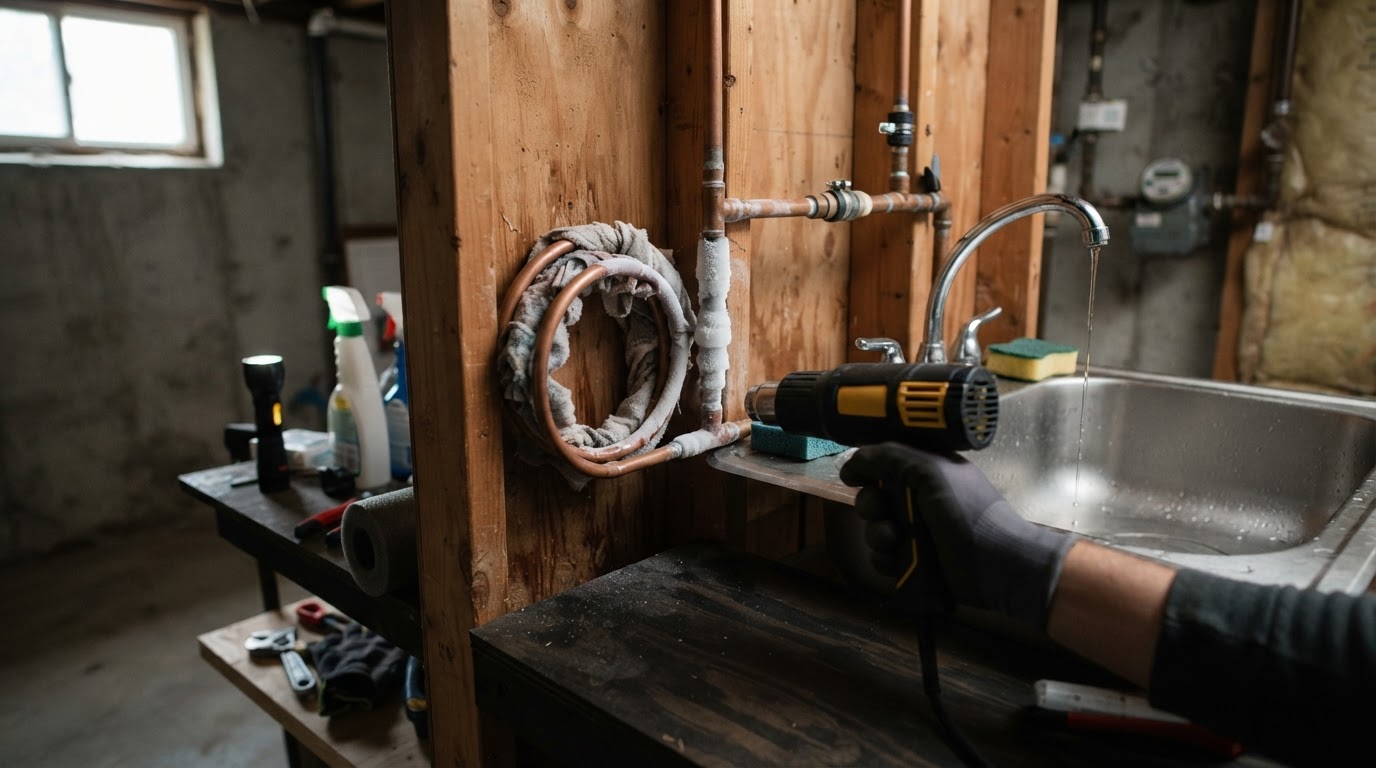
How to thaw frozen pipes safely: keep the faucet open, apply heat from the faucet toward the freeze, and never use an open flame. Full guide with checklist.
This article contains affiliate links. If you buy through these links, we may earn a small commission at no extra cost to you.
Waking up to no water in a cold snap usually means a frozen pipe, not a broken one, and you can often fix it in under an hour. Three rules: keep the faucet open, apply heat from the faucet toward the frozen section, and never use an open flame. If water is already spraying or pooling, that is a burst. Shut the main valve and call a plumber, do not thaw it.
How to Thaw Frozen Pipes, Step by Step
Before any of this, find your main shut-off valve and test it. You do not want to learn where it is mid-flood.
- Confirm it is a freeze. Check more than one faucet. A single frozen line usually means one exposed pipe got cold: under a sink, in a crawlspace, attic, garage, or an exterior wall. Frost on the pipe is the giveaway. A sewage smell from a drain can also mean a freeze, because an empty trap lets sewer gas back up.
- Open the faucet. The faucet the pipe feeds stays open for the whole thaw. Running water melts ice and relieves the pressure that turns a freeze into a burst. Start with a slow trickle and keep it going.
- Shut the main valve only if you suspect a break. Damp drywall, pooling water, or a ceiling stain means a burst, not a freeze. Stop the water, open a faucet below the break to drain the line, and call a plumber. A small drip while thawing is manageable; the valve is shut, so decide next steps calmly.
- Apply heat from the faucet end, working toward the frozen section. The ice is usually nearest the cold spot, and melted water needs somewhere to go. For exposed pipes, a hair dryer on low keeps working while you move it slowly along the pipe, roughly six inches away. A compact one like the Conair Compact Folding Hair Dryer (1875W) (about $27, 4.4 stars from 3,600+ reviews) folds flat and stores in a drawer between winters. A heat lamp or a plug-in heat cable like the Frost King HC9A Automatic Electric Heat Kit, 9 Feet does the same job hands-free. Hot towels, swapped every few minutes, work too.
- Warm the room for pipes you cannot reach. Pipes inside walls, floors, or unheated crawlspaces need the space warmed, not the pipe. Open the cabinet doors under sinks so house air reaches the plumbing, and aim a GiveBest Portable Ceramic Space Heater at the wall or floor where the frozen run lives. Give it a clear three feet on every side, keep it dry, and never leave it running unattended.
- Never use fire. A blowtorch, propane torch, or open flame on a pipe is how houses burn down in winter. Kerosene and propane space heaters give off carbon monoxide and are not thawing tools, full stop. If the power is out along with the freeze, focus on warming people, not pipes, and call a plumber when it is back.
- Keep the heat on until flow returns, then run the water a few minutes longer. Full pressure means the ice is clear. Run it a couple more minutes to flush sediment the freeze loosened.
How Long It Takes, and When to Call a Plumber
An exposed pipe usually thaws within half an hour of direct heat. A wall pipe can take a couple of hours, because you are warming the whole assembly, not just the line. Give it that time before you conclude anything.
Call a plumber when, after a few hours of honest effort, you still cannot reach the frozen section with heat and the water is not flowing better. Also call if you cannot find the freeze at all, if more than one line is out, or if it sits in a slab or a buried line. Line locators and thaw machines are the professionals' tools for those cases; heating the floor above a slab pipe just heats the floor.
After It Thaws: Check for Damage, Then Insulate
A pipe that froze once will freeze again, so the work is not done when the water runs.
- Check for cracks slowly. With a faucet open, turn the main valve back on gently and watch every exposed length of the thawed pipe, plus the joints, for drips. A hairline crack can weep for hours before it shows. Bulges or frost lines mean the material has stretched; replace those sections.
- Insulate the run that froze. Duck Brand Insulating Foam Pipe Covers, 0.75-Inch x… slide over exposed copper or PEX in minutes, and the four-pack runs about $21. Where foam cannot reach, pipe-wrap insulation or heat tape rated for that purpose does the job.
- Add heat where the freeze starts. The pipe froze because a draft or a dead zone got colder than the rest of the house. Feel for cold air near the frozen run, seal the draft, and keep that area on the warm side of the house plan.
- Check your stored water. The same cold snap can split water jugs in a garage or shed. Water expands by about 9% when it freezes, and a full jug is the one that splits. Keep stored water where it stays above freezing, leave a little headroom in each jug, and inspect your stash after a deep freeze. Our food and water storage guide covers the rotation and amounts.
Preventing the Next Freeze
The prevention playbook lives in our winter storm survival guide and winterize checklist: below about 20°F, drip the farthest faucet from the meter and open sink cabinets; keep the thermostat at 55°F or warmer when away; disconnect hoses and shut off outdoor spigots before the first freeze. If the whole supply stops and will not return, follow our water emergency guide. Melted snow can supply flushing water, but follow the treatment steps in that guide before drinking it.
The 60-Second Thaw Checklist
- Main shut-off valve located and tested (do this before it matters)
- All faucets checked; the frozen line identified
- Faucet open, slow trickle running
- Heat applied from the faucet end, moving toward the freeze
- No open flame, no fuel-burning heaters, nothing unattended
- Room warmed for hidden pipes, cabinet doors open
- Main valve closed at the first sign of a burst, plumber called
- After thaw: slow re-open, joints watched for drips
- Frozen run insulated, draft sealed, stored water moved to a warm spot
The freeze does most of its damage in the hour after you panic. Open the faucet, put heat on the pipe, and make it a boring afternoon instead of a flooded one.
Frequently asked questions
How do you thaw a frozen pipe fast?
Keep the faucet the pipe feeds open, then apply heat starting at the faucet and working toward the frozen section: a hair dryer, heat lamp, or electric heat tape for exposed pipes, or a space heater warming the room for pipes inside walls. Never use an open flame, a blowtorch, or a kerosene or propane heater indoors, and call a plumber if water does not flow after a few hours of heat.
Should I turn the water off if my pipes are frozen?
Only if a pipe has burst: shut the main valve if you see spraying water, pooling, or damp drywall, then call a plumber. For a simple freeze with no visible damage, leave the water on and keep the faucet open so running water helps melt the ice.