
Where to Place Carbon Monoxide Detectors: 5 Rules (2026)
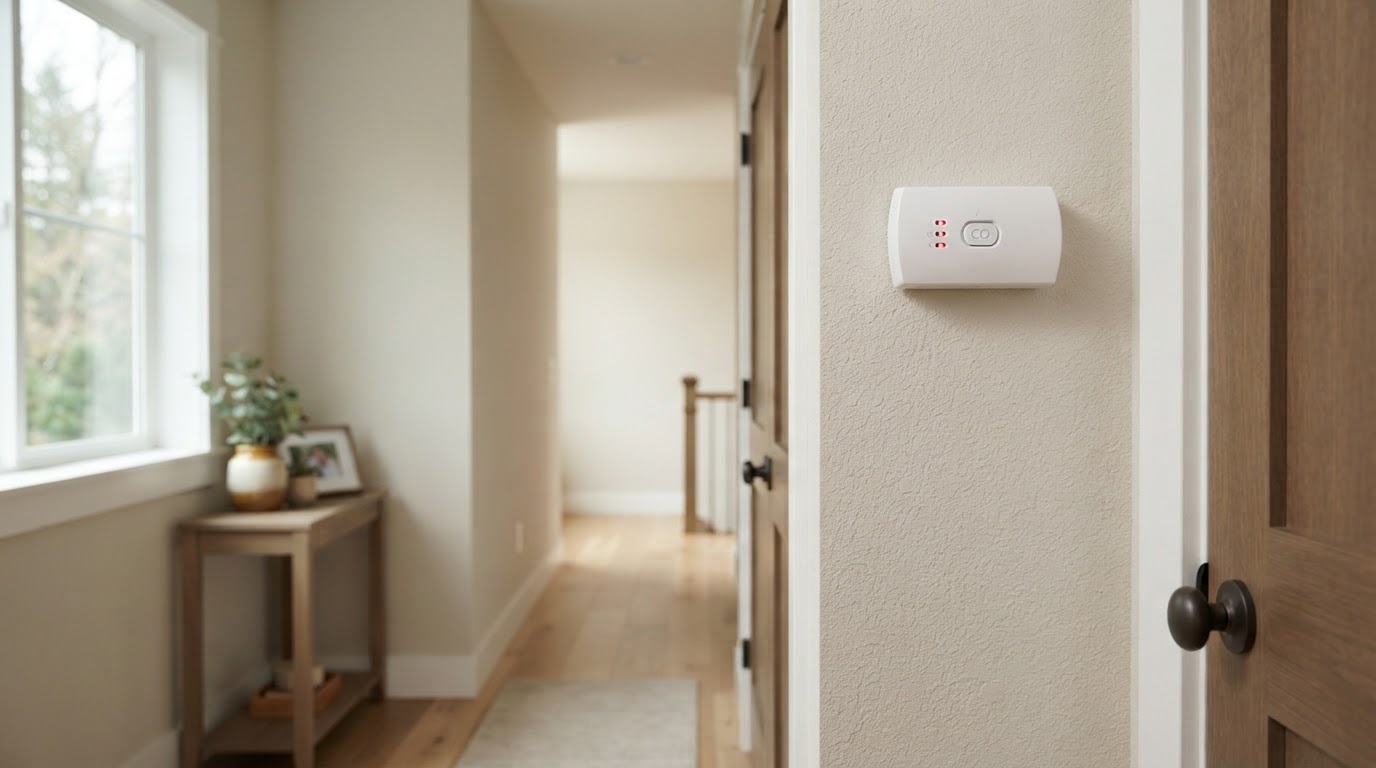
Where to place carbon monoxide detectors: one per floor, outside sleeping areas, and at the maker's appliance setback. Five safe, practical rules for 2026.
This article contains affiliate links. If you buy through these links, we may earn a small commission at no extra cost to you.
Put one carbon monoxide detector on every floor and outside each sleeping area. For fuel-burning appliances, follow the setback in that alarm model's instructions; Kidde commonly specifies 5 to 20 feet. The five rules below cover rooms to skip, distances that matter, and keeping alarms awake through a power outage.
After a storm, portable generators often appear before utility power returns. CPSC warns that generators, fire, and gasoline create carbon monoxide hazards after outages. CO has no color or odor. Detector placement is a job to finish before an outage, not after someone feels sick.
The basics
- Every floor gets one, including the basement. A single alarm by the front door does not protect upstairs sleepers.
- Bedrooms first. Alarms go outside sleeping areas, close enough and loud enough (85 dB is standard) to wake people up.
- Give appliances space: 5 to 20 feet from furnaces, water heaters, fireplaces, and stoves. Too close means nuisance alarms or a dead sensor; too far means late warning.
- Outages are the danger window. Generators, space heaters, grills used as heaters, and cars idling for warmth all make CO. Battery-powered alarms keep working when the grid does not.
- Detectors expire. Most last 7 to 10 years. The manufacture date is printed on the back; an end-of-life chirp means replace, not re-battery.
Where to place carbon monoxide detectors: the 5 rules
Rule 1. One on every level, basement included. The EPA guidance is one detector per floor, and the basement counts because furnaces and water heaters usually live there. A ranch house needs at least one; a two-story with a basement needs at least three. Hallways connecting levels are good spots when a floor has no better option.
Rule 2. Outside each sleeping area. Place the alarm in the hallway serving the bedrooms, within hearing distance of the doors. If bedrooms sit at opposite ends of the house, each cluster gets its own alarm. For extra coverage, manufacturers and fire agencies alike accept an alarm inside the bedroom itself, especially for deep sleepers and children.
Rule 3. Follow the maker's appliance setback. Kidde commonly recommends 5 to 20 feet from furnaces, water heaters, and fireplaces, but the instructions packed with your model control. Do not mount an alarm directly above or beside a stove or fireplace: cooking fumes and brief exhaust can cause nuisance alarms. Read the instructions and measure before you drill.
Rule 4. Keep them out of the rooms that ruin them. No alarms in the garage (engine exhaust), the kitchen (cooking fumes), humid bathrooms (steam), or right next to drafty windows and vents. Skip the dead-air corner where a wall meets a peaked ceiling, and keep alarms clear of curtains and furniture that block airflow. A detector that cannot sample room air is wall decor.
Rule 5. Keep them powered, tested, and current. Test monthly with the test button. Swap replaceable batteries yearly unless the model seals them in for 10 years. Vacuum the vents twice a year; dust and pet hair clog sensors. Write the install date on the unit with a marker and replace it at end of life. If your state or city requires interconnected alarms, link them so one alarm trips them all.
Which detector to buy
Three picks cover the main jobs. Prices and availability were checked on Amazon on October 21, 2026.
Every home: battery-powered alarm on each floor. The Kidde Battery-Powered Carbon Monoxide Detector was $23.47 at review, carries a 4.7-star owner rating, and sounds an 85 dB alert. Two included AA batteries keep it listening through a power failure. Who it is for: any home that needs one alarm per floor without wiring work.
Cars and travel: a portable alarm. The Kidde Portable Carbon Monoxide Detector… runs about $25, carries a 4.6-star rating, and is small enough for a glove box. In a winter stranding, clear snow from the tailpipe, crack a downwind window, and never run the engine in a garage or other enclosed space. A portable alarm adds a warning layer; it does not make exhaust safe.
Gas-heated homes: the combo alarm. The Kidde Plug-In Explosive Gas & Carbon Monoxide Alarm plugs into a wall outlet, detects propane, natural gas, methane, and CO, and has a digital display with 9-volt backup. The backup cell is what keeps the alarm listening through an outage, so keep a spare pack on the shelf: a Energizer MAX 9V Batteries, 4 Count runs about $12 for four and holds up to five years in storage. It was $74.99 at review. Who it is for: homes with gas furnaces, stoves, water heaters, or fireplaces.
| Pick | Price | Rating | Best for |
|---|---|---|---|
| Battery CO alarm | $23.47 | 4.7 | One per floor, no wiring |
| Portable CO alarm | $24.97 | 4.6 | Cars, travel, rentals |
| Plug-in gas plus CO combo | $74.99 | 4.6 | Gas-heated homes |
Generators deserve their own sentence because they kill the most people the fastest. Run them outside, 20 or more feet from doors and windows, never in a garage, even with the door open. Our power outage survival guide covers the full generator rules plus fuel storage. Heating season brings the slower version of the same risk through cracked heat exchangers and unserviced furnaces, which is why our home winterizing checklist starts with a furnace service and fresh detector batteries. And if you heat with gas, learn the difference between the two alarms in our gas leak guide: a CO alarm will not warn for raw natural gas.
Smoke detectors follow the same floor-by-floor logic: one per level, outside sleeping areas. Our home fire escape plan covers their placement and the two-exit drill that goes with it.
Quick recommendations
- Starting from zero: buy one Kidde Battery-Powered Carbon Monoxide Detector per floor and mount them this weekend, bedrooms first.
- Attached garage or gas appliances: add the Kidde Plug-In Explosive Gas & Carbon Monoxide Alarm near the sleeping hallway on the appliance level.
- Winter drivers: put the Kidde Portable Carbon Monoxide Detector… in the car kit before the first freeze.
- Already alarmed: check the date on the back of each unit and replace anything past end of life.
Detector placement checklist
- One CO alarm on every level, basement included (Kidde Battery-Powered Carbon Monoxide Detector)
- Alarm outside each sleeping area, audible through closed doors
- Appliance setback checked against each alarm model's instructions
- Nothing in the garage, kitchen, humid bathroom, or dead-air corners
- Generator spot picked: outside, 20-plus feet from doors and windows
- Test button pressed monthly, vents vacuumed, batteries fresh
- Install date written on each unit, expired units replaced
Frequently asked questions
Where should carbon monoxide detectors be placed in a two-story house?
Put one on every level, including the basement, and outside each sleeping area. Follow each alarm model's instructions for distance from fuel-burning appliances; Kidde commonly specifies 5 to 20 feet. A two-story house with a basement needs at least three alarms.
How many carbon monoxide detectors do I need?
At minimum, one per floor, including the basement. Then add coverage so every sleeping area has an alarm within hearing distance outside its door. Large floor plans and homes with fuel-burning appliances on multiple levels need more than the minimum.
Should a carbon monoxide detector go high or low on the wall?
Follow the instructions in the box. Carbon monoxide mixes with room air, so most manufacturers allow wall or ceiling mounting, and plug-in models sit at outlet height. The room you choose matters far more than the exact height: outside bedrooms and set back from appliances beats a perfectly measured bad location.