
Winter Storm Survival Guide: Extreme Cold and Power Loss at Home
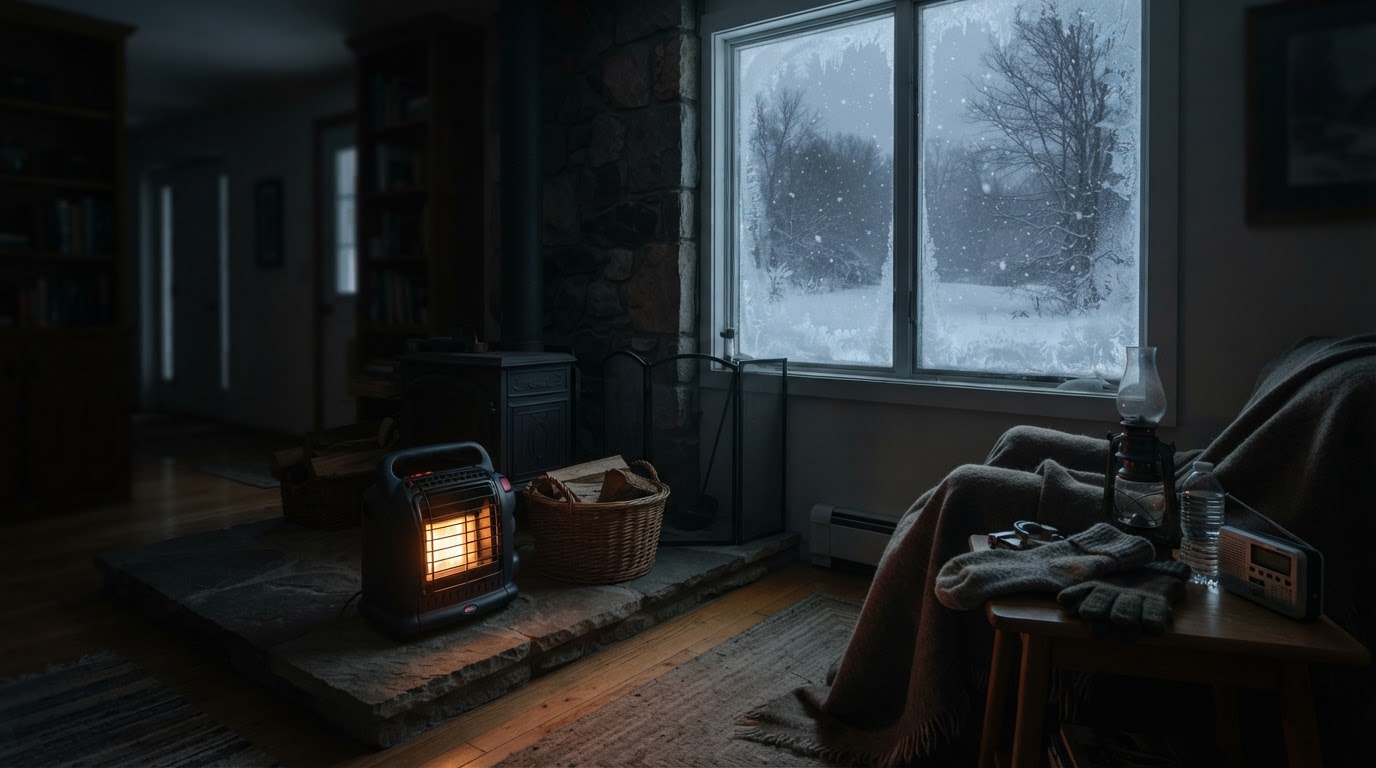
Winter storm prep that works: freeze-proof your pipes, heat one room safely without power, and dodge carbon monoxide traps. Your extreme-cold checklist.
This article contains affiliate links. If you buy through these links, we may earn a small commission at no extra cost to you.
Winter storms kill through three failures: frozen pipes, lost heat, and carbon monoxide. Handle those and you ride out the storm. NOAA's 2026 winter outlook warns of repeated polar vortex episodes that can shove Arctic air deep into the lower 48.
1. Freeze-Proof Your Pipes Before the First Freeze
A burst pipe dumps 50+ gallons of water per minute into your home. Prevention takes 30 minutes:
- Drip your faucets. Below 20°F, open cabinet doors and let the farthest faucet drip; moving water freezes far less easily than still water.
- Know your shut-off valve. Locate and test it now; if a pipe bursts, stop the flow in seconds.
- Drain outdoor lines. Disconnect garden hoses, shut off outdoor spigots.
- Keep it warm enough. If you leave town, keep the thermostat at 55°F minimum.
Insulation keeps working while you sleep: Duck Brand Insulating Foam Pipe Covers, 0.75-Inch x… slide over exposed runs.
Pipe-Freeze Risk by Temperature
| Outdoor Temperature | Exposure Time | Risk Level | What to Do |
|---|---|---|---|
| 32°F (0°C) | 12+ hours | Low | Normal winter caution |
| 20°F (-7°C) | 6+ hours | Moderate | Drip faucets, open cabinets |
| 10°F (-12°C) | 3+ hours | High | Drip all faucets, add insulation |
| 0°F (-18°C) | 1-2 hours | Critical | Keep cabinets open, run heat to 60°F+ |
2. No-Heat Survival: Layer Up, Seal Off One Room
When the furnace stops, heat one room, not the whole house.
- Dress in layers. Base (wool or synthetic, never cotton), insulating mid, windproof shell. The MERIWOOL Men's Base Layer Pants, 100% Merino Wool… (~$59) keeps insulating when damp. Hat on at all times: you lose up to 40% of body heat through your head.
- Pick your "warm room." The smallest interior room with the fewest windows. Stuff towels under the door, seal the windows with Duck Brand Indoor 10-Window Shrink Film Insulator…, close off the rest of the house.
- Use body heat. One adult generates about as much heat as a 100W bulb; pile in together.
- Use sleeping bags for the coldest nights. The Teton Sports Celsius 0°F Sleeping Bag (Regular) keeps you safe even if indoor temps hit freezing.
- Stay home if you can. If you have to drive, our winter driving guide covers speed on ice.
- Skip alcohol. It dilates blood vessels and makes you lose heat faster.
3. Never, Ever Burn Inside: The Carbon Monoxide Rules
The deadliest mistake in a power outage is heating the house with the wrong device. CO is colorless and odorless.
Never indoors, in a garage, or near a window or vent:
- Running a generator inside or in a garage (even with the door open)
- Using a charcoal grill, camp stove, or propane heater for indoor heat
- Turning on an oven or gas stove to heat the room
- Burning candles unattended
Do this instead:
- Install a battery-powered CO detector on every floor; the Kidde Battery-Powered Carbon Monoxide Detector runs on two AAs and works through a power failure.
- Put a second detector near bedrooms.
- Know mild CO symptoms: headache, dizziness, nausea, confusion. If anyone feels this way, get outside and call 911.
4. Space Heater Safety: The Only Indoor Heat You Should Use
Electric space heaters are safe indoors if you follow the rules. Roughly 25,000 house fires a year start with them:
- 3-foot rule: keep heaters 3+ feet from anything flammable.
- Plug directly into a wall outlet, never an extension cord (the #1 cause of space heater fires).
- Look for automatic shut-off. The GiveBest Portable Ceramic Space Heater has tip-over and overheat protection.
- Rotate rooms. Many circuits can't handle 1500W for long.
- Never leave a heater running while you sleep.
If the power is out, heaters don't work. The EcoFlow RIVER 3 Portable Power Station can run small heaters in short bursts and keeps phones and a CPAP charged through a multi-day outage.
5. Stay Informed: Radios Over Phones
Cell service dies in winter storms; a NOAA radio is an independent warning channel. That matters most when a watch turns into a warning, so know the difference: our winter storm watch vs warning guide covers what each alert means and when to act.
- Best overall: the Midland ER310 Emergency Radio, 72+ hour battery, NOAA alerts.
- Budget pick: the RunningSnail MD-090 Emergency Radio at ~$36.
- Long-outage pick: the Kaito KA500 Emergency Radio, solar, hand crank, AC.
Keep the phone on airplane mode; save the battery for the call that matters.
6. Food and Water in Extreme Cold
- Store 1 gallon of water per person per day for at least 3 days. The Reliance Aqua-Tainer 7 Gallon Water Container… holds 7 gallons.
- Beware frozen water lines. Melt snow for flushing water, but don't drink it straight. Boil it first.
- Eat dense, high-energy foods, nuts, peanut butter, granola, canned soups.
- Stock 3+ days of no-cook food, granola bars, dried fruit, canned beans. See our food and water storage guide.
7. Know the 4 Signs of Hypothermia
Hypothermia sets in when core body temperature drops below 95°F:
- Uncontrollable shivering. If shivering stops, it's a red flag.
- Confusion and slurred speech, victims can't recognize they're cold.
- Clumsiness and slow movement, fine motor skills fail first.
- Extreme drowsiness, the point where victims just want to sleep.
If you spot these: move the person to warmth, remove wet clothing, warm the core (chest, neck, head, groin), not the limbs, and call for help. Never rub frostbitten skin. The SurviveX Large First Aid Kit kit covers the rest.
8. Clear Snow the Safe Way After the Storm
Shoveling is sudden heavy exercise in cold air and sends people to the ER every winter. Push snow instead of lifting it, work in 15-minute blocks, and stop at the first sign of chest pain or dizziness. If you have heart risk factors, hire the plow out. The full method is in our snow shoveling safety guide.
Winter Storm Prep Checklist
- Main water shut-off valve located and tested
- Faucets drip when temps hit 20°F
- CO detector with fresh batteries on every floor
- Space heaters: 3-foot clearance, wall outlet, auto shut-off
- 3+ days of water (1 gal/person/day) and no-cook food
- NOAA radio + batteries or hand crank
- Warm layers, sleeping bags, thermal blankets
- Generator stored outdoors
- Shovel in small loads, push don't lift, stop at chest pain
- Phone power banks fully charged before the storm
Quick Recommendations
- On a budget: RunningSnail MD-090 Emergency Radio + a CO detector + Duck Brand Insulating Foam Pipe Covers, 0.75-Inch x… = about $77.
- Best all-around: Midland ER310 Emergency Radio for weather alerts and EcoFlow RIVER 3 Portable Power Station for power.
- Long outages: Kaito KA500 Emergency Radio plus Reliance Aqua-Tainer 7 Gallon Water Container… for water.
Cold doesn't have to be dangerous if you plan for it in August, not January. For more, see our power outage survival guide.
Frequently asked questions
What should I do during a winter storm power outage?
Heat one room, not the house: close interior doors, layer clothing, and use a safe indoor-rated heater per its manual. Never run a generator, grill, or camp stove indoors. Let faucets drip to prevent frozen pipes, and know your home's water shutoff location before you need it.
What do I do if I'm stuck in a car during a winter storm?
Stay with the vehicle, it is shelter and rescuers find cars more easily than people. Run the engine 10 minutes per hour for heat with the exhaust pipe cleared of snow, crack a downwind window slightly, and make the car visible with a bright cloth on the antenna.
How cold is too cold to be outside in a winter storm?
Wind chill below -18°F (about -28°C) can freeze exposed skin in under 30 minutes. Below that, outdoor time should be emergency-only: cover all skin, work in pairs, and watch for numbness or white patches, the first signs of frostbite.