
How to Find a Lost Pet After a Disaster (2026)
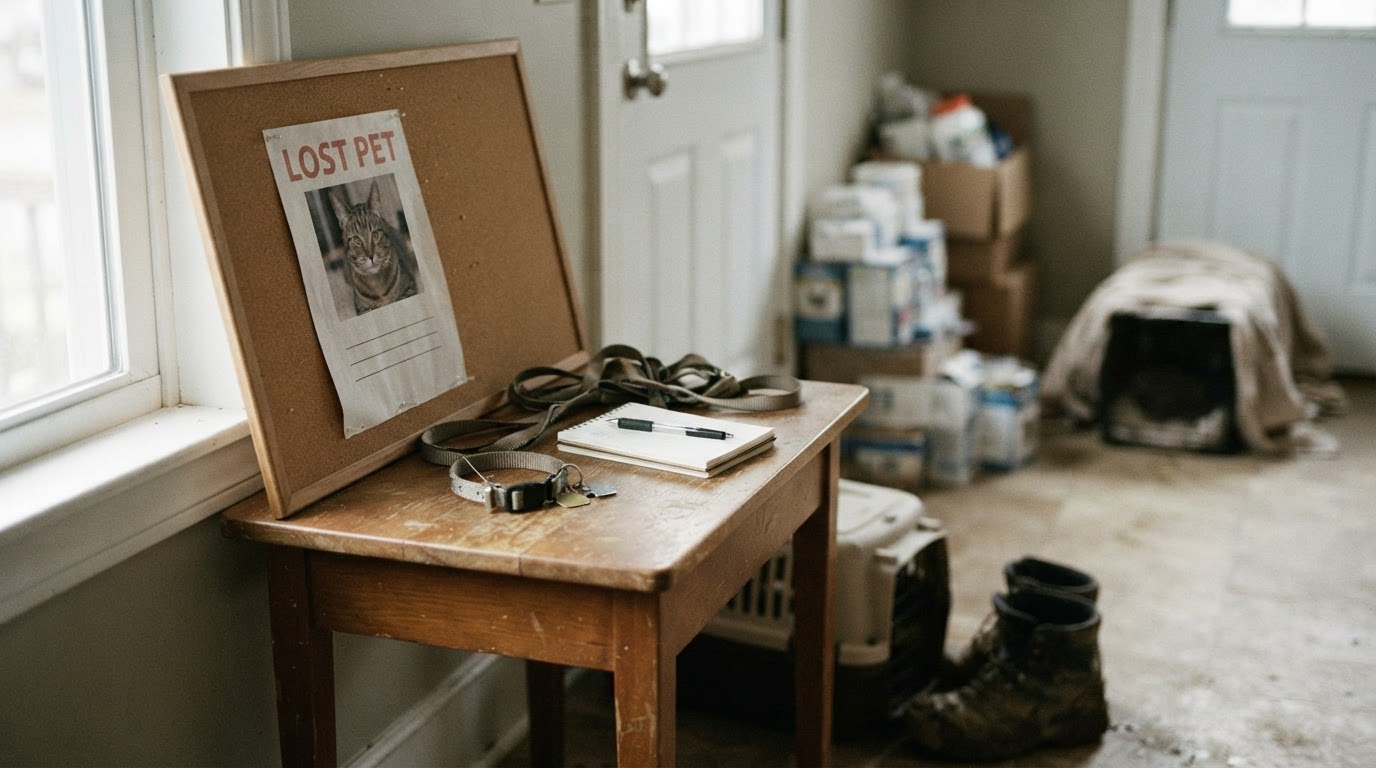
Find a lost pet after a disaster or evacuation: first-48-hour search tactics, scent stations, shelter and microchip paperwork, posters, and cat trapping.
This article contains affiliate links. If you buy through these links, we may earn a small commission at no extra cost to you.
Most pets that go missing in a disaster turn up within a mile or two of where they were last seen, and the ones that come home do so because their owner worked a system. The first hour is a quiet local search. The next 48 are a scent station, dawn and dusk patrols, and reports filed in person at every shelter. Here is the order that works.
The First Hour: Search Local, Stay Quiet
A panicked animal reads pursuit as a threat and runs farther. Walk, do not sprint, call the name calmly, stop, and listen. A dog that can hear you often circles back on its own. Dogs and cats disappear differently. A dog runs from the noise and stops at the first familiar-smelling place. A cat does not run far; it hides. Check under decks, sheds, crawl spaces, storm drains, and parked cars before you drive anywhere.
Cover the immediate blocks now, at dusk, and tomorrow morning. Most reunions start with a neighbor, so knock on doors and leave your number.
The First 48 Hours: Scent, Dawn, Dusk
Put a scent station at the door, or where the house used to be: an unwashed T-shirt, the animal's bedding, a favorite toy. Familiar smell guides an animal home even when the building is gone. Add food and water, unless the area has bears or coyotes.
Search at dawn and dusk, when missing animals are most active. A hands-free light helps: the Petzl Tikkina Headlamp (300 Lumens) is about $20 and 300 lumens sweeps yards and ditch lines. Bring treats and a leash.
Keep returning to the property for days; animals circle back to the site of the house even after fire or flood. Mark searched areas on a paper map. If you cannot search, find someone who can; twice a day for a week beats one all-night panic.
File the Paperwork the Same Day
By the end of day one, report the animal to county animal control, area shelters, and every vet clinic in range, with a recent photo, a description including distinguishing marks, and the microchip number. Visit in person every day or two; phone lists go stale and a face at the counter is remembered. Holding periods run a few days to a week before an animal is moved or adopted; local law sets the exact timeline. Ask the shelter for your animal's deadline and treat it as the date your daily visits must beat. Keep rabies and vet records handy; shelters require proof of vaccination to release an animal.
The microchip works only if the registry has your current phone number. Stale contact info is a top reason chipped pets never make it home; confirm the number while you search.
Posters That Get Calls
A poster must be readable from a moving car: big "LOST DOG", then breed and size, then a reward and phone number. Add tear-off tabs. Hang copies at gas stations, vets, feed stores, and shelters in neighboring towns, and laminate them.
A specific reward draws more calls than the word "reward". Do not put your home address on the poster. Post online the same day: local lost-pet groups, neighborhood apps, shelter found lists. Check the found listings too; finders often post there first. Use a face shot and a full-body shot; shelters match by photo more than name.
Cats Hide Instead of Run
A cat that will not come out needs a humane trap, not patience at arm's length. A 32-inch single-door cage like the Havahart Large 1-Door Live Animal Trap (1079SR) is baited with tuna or mackerel and covered with a towel so the trap reads as a cave. A tug on the trigger plate drops the door without hurting the animal. Skittish cats move after dark, so a quiet midnight check is part of the routine. Do not grab a hiding cat. A scared cat turns a rescue into scratches and a second bolt. Trap it or wait; the food station brings it back night after night.
After Fire and Flood: Check Beyond Your Town
Large disasters scatter animals across a region and shelters transfer them between facilities, so a pet can surface a hundred miles away. Check the found-photo galleries of every shelter in the region daily and ask where transfers go.
Some counties run reunification events, a day when impounded animals are shown in one place; ask animal control. Keep checking the property itself; returning pets head for where the house stood, no matter what it looks like now.
The Scam You Will Meet
Lost-pet posts attract scammers. The pattern: we have your dog, send money and we will release it. Never pay before proof. Ask for a current photo, a video, or a detail only you would know, the scar on the left ear, the blue collar. Legitimate finders do not demand payment up front.
Prevention Is the Cheapest Search
The ID layer wins this before anything happens. A panicked dog backs out of a flat collar in seconds, so a vest harness carries tags better: the Kurgo Tru-Fit Smart Dog Harness is escape-resistant and holds the ID on a ring that stays put. Add a registered microchip with a current phone and three current photos of each animal, printed into the grab-and-go document binder.
Check tags once a month; engraved tags wear smooth and that is the tag that fails you at the shelter counter. A Bluetooth tracker is the modern answer: an Apple AirTag 4-Pack (2nd Generation) on the harness lets the Find My network narrow a search to a doorway in a shelter lot, then the tag's sound leads you the last few feet.
When You Find Them
Approach low and sideways, offer food, and do not grab; a hurt or terrified animal will bite the hand that rescues it. Transport a found pet enclosed, not loose in the car: the Sherpa Original Deluxe Travel Pet Carrier is the airline-approved box shelters recognize, and a known carrier is calmer than a lap. Then get a vet once-over; dehydration and parasites do not announce themselves. The pet first aid guide covers the first minutes.
The system runs from memory: quiet local search, scent and scheduled patrols, paperwork in person every day, posters everywhere, and a trap for the cat that will not come out.
Quick Picks for the Search
- ID layer: Kurgo Tru-Fit Smart Dog Harness vest harness with tag rings, ~$25
- Bluetooth backup: Apple AirTag 4-Pack (2nd Generation) 4-pack on a harness clip, ~$89
- Dawn and dusk light: Petzl Tikkina Headlamp (300 Lumens) hands-free, ~$20
- Found-pet transport: Sherpa Original Deluxe Travel Pet Carrier enclosed carrier, ~$48
Start with the emergency pet kit so the ID, photos, and carrier exist before the disaster does; the search is shorter when the paperwork is done.