
Pet First Aid: Dog and Cat CPR, Bleeding, Choking, and When to Drive to the Vet
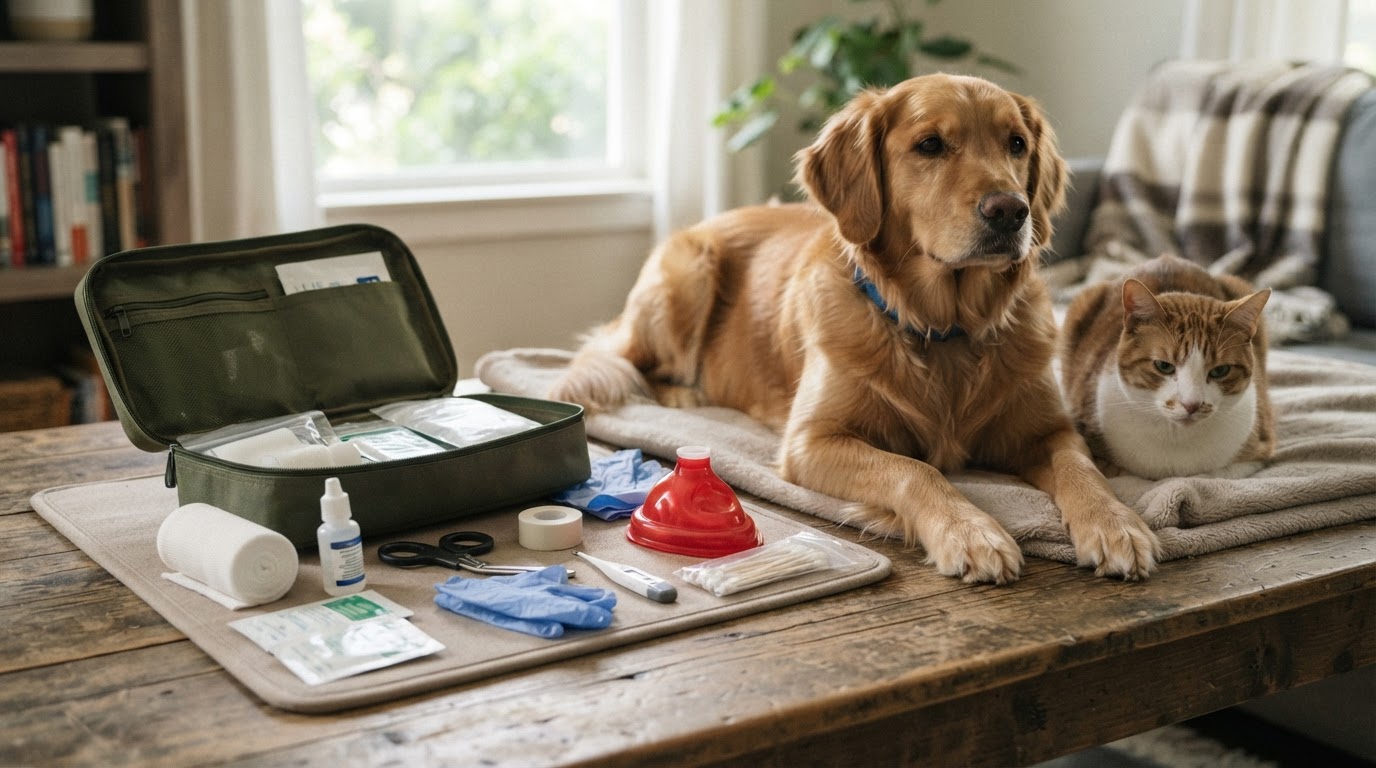
Pet first aid for dogs and cats: muzzle first, then CPR ratios, bleeding control, choking sweep, and the heat stroke signs that mean drive now, not wait.
This article contains affiliate links. If you buy through these links, we may earn a small commission at no extra cost to you.
A dog with a torn pad or a cat that has been hit by a car is going to be scared, in pain, and likely to bite the hand trying to help. Pet first aid starts with a muzzle, not a bandage, because the family Labrador who has never growled will absolutely growl when you press on a wound. The emergency pet kit article covers what to pack; this one covers what to do once you are kneeling next to the animal.
Muzzle First, Then Everything Else
Any pet in pain can and will bite, even the gentle one. A basket-style muzzle like the Baskerville Ultra Dog Muzzle, Size 5 lets a dog pant and drink while it stays on, which matters because a muzled dog that overheats is a new problem on top of the original one. Fit it to your dog at home in calm conditions, so the first time it goes on is not the worst hour of the animal's life. Cats and short-snouted breeds cannot wear a basket muzzle safely; wrap the head in a towel so only the wound is exposed, and keep your face away from the teeth. Skip the muzzle if the pet is vomiting, seizing, or struggling to breathe.
CPR: Different Numbers Than Human CPR
Pet CPR follows the same idea as human CPR (compressions to keep blood moving, breaths to keep oxygen in the lungs) but the numbers are not the same. A pet-first-aid quick reference like the Pet First Aid & CPR Quick Reference (Fleck) is sized to fit a glove box and written to be read mid-incident, not studied in advance. The ratios:
| Animal | Compressions per minute | Compression depth | Hand position | Breath ratio |
|---|---|---|---|---|
| Dog over 30 lb | 100-120 | 1/3 to 1/2 chest depth | Side, over the widest part of the chest | 30 compressions to 2 breaths |
| Dog under 30 lb | 100-120 | 1/3 chest depth, one hand | Side, just behind the elbow | 30 to 2 |
| Cat | 100-120 | 1/3 chest depth, thumb + 2 fingers | Side, just behind the elbow | 30 to 2 |
For cats and small dogs, use the one-hand cardiac pump: thumb on one side of the chest, fingers on the other, squeeze to about a third of its depth at 100-120 per minute. Check for a pulse and breathing every two minutes. After 10 minutes of CPR with no response, the outcome is unlikely to change; that is the moment to stop and drive.
Bleeding and Cuts
The rule is the same as for humans: direct pressure, then more pressure. Press a clean cloth or gauze pad firmly on the wound for at least three minutes without lifting it to peek. Lift early and you break the clot that is forming. If blood soaks through, add more layers on top; do not remove the soaked ones.
What you do not do matters as much. Skip hydrogen peroxide on a deep wound; it damages tissue and slows healing. Do not apply a tourniquet unless you have been trained. Do not give any human medication unless your vet has specifically told you the drug and dose: ibuprofen is toxic to dogs in small amounts, acetaminophen destroys cats' red blood cells, and aspirin doses for animals differ from people.
For pad cuts on dogs, rinse the paw with cool water to see how deep it is, then wrap with self-adherent vet wrap over a non-stick pad. The wrap sticks to itself, not to fur, which matters at removal time.
Choking
A choking pet paws at the face, gags, and may panic. The two-step rule:
- Look first. Open the mouth and look. If you can see the object, sweep it out with a finger. If you cannot see it, do not sweep blind; you may push it further in.
- If you cannot see it, stand behind the pet, lift the back legs or hold the hindquarters up for a small dog or cat, and give five firm back blows between the shoulder blades. Gravity plus the blows dislodge what your finger cannot reach.
If the pet collapses, attempt CPR as above; chest compressions can sometimes move the obstruction. Drive to the emergency vet while you work.
Heat Stroke: Cool Water, Not Ice
A dog left in a parked car on an 85-degree day reaches a lethal body temperature in under 10 minutes. Signs are heavy panting, drooling, bright red gums, stumbling, and collapse. The instinct is to throw the animal in ice water; the right move is cool, not cold. Ice water constricts surface blood vessels and traps heat inside. Run cool tap water over the animal, especially the belly, paws, and groin, and drive to the vet with the air conditioning on. Even if the dog seems to recover, internal organ damage can show up hours later. Cats rarely get heat stroke but hide it until they cannot; the same cooling rules apply.
When to Drive and When to Call
If the animal is not breathing, bleeding heavily, has been hit by a car, has eaten something toxic, or is showing heat stroke signs, you drive. Call the emergency vet on the way so they are ready when you arrive. For minor cuts and limping, calling first is fine.
What Goes in the Pet First Aid Pouch
The full packing list is in the emergency pet kit article; the first aid layer is its own short list. Saline wound wash, a roll of self-adherent vet wrap like the Medline Self-Adherent Cohesive Wrap Bandage, 4 in x… (about $30 for 18 rolls), non-stick gauze pads, MEUUT Medical Scissors 2-Pack Trauma Shears, a tick removal tool like the The Original Tick Key Tick Detaching Device, Orange (about $12), and a basket muzzle sized to your dog. The angled blunt tip slides under bandages and matted fur without poking the animal, and the two-pack runs about $9: one pair stays in the pouch, one in the house kit. Add a compact reference: the Pet First Aid & CPR Quick Reference (Fleck) is sized to read with shaking hands. If you would rather not assemble the pouch, the Dr. Brahmsy Pet First Aid Kit is vet-reviewed and comes with wound wash, a tick tool, and a care guide. Whichever you pack, the rule is the same: muzzle first, then everything else.
For the human side of bleeding control, the stop severe bleeding guide covers the same pressure-and-elevation logic. For the moment the emergency ends and the cleanup starts, the flood recovery and mold safety article covers how to bring a pet home safely after standing water is gone.