
Emergency period kit: what to pack and how to manage without running water
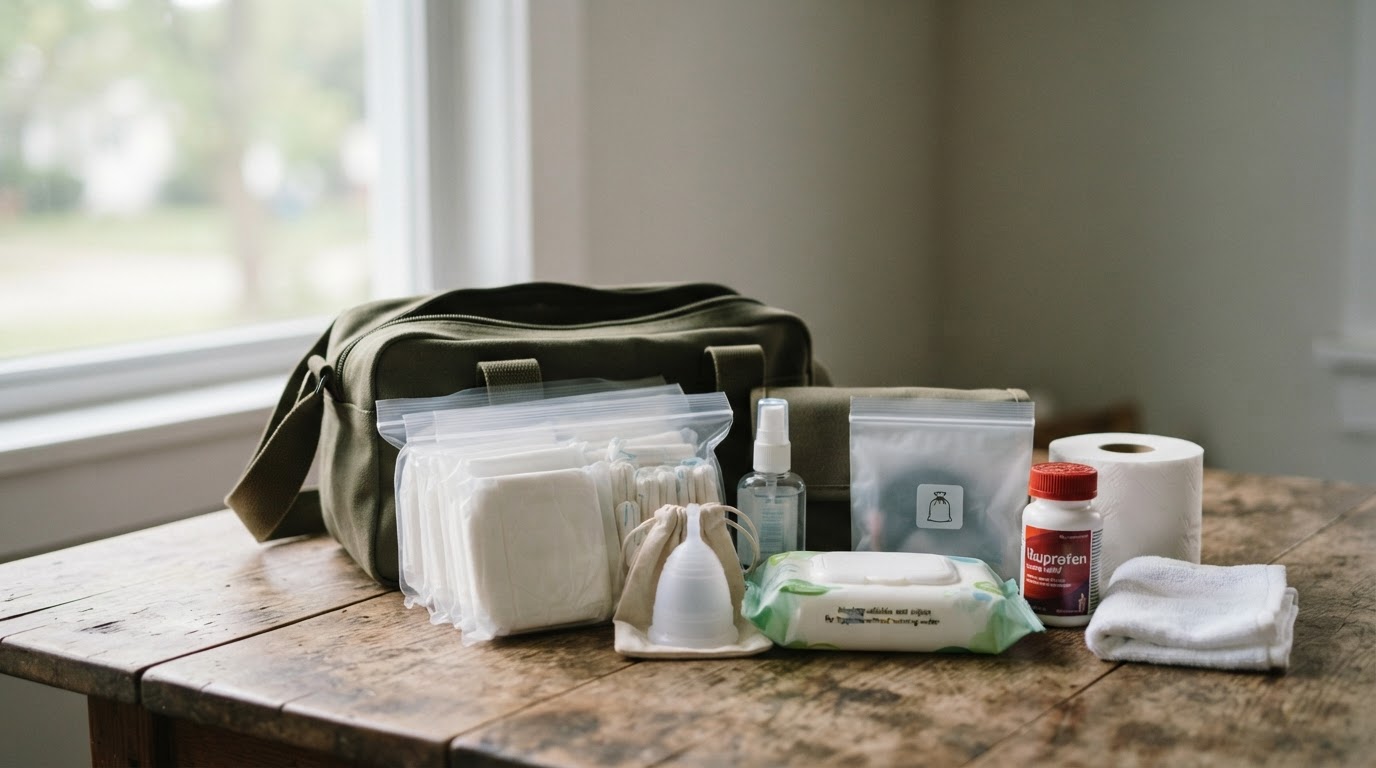
Build an emergency period kit: supply math for a full cycle, hygiene without running water, cramp relief, and safe disposal during outages and evacuations.
This article contains affiliate links. If you buy through these links, we may earn a small commission at no extra cost to you.
Build the kit for one full cycle per person, plus a spare, and keep a travel pouch in the go-bag. FEMA's emergency supply checklists list feminine supplies and personal hygiene items among kit basics; the working version of that line is pads or tampons for your heaviest days, a pack of no-rinse wipes, hand sanitizer, spare underwear, heat for cramps, and two sealable bags for disposal.
Periods do not read the weather report. A storm, a flood, or a multi-day outage arrives whenever it arrives, and the supplies are whatever was in the cabinet. That part is fixable: a period kit costs less than most single items in a go-bag and takes one afternoon to assemble. This guide covers the quantities, managing without running water, and the warning signs worth a call to a doctor.
If the water goes off entirely, our water outage guide covers the first response: drinking water gets priority, and hygiene leans on wipes, sanitizer, and a station set up before anyone needs it.
What goes in an emergency period kit
- Pads, tampons, a cup, or period underwear: one full cycle per person who menstruates, plus a spare cycle stored at home.
- Two absorbencies if you use tampons. The FDA says to use the lowest absorbency that controls your flow, and that lower absorbency lowers toxic shock risk.
- Wipes and hand sanitizer. The FDA's tampon guidance starts with washing your hands before and after every change; when taps are dry, no-rinse wipes and sanitizer carry that job.
- Heat: a hot water bottle or air-activated hand warmers, for cramps when the heating pad is dead.
- Spare underwear, two sealable bags for disposal, and a small pouch so the whole kit travels as one unit.
How much is one cycle
The NHS says to change pads or liners about every 4 to 6 hours, depending on flow. The FDA says tampons every 4 to 8 hours, and never a single tampon for more than 8. Run that cadence across a five-day period and you land around 20 to 30 changes: a box of pads or tampons per person is a sane floor, not a luxury.
What moves the number: flow, duration, and product choice. The first days of a period often run heavier, a cup replaces a box of pads but needs clean water to rinse, and a heavy flow burns through supplies faster. Pack for your heaviest normal cycle, not an average one. If you are stocking pads, the Always Ultra Thin Size 2 Super Pads with Wings… is unscented, Size 2 with wings, and costs about $15 for a 32-count box: one full cycle with a few spare.
Managing without running water
Set up a changing station in whatever bathroom still works: supplies, wipes, sanitizer, a small bottle of water for rinsing, and a lidded bin lined with a bag. That way nobody is rummaging through a dark house mid-change.
- Hands before and after every change. This is the FDA's first rule and it does not bend during an outage. If water is being rationed, our two-week water budget breaks down what you can spare; hands get sanitizer, surfaces get wipes, and the splash bottle stays for the station itself.
- Clean up with a wipe, not a washcloth. CDC menstrual hygiene guidance says to keep the area clean and skip scented products. The Combat Wipes ACTIVE Outdoor 2-Pack Wet Wipes… is a no-rinse body wipe, 50 cloths across two travel pouches, about $15 at review; park one pouch at the station and one in the go-bag.
- Never flush anything but toilet paper. The NHS notes pads and liners cannot be flushed, and a system that is barely moving has no margin for anything else. Bag, seal, and move on. If the toilet itself is out, the bucket system in our emergency toilet guide takes over, and period waste goes out with the rest of the solid waste.
Cramps and comfort without electricity
Heat is the workhorse for cramps. A HomeTop Classic Rubber Hot Water Bottle holds heat for hours and costs about $13; fill it with hot but not boiling water, per the bottle's own fill instructions, wrap it in a towel, and rest it against your lower back or abdomen. You can still heat water in an outage: camp stove, or the hot water tank.
No way to heat water? Hand warmers do the job. HotHands Hand Warmers Value Pack, 10 Pairs are air-activated packs that run for hours in a pocket or waistband, and a 10-pair box runs under $8. Follow the package instructions: keep them off bare skin for long stretches and do not sleep pressed against one.
Pair heat with whatever pain relief you normally use, at its label dose, and keep drinking. If the pain is far worse than your normal or bleeding suddenly turns much heavier, call your doctor instead of waiting it out.
Disposal when plumbing or pickup is down
- Used products go into a bag, then a lidded bin, kept away from food and drinking water storage. Double-bag if it will sit for days.
- If you are running the bucket toilet system, period waste goes out with the rest. Keep a dedicated small bin near the station so it never backs up into the kitchen stream.
If you evacuate
The pouch version of the kit lives in the go-bag, not the bathroom cabinet: three days of products, wipes, sanitizer, two bags, spare underwear. Shelters often stock menstrual products, but sizes and absorbency vary; do not plan to find your brand on day three.
Pack a full cycle even if your period is not due this week; evacuation timing and cycle timing never negotiate. And show everyone in the house where the pouch lives now, not while the storm is arriving.
Warning signs that need medical care
The FDA prints this warning list on every tampon box: sudden high fever (usually 102°F or higher), vomiting, diarrhea, fainting or feeling faint when standing, dizziness, or a rash that looks like a sunburn, during or soon after your period. If that cluster shows up, remove the tampon and get medical care immediately. Also per the FDA: do not use tampons for any non-period bleeding or discharge.
Bleeding that is much heavier than normal for you, especially with dizziness, is worth urgent care rather than a wait-and-see.
Period kit checklist
- One full cycle of products per person, plus a spare at home
- Wipes, sanitizer, and a rinse bottle at a changing station
- Heat for cramps: hot water bottle or hand warmers
- Two sealable bags and a lidded disposal bin
- Travel pouch in the go-bag with three days of supplies
- Everyone in the house knows where the kit lives
Frequently asked questions
How many pads or tampons should an emergency kit have?
Enough for one full cycle per person who menstruates, plus a spare. NHS guidance is to change pads or liners about every 4 to 6 hours, and the FDA says change tampons every 4 to 8 hours and never longer than 8. That works out to roughly 20 to 30 changes across a five-day period, so a box of pads or tampons per person is a reasonable floor for the home kit. Add your heaviest-day absorbency plus one backup option.
Can I flush pads or tampons when the plumbing is stressed or the power is out?
No. Pads and liners cannot be flushed (NHS), and used menstrual products are a common cause of clogs even when everything is working. During an outage or a sewer problem the margin is zero. Bag used products, seal the bag, and put it in the trash or your emergency bucket system, kept away from food and drinking water.
What if I use a menstrual cup and water is scarce?
Cup care takes clean water: wash your hands before and after handling it, and rinse the cup with clean water between changes. The deeper cleaning steps follow the maker instructions, and the FDA hand-hygiene rule applies to every menstrual product. When water is scarce, pads are the simpler option for the duration, so pack a few even if you normally use a cup.