
What to Do When the Toilet Won't Flush: The Emergency Bucket System
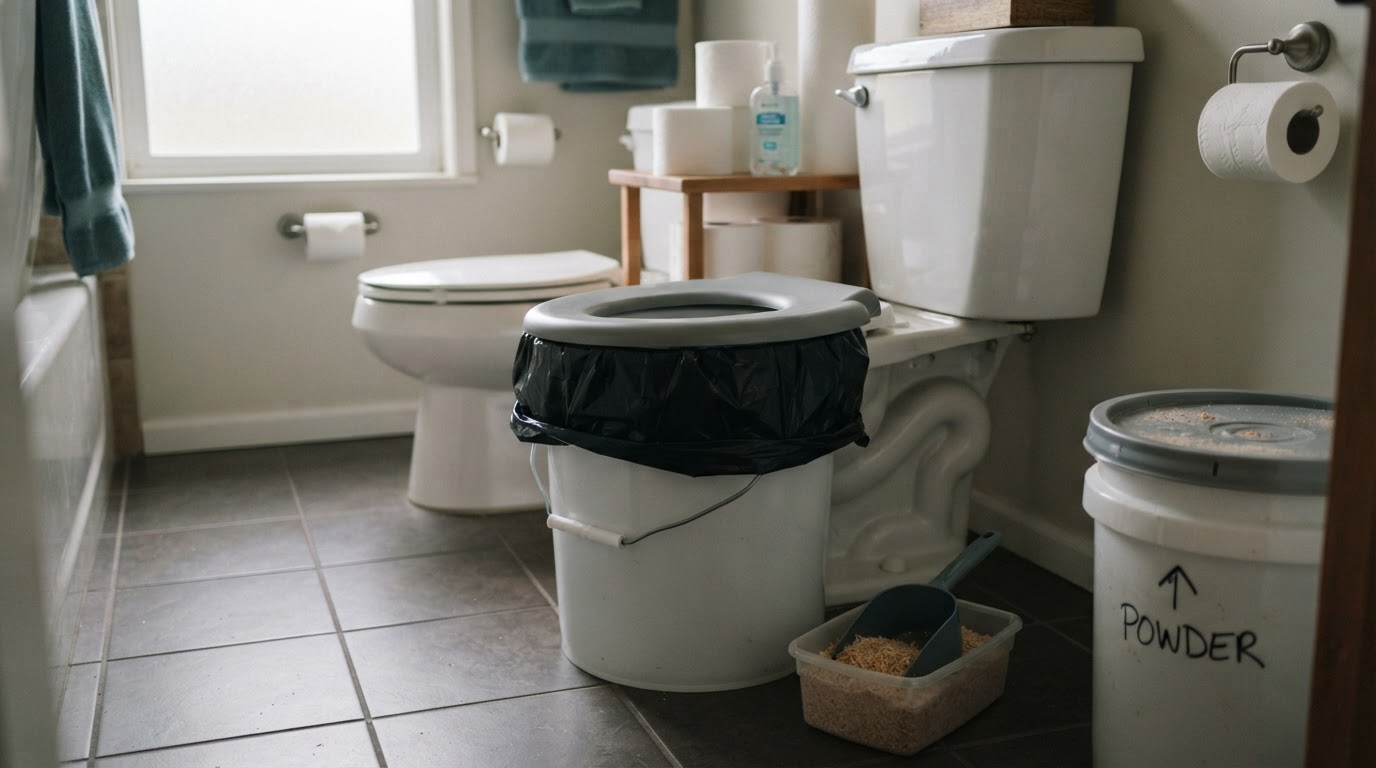
Toilet won't flush during an outage? The one-flush bucket trick, the 5-gallon twin-bucket emergency toilet, and safe waste disposal for weeks, not days.
This article contains affiliate links. If you buy through these links, we may earn a small commission at no extra cost to you.
The direct answer, if the toilet just stopped working: build the 5-gallon emergency bucket system. A 5-gallon bucket lined with a heavy trash bag, a cup of kitty litter after each use, and a tight-sealing lid. That is the setup that carried households through the 2026 outage season, and the bucket and seat cost about $43 together before you add bags and litter.
When the power goes, most municipal water systems lose pressure within a few hours, and a toilet flushes only because gravity moves 1.6 to 3.5 gallons of water per use. No pressure, no flush, usually no warning. A modern toilet is the highest-water-use thing in a house, roughly 30% of indoor use, so it is also the first thing to stop. The plan is small.
How Long Your Toilet Actually Lasts
- Pressure still on: your toilet works normally until the utility loses pressure, which can be hours or days. The moment you hear an outage is coming, fill the bathtub and every clean jug.
- Tank water only: the reservoir holds 3 to 5 gallons, enough for 1 to 3 flushes. Pour that water straight into the bowl to trip a flush, and refill the tank from your stored supply.
- No water at all: now it's the bucket.
Two tricks stretch a working toilet further. Pour 1 to 2 gallons into the bowl, not the tank, to flush: the sudden weight siphons it like a normal flush. And keep everything except waste and toilet paper out of it, because a toilet on gravity water has no margin for clogs.
Build the Emergency Toilet (About $43)
- A 5-gallon bucket with a tight-fitting lid. The lid seals smells and keeps flies out. The METAPACK 5 Gallon Bucket with Screw-on Lid is food-grade and BPA-free with a screw-on lid and steel handle, about $28. A snap-on seat like the campersville Portable Toilet Seat & Lid for… adds a real seat for about $15, so the bucket and seat together come to about $43.
- Heavy-duty trash bags. Skip flimsy kitchen bags. ToughBag 55-60 Gallon Heavy Duty Trash Bags, 50… is a 50-pack of contractor-grade 3-mil bags, about $24. For a bag built for this job, Reliance Double Doodie Toilet Waste Bags are double-bagged with gelling powder and an odor barrier.
- Kitty litter or wood shavings. A cup per use absorbs liquid and controls odor. Fresh Step Extreme Clay Non-Clumping Cat Litter, 21… is plain non-clumping clay in a 21-pound jug, about $27.
- Stash it now. Bucket under the bathroom counter or in a closet, with enough bag and litter for 15 to 20 uses. That is roughly a week for a family of four.
- Add the paper. The bucket changes where waste goes, not what you wipe with, and toilet paper is the first thing stores sell out of when a storm or outbreak hits. A Amazon Basics 2-Ply Soft Toilet Paper, 30 Rolls… bulk pack (30 rolls, about $21) stores on a closet shelf and lasts a family of four about a month. Buy one pack beyond your normal supply and rotate it like any other consumable.
After each use, add the scoop of litter and close the lid. When the liner is about a third full, tie it closed and start a new one.
Keep liquids and solids separate. Liquids are what make a liner heavy and smelly, and they are the easy part to dispose of. Urinate into a dedicated bottle, then dump it down a now-waterless toilet or a designated outdoor spot. Households that run the two-stream method get two or three times as long out of each liner.
Keep Your Real Toilet Going Longer
You can keep using the real toilet as long as you have water to pour into it. A manual flush is a fast pour of 1 to 2 gallons into the bowl. The Reliance Aqua-Tainer 7 Gallon Water Container… is a 7-gallon jug with a spigot you keep as your dedicated flush-and-clean supply. A family of four gets 10 to 14 manual flushes out of a single fill.
Keep Drinking Water Separate
The rule that keeps people safe: flush water and drinking water are never the same supply. The 1 gallon per person per day you store for drinking does not cover flushes, which is why the water line of an emergency setup has two jobs and two products.
| Product | Price | What it does | Best for |
|---|---|---|---|
| Reliance Aqua-Tainer 7 Gallon Water Container… | ~$52 | Holds 7 gallons, spigot, refillable | The flush and cleaning supply |
| Sawyer Squeeze Water Filtration System | ~$46 | Filters 100,000 gallons, fits standard bottles | Making any water source drinkable |
| LifeStraw Personal Water Filter | ~$13 | Filters 1,000 gallons, weighs 2 oz | One per person as a pocket backup |
The Sawyer Squeeze Water Filtration System attaches to standard water bottles and filters over 100,000 gallons, so when stored water runs out you can draw from your water heater's 40 to 80 gallons, the toilet tank from the top, or even a creek and drink safely. Our emergency water sources guide walks through where to find every gallon. The LifeStraw Personal Water Filter weighs 2 ounces and filters 1,000 gallons, the just-in-case per person.
Hygiene Without Running Water
Waste is not the only problem; skin and hands are. The routine that actually works:
- Hand washing still comes first. Wet hands, soap, scrub 20 seconds, rinse from a cup. Soap and water beats sanitizer when you have it.
- Alcohol-based hand sanitizer, 60% or higher, is the backup for when water is genuinely scarce. The Purell Hand Sanitizer Gel, 1L Pump Bottle… is the standard: 70% alcohol gel with a pump top, about $19 a liter.
- Bathing runs on 1 to 2 gallons, not 30. A sponge bath with a cup for rinsing uses 1 to 2 gallons per adult, versus 30 to 50 for a shower. You need to be clean enough to stay healthy, a much lower bar.
- Sanitize the bucket line after you empty it with a spray solution of 1 tablespoon of unscented bleach per gallon of water. Never mix that bleach water with anything you drink. Clorox Disinfecting Bleach, 121 oz is the standard refill, 7.5 percent for about $16. Mix it in a sprayer built for bleach: the Zep Bleach Resistant Professional Sprayer Bottle… (about $17 for two) is rated for bleach and other chemical solutions, with one bottle for the bucket kit and one for the regular cleaning supplies.
Disposal: Where It Goes After
- Tie each liner closed as it fills and store sealed bags in a garage or shed until service returns. In an apartment, plan the pack-out route in advance: sealed bags to a balcony, a stairwell landing, or a covered dumpster.
- Never dump raw sewage into a yard, storm drain, or creek.
- If a long-term situation forces burial, dig 6 to 8 inches down, well away from any water source.
- If you have no disposal site at all (an apartment, a hardpan yard, a rented room), the bucket build leaves you holding sealed bags with nowhere for them to go. A self-contained toilet keeps the waste in its own tank instead: the VINGLI Portable 5.3 Gallon Camping Toilet with… holds 5.3 gallons with a carry bag, then empties into a working toilet or an RV dump station when you can get to one. The current listing has no featured offer, so check the live price.
The pattern from every major 2026 outage is the same: the first day is chaos, the second day is the sanitation problem. Ten minutes and about $43 of gear now is the difference between still having a bathroom and not having one. Do it on a sunny Tuesday, while the water still runs.
Checklist (Print and Keep With the Bucket)
- 5-gallon bucket + tight lid
- Heavy trash bags (15+)
- Kitty litter or wood shavings
- Toilet paper: one bulk pack in the stash
- Unscented bleach + spray bottle
- 60%+ alcohol hand sanitizer
- Flush supply: 7+ gallons stored
- Drinking water separate: filter + 1 gal/person/day
Frequently asked questions
What do I do if the toilet won't flush during an outage?
You can still flush once by pouring a bucket of water directly into the bowl. For longer outages, switch to the twin-bucket system: liquids and solids separately, with sawdust or kitty litter.
How do I make an emergency toilet?
A 5-gallon bucket, a pool-noodle seat, heavy trash bags, and kitty litter or peat moss. Solids get cover material after each use; liquids go in a separate bucket diluted 1:10.
Where do I dispose of emergency toilet waste?
In a working sewer or septic system when service returns. If the outage is extended, bury solids 6 to 8 inches deep at least 200 feet from any water source.