
Sewage Backup in Your Home: What to Do When the Toilet Backs Up
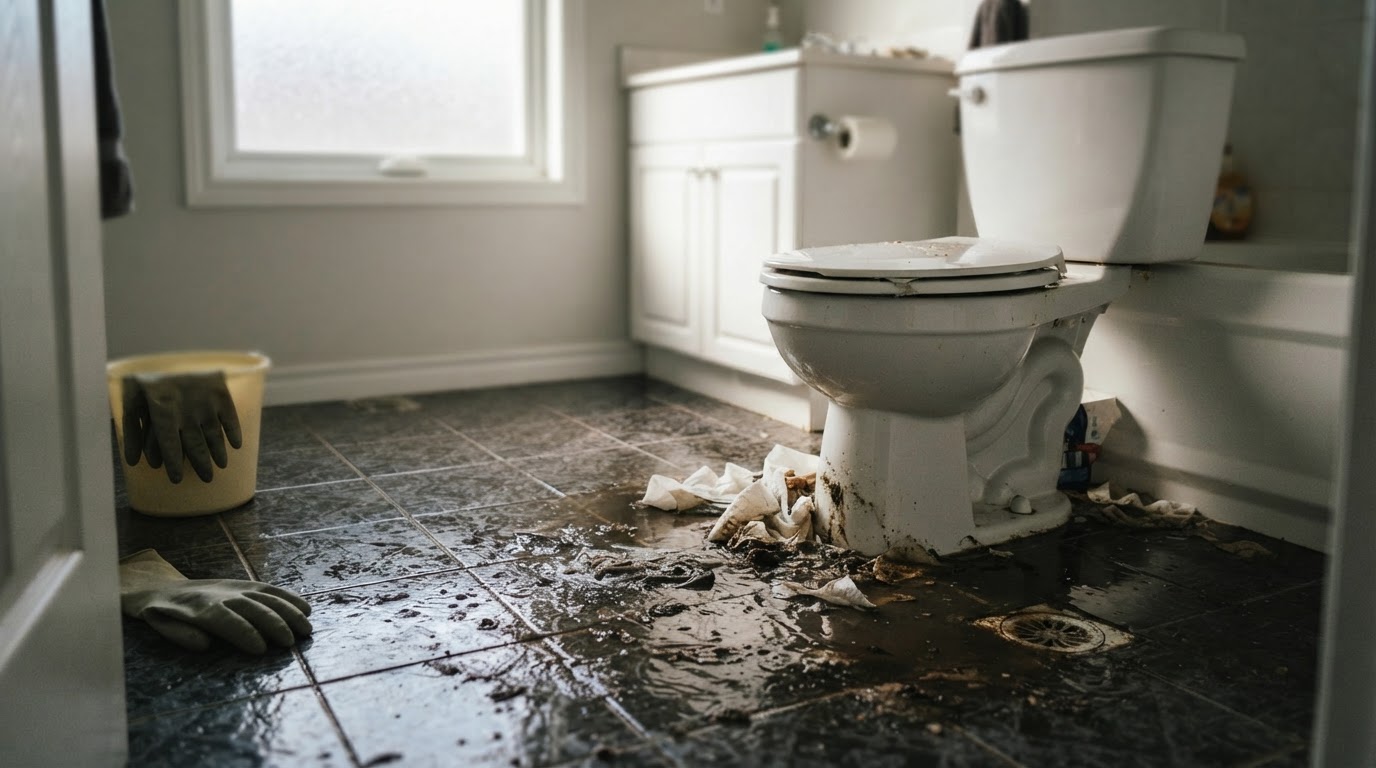
Sewage backing up through a toilet or floor drain is a health emergency as much as a plumbing one. First moves, the cleanup order, and when to call for help.
This article contains affiliate links. If you buy through these links, we may earn a small commission at no extra cost to you.
Sewage backing up through your lowest fixture is a health emergency as much as a plumbing one. The IICRC, the restoration industry's standards body, classifies sewage and waste-line backflows as Category 3 water: grossly contaminated, handled as a biohazard rather than a mess. Two principles cover most of the response: stop making it worse, and clean in the right order.
Stop adding water first
Every flush, shower, laundry load, and dishwasher cycle pushes more through the same pipe. Whatever is causing the backup, you are feeding it. Stop water use in the whole house first, and tell everyone why.
Keep people and pets off the affected floor. If the backup is in a basement and standing water has reached outlets, cords, or appliances, do not wade in. The electrical-safety rule after floods is consistent: never enter standing water that may be touching energized wiring. If you can reach the breaker panel from a dry spot, cut power to the affected circuits. If the panel itself is wet, leave it and call an electrician.
Take photos from a dry spot before anything moves. Most standard homeowners policies exclude sewer backups unless you carry a water-backup endorsement; photos and receipts are what a claim runs on.
Figure out whose problem it is
The right phone call depends on where the blockage sits.
The whole street is backing up. If neighbors have the same problem, or the city has announced a main break or lift-station failure, the blockage is in the municipal line. Call the city's sewer department; they may tell the whole block to stop using water until the main is clear.
Only your house is backing up. The blockage is in your lateral line or a fixture branch. Roots, grease, and wipes are the usual culprits. The call is a plumber.
The basement floods through a floor drain. Floor drains sit at the lowest point of the plumbing, so they are the first opening a surcharged sewer pushes through. If you also have an ejector pump or an upflush toilet down there, a failed pump produces the same flood. That fix is a plumber plus a plan to keep that pump alive in an outage; the sump pump power-failure guide covers the backup options.
You are on septic. A backup usually means the tank is full, the outlet is clogged, or the drain field has failed. That call is a septic pumper.
Clean in this order
Once the flow has stopped, the cleanup has a fixed order. Skipping ahead is how contamination ends up in rooms that were fine.
1. Gear up. MedPride Powder-Free Nitrile Exam Gloves, Medium… and washable boots, at minimum. Anything that touches the water is contaminated, so keep the area off-limits to kids and pets until it is done.
2. Remove the water and the solids. Move what will move, and bag what came out of the drain. Porous materials that soaked up sewage do not get cleaned: carpet and pad, cardboard, particleboard, and drywall that is wet above the baseboard all get bagged and discarded. Heavy double-bag liners like Reliance Double Doodie Toilet Waste Bags are the honest tool; anything leaving the house should be double-bagged and tied.
3. Clean, then disinfect. One product at a time. This is the step with the mistake that can genuinely hurt you. Bleach is the right disinfectant, and the CDC's post-disaster guidance is 1 cup of household bleach to 5 gallons of water. The same guidance is blunt about the other half: never mix bleach with ammonia or any other cleaner; the combination releases toxic gas. Never use bleach on a surface you have not washed with soap and water first, either. Dirt burns up the bleach before it can disinfect anything. Keep one plain, unscented jug for the job: Clorox Disinfecting Bleach, 121 oz. Open a window, and ventilate while you work.
4. Dry it fast. Wet materials that stay wet start growing mold within a day or two. Run fans and a dehumidifier, and do not replace flooring or rebuild until everything is dry. The mold and flood recovery guide covers the dry-out and what has to be thrown away.
Contain it while you wait
If the backup is slow or keeps recurring while you wait for the fix, containment is on you.
- Do not use the affected fixture, and do not let guests use it either.
- A lidded bucket gets wet debris from the basement to the curb without trailing through the house: METAPACK 5 Gallon Bucket with Screw-on Lid. A screw-on lid keeps the smell in and the load from spilling.
- Block doorways with towels or plastic sheeting so water cannot wick into finished rooms.
- Elevate what you can. Anything that can sit on a table or shelf should.
When this is a 911 call, not a plumber
Most backups are a same-day plumbing problem. A few are emergencies:
- Water is rising fast and nothing stops it.
- Water near live electrical equipment, or a burning smell.
- Gas smell, or a backup that follows an earthquake or flood that may have broken the line.
- Someone in the house is immunocompromised, pregnant, or an infant, and the affected area cannot be sealed off.
For anything beyond a small, contained area, the cleanup belongs to a certified remediation crew rather than a homeowner with a mop. Category 3 water means protective equipment, containment, and disposal most households do not have on hand. Get the quote before you start; claims are easier when remediation has not already happened.
Prevent the next one
The hardware fix for a basement that backs up is a backwater valve, a check valve a plumber installs on the building drain. It closes when flow reverses, so a surcharged city main pushes sewage past your house instead of into it. If your basement has flooded through a floor drain more than once, ask a plumber about one.
The behavior fixes are cheaper. Do not flush wipes, including the ones labeled flushable; they do not break down like paper. Do not pour grease down a drain. Know where your cleanout is, so a plumber can reach a blockage without tearing the wall open. Keep the response kit in one place: gloves, a plain bleach jug, waste bags, and a lidded bucket. If the problem is the opposite one, no water at all, the emergency toilet guide covers that case.
A backup is a bad day, not a ruined house, as long as the water gets stopped, the cleanup runs in order, and the materials that cannot be saved get tossed instead of scrubbed.
Frequently asked questions
Is a sewage backup covered by homeowners insurance?
Usually not by default. Standard policies exclude sewer backups unless you added a water-backup endorsement, so check your declarations page before you assume you are covered. Photograph the damage and keep receipts before cleanup starts, because the claim runs on documentation.
Can I clean up a sewage backup myself?
A small, contained spill in an unfinished basement is a reasonable DIY job with gloves, boots, ventilation, soap, and a bleach solution. Anything larger, or anything that soaked into carpet, drywall, or a finished room, is a certified remediation job. Category 3 water is treated as a biohazard for good reason.
Why does the basement floor drain back up first?
It is the lowest opening in the plumbing system. When the sewer main or your lateral line fills up, water takes the path of least resistance, and that path is usually the floor drain at the bottom of the house.