
What to Do When the Water Goes Off: Low Pressure and Shutoffs (2026)
Water off or pressure dropped? The 15-minute response, how much emergency water to grab fast, and safe sanitation to hold until normal service returns.
This article contains affiliate links. If you buy through these links, we may earn a small commission at no extra cost to you.
When the water goes off, fill the bathtub first, save drinking water from the hot-water tank while pressure remains, and close every tap. Then divide what you have into drinking, cooking, flushing, and washing water. A 7-gallon container is easier to carry and rotate than a tub full of water, but the tub buys you time for toilets and cleaning.
Water rarely announces its departure. A main breaks, a treatment plant loses power, a hard freeze splits a line, and one morning the tap sputters, coughs air, and goes quiet. The households that ride this out comfortably have the first response written down: fill while pressure lasts, protect the pipes from backflow, and conserve the clean water for drinking. This guide covers those first fifteen minutes and the sanitation plan for a longer outage.
Pair it with our family communication plan and medication stockpiling guide. A water outage is harder on anyone who needs regular medication, mobility help, or a caregiver's daily check-in.
What to do when the water goes off: first 15 minutes
1. Fill everything, immediately, starting with the bathtub. When pressure drops, gravity drains the system fast. The tub is your largest container and it fills while pressure still exists; every other container you own comes second. A standard tub holds 40–60 gallons, most of it usable for flushing and cleaning even if you wouldn't drink it.
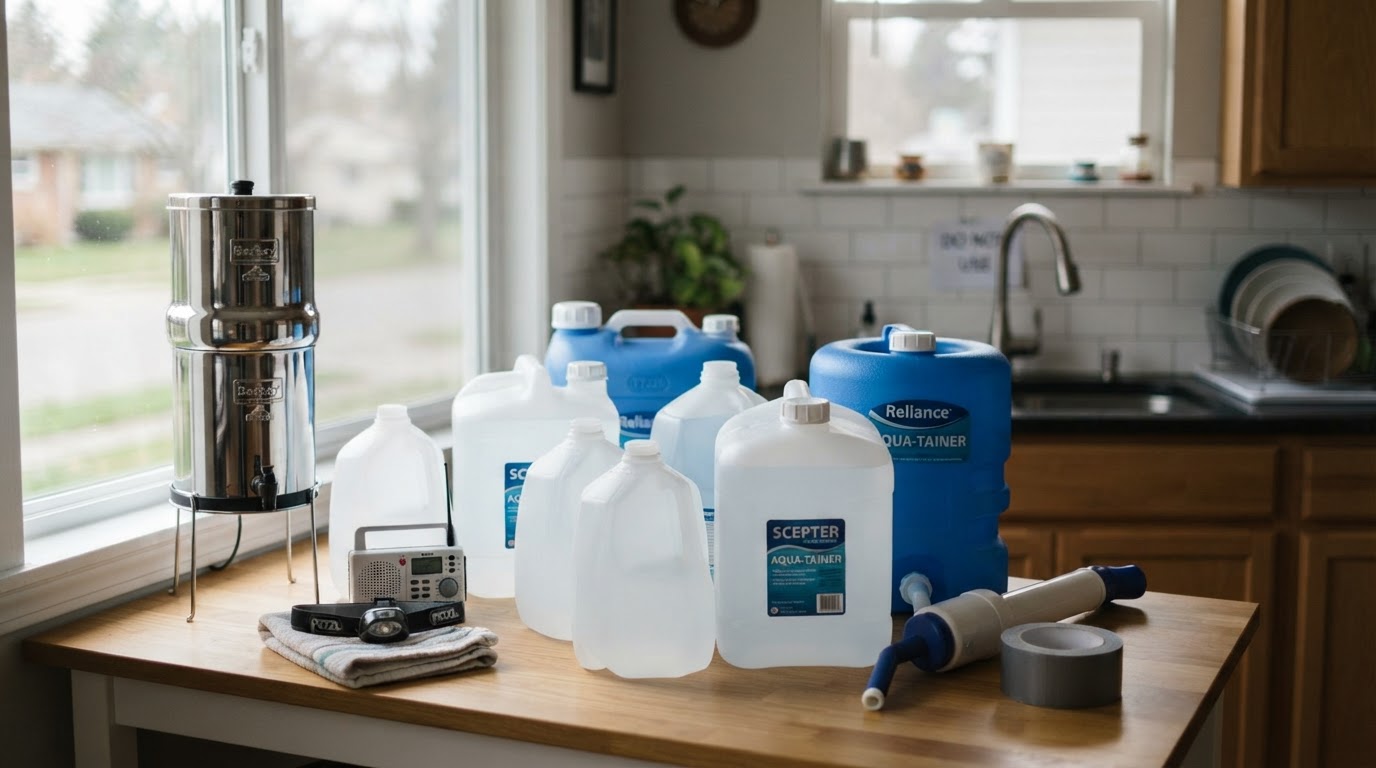
2. Grab your drinking water from the right places before they're gone. The hot water heater holds 30–50 gallons of drinkable water: shut off its cold intake (or power/gas) so it doesn't drain backward, and draw from the drain valve at the bottom. Toilet tanks (not bowls) hold another gallon or so if the water was clean. Ice cubes in the freezer count too. If you keep a Reliance Aqua-Tainer 7 Gallon Water Container… at home, fill it before pressure disappears and stage it by the kitchen. Its 7-gallon load is heavy, so plan where you will pour it instead of lifting it over a sink. Keep a clean container for drinking and a separate tub or bucket reserve for flushing.
3. Kill the taps. Open faucets can siphon contamination back into your pipes when the system depressurizes, and when service returns, the initial surge carries sediment and sometimes bacteria. Close everything; you'll run the cold taps to flush when the advisory ends.
Why Did It Go Off? The Cause Changes the Plan
- Main break nearby: usually 4–12 hours. Conserve what you filled; don't run laundry or dishwashers on return.
- Treatment plant power failure: hours to days, and likely followed by a boil advisory when pressure returns; treat every drop until officials clear it (the 1-minute boil rule).
- Frozen pipe in your house: shut the main valve (find it today, usually where the line enters near the water meter). Thaw toward the faucet, never an open flame.
- Municipal shutoff notice: they'll tell you the window. Fill first, then use normally.
Sanitation Without Running Water
This is where unprepared households fall apart fastest: smell, hygiene, and dignity go before thirst does:
- Toilets: one bucket-flush per bowl works once (pour ~2 gallons straight into the bowl). After that, build the twin-bucket system from our emergency toilet guide, 5 gallons, pool-noodle seat, trash bags, kitty litter.
- Hand hygiene: a pump bottle of Purell Hand Sanitizer Gel, 1L Pump Bottle… at every sink station, because handwashing stations are exactly what's broken.
- Dishes and washing: wash in a basin with heated (not boiled) water. A ust FlexWare Collapsible Sink 2.25 Gal holds 2.25 gallons and folds flat between outages, so it can serve as a dish basin or sponge-bath basin without taking permanent shelf space. Sanitize with a capful of unscented bleach per gallon, then air dry.
- Periods and personal care: an outage does not pause a cycle. Keep a small changing kit (products, wipes, a sealed bag) at the station you are still using, and see our emergency period kit guide for quantities, hygiene without running water, and disposal rules.
Drinking Water Discipline While It's Out
Budget what you grabbed: half a gallon of drinking water per person per day is the floor in FEMA and American Red Cross guidance, with more required in hot environments and by children, nursing mothers, and ill people; one gallon per person per day covers drinking, cooking, and hygiene combined. Cooking absorbs into that budget if you pivot to one-pot meals; pasta water counts as cooking water and the meal. Never ration below half a gallon of actual drinking water per person without sourcing more: our guides on emergency water sources at home (water heater, pipes, ice) and backing up the whole stack cover the next layer.
If stored water runs low and officials identify an alternate source as usable, Aquatabs 49mg Water Purification Tablets (30 Pack) can treat 1–2 liters in about 30 minutes. Keep that as a backup, not a blanket answer: purification tablets do not make fuel, chemical, or sewage contamination safe, and they do not override a boil or do-not-drink notice. Follow the local utility or health department's instructions first.
When Service Returns
Flush your cold taps for 2–3 minutes before drinking, run ice makers through two cycles and toss the batches, replace every filter cartridge (they trap the surge's sediment and bacteria), and check the water heater: if it was drained or the system ran dirty, flush it per the manual. Then restock what you used, the tub trick only works for people who still have a tub's worth of time before the next outage.
Frequently asked questions
What should I do first when the water goes off?
Fill the bathtub immediately while residual pressure lasts, then draw drinking water from the hot water heater (30–50 gallons via its drain valve) and close all taps so contaminated water isn't siphoned into your pipes.
How long does water stay safe in the hot water heater?
The tank volume (typically 30–50 gallons) stays drinkable for weeks if the tank was clean and sealed. Shut off its intake valve first so it doesn't back-drain into the empty mains, then draw from the bottom drain valve.
Can I flush the toilet when the water is off?
Once, by pouring about two gallons of water directly into the bowl. After that, switch to the twin-bucket emergency toilet system rather than wasting water on gravity-flushing a dry system.