
Pet Emergency Kit: What to Pack for Dogs and Cats in 2026
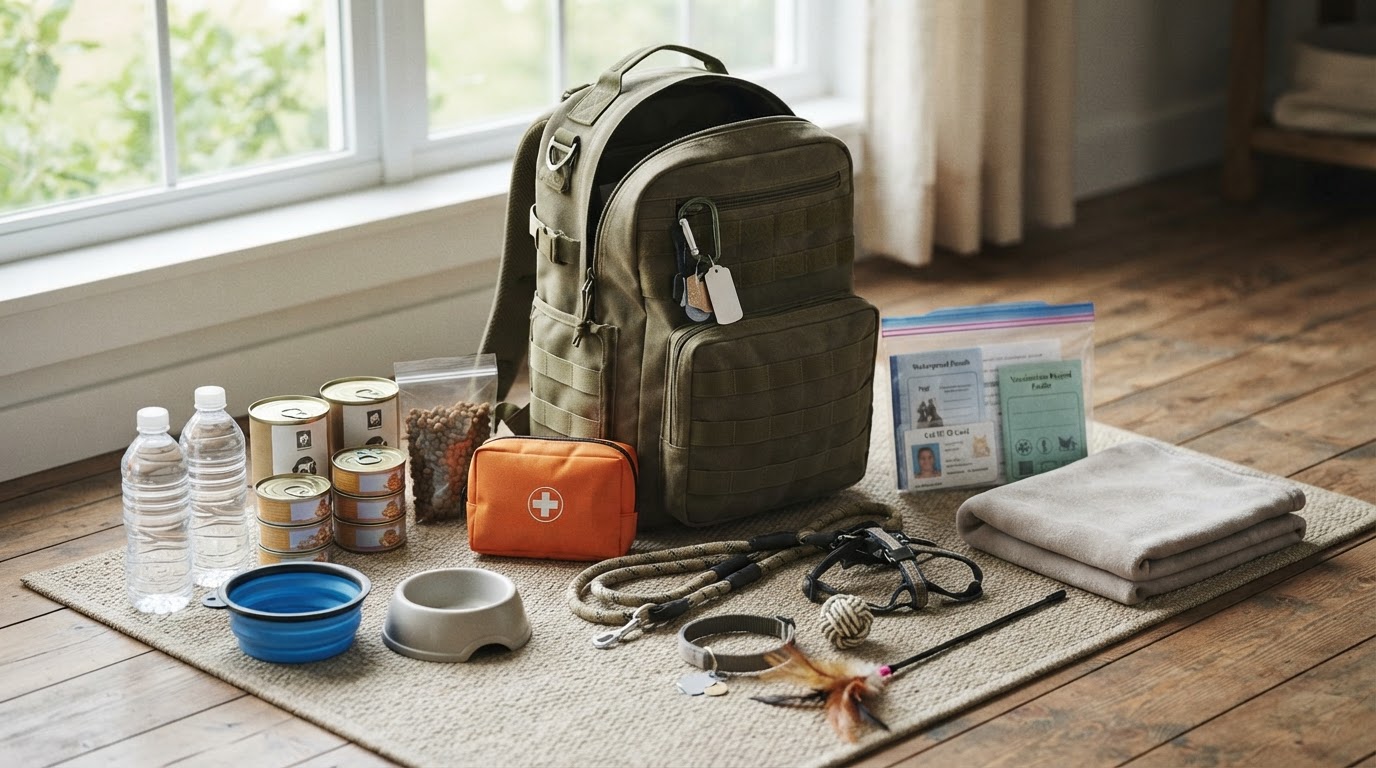
Build a pet emergency kit: three days of food and water, a first aid pouch, ID and vet records, and a go bag that keeps your dog or cat safe when you evacuate.
This article contains affiliate links. If you buy through these links, we may earn a small commission at no extra cost to you.
A complete pet emergency kit holds three days of food and water, a first aid pouch, ID and vet records, and a carrier in one bag by the door. Ours is a small backpack with a collapsible bowl, a week of meds, and a compact first aid kit. Many general emergency shelters do not accept pets or house them in the same area, so check local options before an evacuation. Below is the water math and the gear we would buy again.
Why Your Pet Needs Its Own Kit, Not a Share of Yours
A family kit is sized for humans. A dog drinks roughly one ounce of water per pound of body weight every day, so a 50-pound dog needs about 50 ounces (0.4 gallons). A separate pet bag, packed next to yours, means nobody trades rations.
Pets also change your timeline. Loading a reluctant cat into a carrier can take ten minutes you do not have. Have every animal crate-able and the bag by the door before the order comes.
Daily Water Needs by Pet Size
Water is the line item people forget, so here is the honest math on a 7-gallon jug against daily drinking needs:
| Your pet | Approx. weight | Drinks per day | A 7-gallon jug lasts (drinking only) | | Small dog | 15 lb | ~15 oz | ~2 months | | Medium dog | 50 lb | ~50 oz | ~18 days | | Large dog | 90 lb | ~90 oz | ~10 days | | Cat | 10 lb | ~8 oz | ~3 months |
Drinking-only numbers. Add half again for mixing food. On foot, you filter instead.
What Goes in the Bag
Food and water. Pack three days of dry food, plus one spare day if the extra weight fits your route. For a cat, pack cat food specifically: veterinary guidance is clear that dog food is not a substitute, since cats need nutrients like taurine at levels dog formulas do not guarantee. A 3.5-pound bag like Purina ONE Tender Selects Blend With Real Salmon… (about $10) covers the three days many times over, and the rest rotates into regular meals. A Dexas Pets Collapsible Travel Cup (Large/2 Cup) pops into a two-cup bowl for dinner, then flattens into the side pocket. At home, one Reliance Aqua-Tainer 7 Gallon Water Container… 7-gallon jug covers a medium dog's drinking water for about 18 days. On foot, a Sawyer Squeeze Water Filtration System filter removes bacteria and protozoa from stream water, but not viruses or chemicals, so source choice still matters.
Meds and records. Seven days of any regular medication (heartworm, thyroid, seizure meds) in a labeled pouch, plus a printed copy of your vet records, rabies certificate, microchip number, and a recent photo in case you need a lost-poster. Pet-friendly shelters may ask for proof of vaccination at check-in.
First aid. You do not need a pet-specific kit. A compact human kit like the Adventure Medical Kits Mountain Series Hiker… includes wound care, blister supplies, and a printed manual. Add the Medline Self-Adherent Cohesive Wrap Bandage, 4 in x… 18-roll box of 4-inch vet wrap (about $33), antiseptic wipes, a The Original Tick Key Tick Detaching Device, Orange (about $8), blunt-tip scissors, and a basket muzzle sized to your dog, like the Baskerville Ultra Dog Muzzle, Size 5. The basket shape lets the dog pant and drink. An injured animal may bite even its owner. Pet-specific care is its own skill set, so add the Pet First Aid & CPR Quick Reference (Fleck) to the pouch. If you'd rather not assemble it yourself, the Dr. Brahmsy Pet First Aid Kit includes wound wash plus a tick tool; the tradeoff is you take its contents as shipped.
The carrier that gets accepted. A soft-sided carrier like the Sherpa Original Deluxe Travel Pet Carrier has mesh ventilation and locking zippers. Sherpa's Guaranteed On Board program covers participating airlines, but size rules still vary, so confirm the current limit with your airline or shelter before relying on it.
ID and comfort. A collar with current tags on the animal, a spare ID inside the bag, a registered microchip with a current registry phone number, plus a toy, a blanket, and their regular treats. Stale registry details can keep a rescuer from reaching you. For dogs that lose it during thunder, fireworks, or the rumble of an evacuation, a calming wrap earns its place: the ThunderShirt for Dogs Calming Anxiety Vest… costs about $50 in the size we checked. Fit it at home first so the first time it goes on is not the worst hour of the animal's life. If you still get separated, the lost pet recovery guide has the full search plan.
The harness goes in the bag now, not on the dog later. A collar can slip over a panicked dog's head; a properly fitted vest-shaped harness is harder to back out of. The Kurgo Tru-Fit Smart Dog Harness has a padded vest cut, quick-release buckles, and front and back leash attachments. It costs about $25 in the common sizes. Add the brand's Quantum leash (Kurgo Quantum 6 in 1 Dog Leash): it clips to the harness and converts to a waist belt, so the dog stays attached while both hands carry the crate. Its current listing has no featured offer, so check the live price. Fit both at home before you need them.
The Radio That Gives You Time to Pack the Cat
Pets make evacuation slower, so warning time matters more. A NOAA weather radio with alert mode, like the Midland ER310 Emergency Radio, can run for up to 45 hours of normal use on its rechargeable battery and accepts six AA batteries as backup. It receives National Weather Service alerts without cell service. When a watch upgrades to a warning, that is your signal to start crating and loading.
Practice the Evacuation Once a Month
A kit is only as good as the drill. Once a month, crate or harness every animal, grab the bag, and time yourself getting to the car. You will find the missing piece every time: the cat that refuses the carrier, the bag packed but not watertight. Fix it the same day. The full day-of plan, from carrier to car, is in our guide to evacuating with pets.
If You Stay, and If You Go
Sheltering in place: pick one secure room with no windows, move the kit and the animals in, and put a sign in the window saying pets are inside. If you leave, you leave with them. Tied-out and crated animals die in floods and fires. Call ahead to three pet-friendly hotels within a two-hour drive and to your county's pet-rescue shelter.
Pack three days of food and water, a first aid pouch, ID and records, and a carrier. Keep the bag next to yours and check it monthly. Pets cannot follow an evacuation order on their own, so plan the exit for them.
Quick Picks for Your Pet's Go Bag
- Water at home: Reliance Aqua-Tainer 7 Gallon Water Container… two 7-gallon jugs, ~$52
- Water on the move: Sawyer Squeeze Water Filtration System filter, ~$46
- Carrier: Sherpa Original Deluxe Travel Pet Carrier soft-sided carrier, ~$60
- First aid pouch base: Adventure Medical Kits Mountain Series Hiker…, ~$34
- Early warning: Midland ER310 Emergency Radio NOAA radio, ~$80
Pair the kit with our family emergency communication plan so everyone, pets included, knows who calls whom and when to leave. Then take five minutes tonight and put the bag by the door.