
Emergency Water Sources: Where to Find Drinking Water in Your Home (2026)
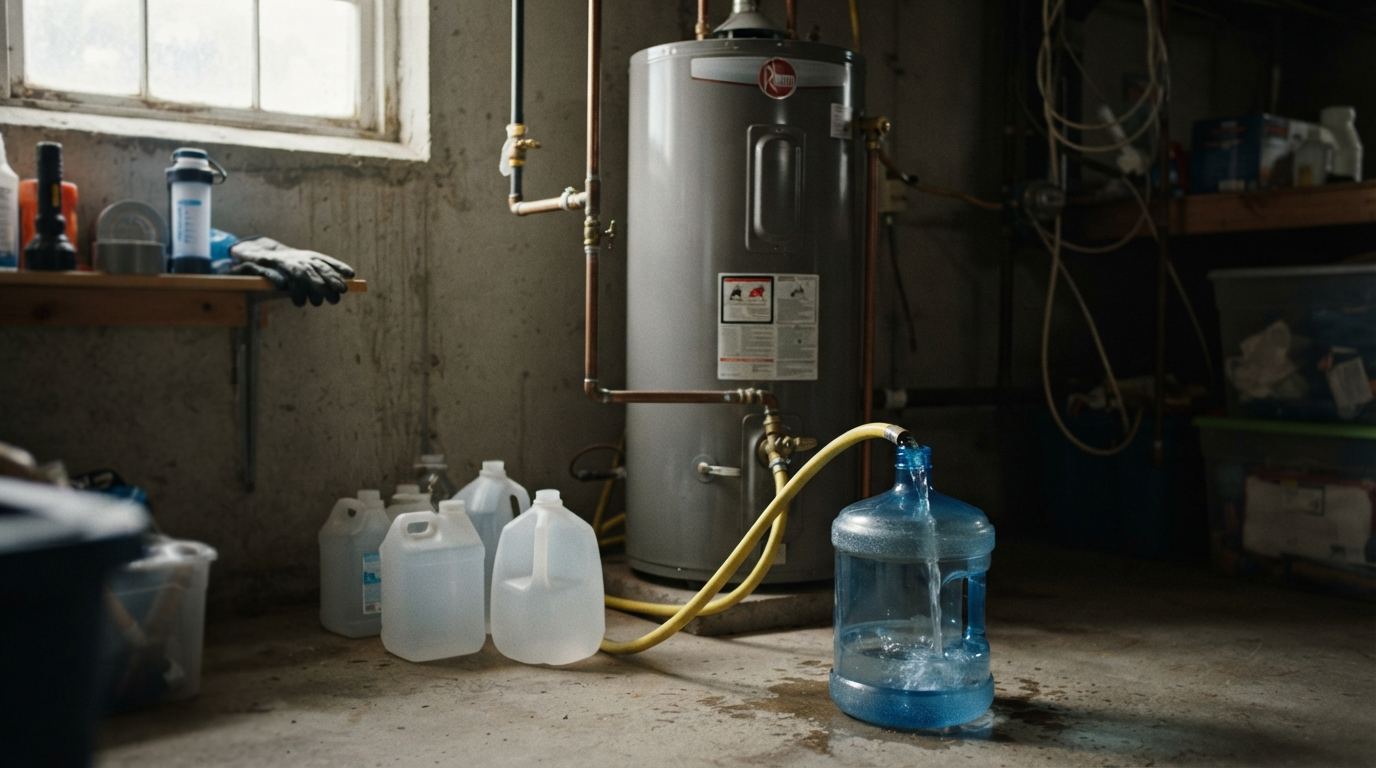
Your water heater holds 40–80 gallons of clean water you forget you own. Where to find emergency water at home, how to drain it, and how to make it safe.
This article contains affiliate links. If you buy through these links, we may earn a small commission at no extra cost to you.
The fastest source of emergency water you own is the tank sitting in your closet or garage: a standard home water heater holds 40 to 80 gallons of water that was clean when it went in. When the taps run dry, that tank alone gives a family of four a week of drinking water. It's the first place to draw from, followed by the toilet tank (the tank, never the bowl), the standing water in your pipes, and melted ice.
That's not theory. During the February 2021 Texas freeze, burst pipes and pressure loss knocked out water service for millions, some cities ran on boil-water notices for over a week while grocery-store shelves emptied of bottled water. The households that came through it were the ones who knew their own house was a reservoir. Here's exactly where to look and how to get at it safely.
1. The Water Heater: Your 40–80 Gallon Reservoir
A typical home water heater holds 40 or 50 gallons (larger homes run 60–80). The water in it was treated municipal or well water when it entered the tank, and the tank is sealed, so in a loss-of-pressure outage (no water coming in), that water is drinkable as-is.
Three rules before you drain it:
- Turn off the power or gas to the heater so it doesn't try to heat (or ignite) an empty tank.
- Close the cold-water inlet valve (the one feeding the tank) so contaminated supply can't backflow in.
- Let it sit a few minutes so sediment settles, then open a hot faucet upstairs to relieve pressure.
Drain from the spigot at the bottom into clean containers. Use a hose rated for drinking water rather than the garden hose on the side of the house: testing by the Ecology Center found lead, BPA, and phthalates leaching from ordinary garden hoses into the water. A lead-free, BPA-free hose like the Camco EVOFlex RV Drinking Water Hose, 10 ft… (about $20 for 10 feet, 5/8-inch) runs from the drain valve to a bucket or jug, and it coils into a bag between outages. The first bit may carry sediment from years of tank buildup, let it run into a bucket until it clears, or pour the bottom off after settling. Shut the valve when you're done so the tank doesn't collapse from the weight change, and remember this water is a one-time reserve: once drained, it's gone until service returns.
If your outage is a boil-water advisory instead (contaminated supply, pressure still on), the tank water came from that same contaminated source, treat it like tap water and boil it before drinking.
2. The Toilet Tank: A Clean, Overlooked Reservoir
The reservoir behind the toilet (the tank, not the bowl) holds the same clean supply water, refillable each flush cycle: roughly 1.5 gallons in a modern low-flow toilet, 3.5 to 7 in pre-1994 models (EPA WaterSense). Scoop from the top with a clean container, don't reach into the bowl water.
Two warnings: if you use chemical bowl or tank cleaners, don't drink that water. And if a boil advisory is active, treat this water like tap water too.
3. Standing Water in the Pipes
Once the heater is empty, several gallons still sit in the pipes themselves. Open the lowest cold faucet in the house (a basement or ground-floor sink) over a pot, gravity feeds the top-down water out. It's the same clean supply water. Flush-stale tasting water away before collecting.
4. Melted Ice and the Freezer
On a short notice, bagged ice from the freezer melt-down gives clean drinking water, usually 1–3 gallons for a full freezer. Do this early in an outage, while it's still mostly ice; water keeps better frozen than thawed, and it buys you cold-storage time anyway.
Making Any Questionable Source Safe
Water from the tank, toilet tank, or pipes is clean unless the supply was contaminated when it entered. Rain, streams, pools, and snow need treatment regardless. The rules, in order of reliability:
- Boil: a rolling boil for 1 minute (3 minutes above 6,500 feet elevation, per CDC guidance). Kills bacteria, viruses, and protozoa. This is the gold standard, details in our boil water advisory guide.
- Filter: removes sediment and (with the right filter) bacteria and protozoa, the full rundown is our emergency water filter guide.
- Purify: a purifier that also blocks viruses, like the Grayl GeoPress Water Purifier, covers the gap most backpacking filters miss.
Boiling needs heat and fuel you may not have, so a filter is the most practical backup. The Sawyer Squeeze Water Filtration System is rated for up to 100,000 gallons, weighs almost nothing, and fits in a kit or go bag, it's the one we keep in ours.
How Much You Need, and How to Store It
Plan 1 gallon per person per day (drinking, cooking, and basic hygiene), the FEMA and American Red Cross baseline, plus about half a gallon a day for a medium dog (smaller pets need less, and heat pushes both numbers up). Two weeks for a family of four is 56 gallons, which is more than a water heater holds; the heater covers the gap while you collect and augment. Whatever you draw, store it in clean, food-grade containers. The Reliance Aqua-Tainer 7 Gallon Water Container… 7-gallon jugs stack in a closet and pair directly with every source above, fill them from the heater's drain spigot now, while there's still time, and rotate every six months. The full stockpile math lives in our food and water storage guide and the two-week water budget.
Sources Compared
| Source | Typical Volume | Safe Unboiled? | Effort |
|---|---|---|---|
| Water heater | 40–80 gal | Yes (loss-of-pressure outage) | Shut off + drain |
| Toilet tank | 1.5–7 gal | Yes (no cleaners) | Scoop |
| Standing pipes | 2–5 gal | Yes | Lowest tap |
| Melted ice | 1–3 gal | Yes | Just melt |
| Rain / streams | Unlimited | No (treat first) | Collect + treat |
Quick Recommendations
- The fastest gallons: your water heater tank, drained into a Reliance Aqua-Tainer 7 Gallon Water Container…
- The virus-rated option for questionable sources: Grayl GeoPress Water Purifier
- The everyday filter that never quits: Sawyer Squeeze Water Filtration System
- Know the process cold: our boil water advisory guide
Know your home's sources before you need them. Locate the water heater valve today, figure out where your lowest faucet is, and stock one purifier that handles viruses. When the water stops, the difference between a crisis and an inconvenience is often just knowing where to look.