
Boil Water Advisory: What to Do, How Long to Boil, and What's Safe
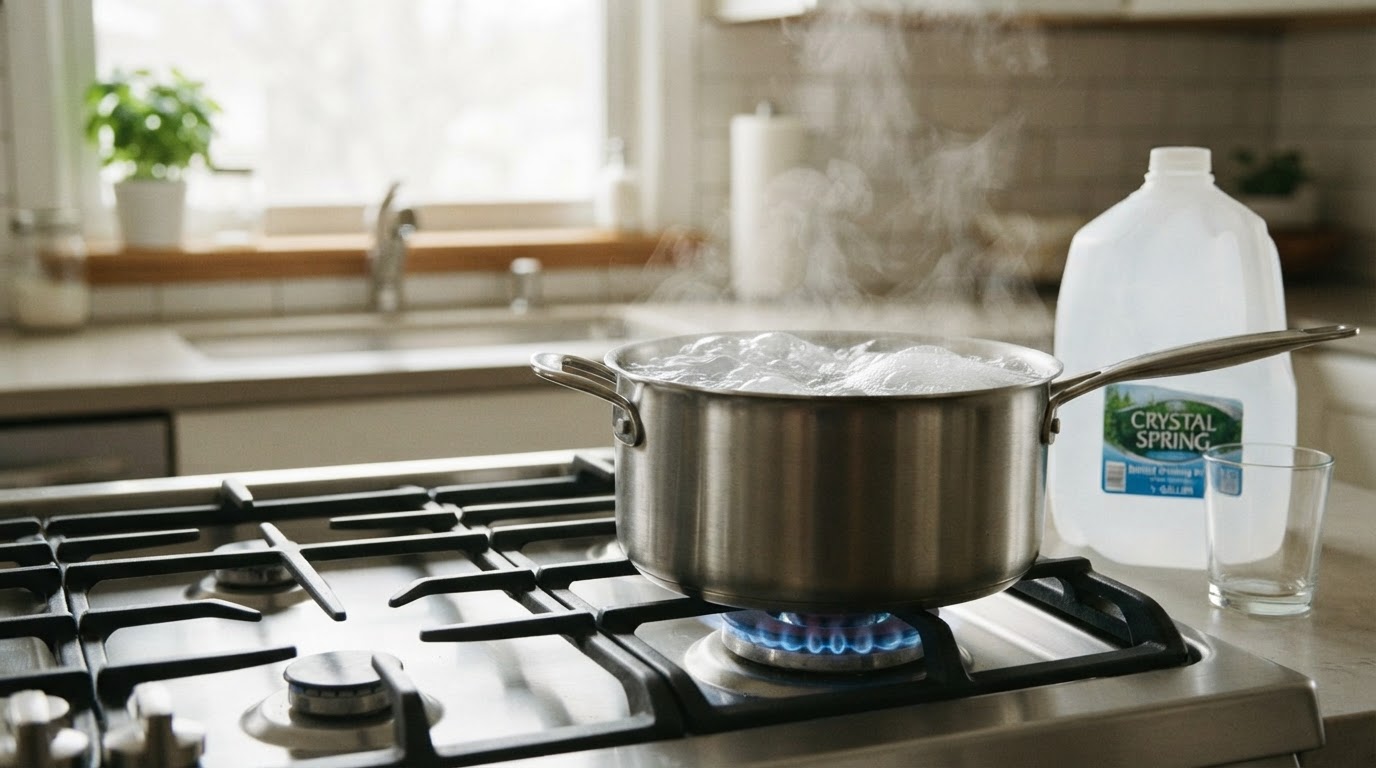
The 1-minute rolling boil rule for a boil water advisory, which taps stay safe to use, and the flush-out steps to run when the advisory finally lifts.
This article contains affiliate links. If you buy through these links, we may earn a small commission at no extra cost to you.
A boil water advisory means your tap water may be contaminated with bacteria, viruses, or parasites, and it is no longer safe to drink straight from the faucet. Until officials lift the order, make all drinking water safe: a rolling boil for one full minute (three minutes above 6,500 feet elevation) is the CDC's rule, or use bottled or certified-filtered water instead. A precautionary advisory usually runs at least 24 hours (the minimum testing window), so plan for a couple of days of treated water.
Boil advisories are no longer rare. After the Texas Hill Country floods, the second year in a row, and the historic Hudson Valley flooding of July 28–30, 2026, whole counties went under boil water notices at once. The CDC's baseline is at least 1 gallon of water per person per day for 3 days, a number to hit before the next notice, not during it.
Why Boil Water Advisories Are Issued
Utilities issue a boil advisory whenever there's a real risk that pathogens got into the pipes. The three most common triggers:
- Flooding, floodwater can push sewage, farm runoff, and contaminated sediment into wells and water treatment intakes. Our flood safety guide covers how to protect your home before the water rises.
- Line breaks, a burst main drops pressure to zero, which lets groundwater seep into the pipe through tiny cracks that normally stay pressurized.
- Pressure loss, any drop in pressure (pump failure, power outage, heavy demand) can suck contaminated groundwater in through leaks that only stay sealed while pipes are pressurized.
A boil advisory is a precaution, not a confirmation, but until tests come back clean, you have to act as if your water is contaminated.
What Water Needs Boiling (and What Doesn't)
The rule of thumb: anything that enters your mouth or your food needs treated water.
Boil water for:
- Drinking, including water from fridge dispensers
- Brushing your teeth and rinsing your mouth
- Cooking (including boiling pasta or vegetables, start with treated water)
- Washing fruits and vegetables
- Making coffee, tea, baby formula, and ice
- Pet water bowls and wet food, pets get sick from the same pathogens you do, so give them boiled or bottled water and follow the same 1-minute rule. If your household isn't set up for a multi-day advisory, our pet emergency kit guide covers the full water plan for animals.
You do NOT need to boil water for:
- Laundry, washing clothes is fine
- Showers and baths, brief skin contact is low-risk for healthy adults; just keep your mouth closed and supervise kids so they don't swallow water
For hand-washing dishes, use boiled or bottled water, or mix one tablespoon of unscented bleach per gallon of dishwater (the CDC's sanitizing ratio) and rinse well. Dishwashers on the sanitize cycle are fine.
How Long to Boil Water
Boil water at a rolling boil for 1 minute. That's the CDC's standard, and it's enough to kill bacteria, viruses, and protozoa like Giardia and Cryptosporidium that cause boil advisories. Above 6,500 feet, water boils at a lower temperature, so the CDC extends it to 3 minutes.
A few practical notes:
- "Boiling" starts when bubbles are rolling, not when they first appear.
- Let boiled water cool completely before pouring it into containers or using it for formula.
- Store it in clean, covered containers. What spoils boiled water is recontamination, not the boiling, so cover it and use it up.
- Boiling kills pathogens but doesn't remove chemicals or sediment. If it tastes flat, pour it between two containers to re-oxygenate it.
Safe Alternatives to Boiling
If you can't boil (no power, no gas), bottled water is the gold standard. After that, you need a purifier that removes viruses, not just any filter.
The catch most people miss: many backpacking filters don't stop viruses. Viruses are far smaller than bacteria, and most filters, including the popular Sawyer Squeeze Water Filtration System (which Sawyer rates at 99.99999% of bacteria and 99.9% of protozoa) and the LifeStraw Personal Water Filter, have pores too large to block them. They're excellent for mountain streams, but during a boil water advisory, they won't protect you from viral contamination.
For an advisory, you want a purifier that blocks viruses, like the Grayl GeoPress Water Purifier, which the maker rates at about eight seconds per press: safe drinking water with no heat and no power.
| Method | How it works | When to use it |
|---|---|---|
| Boiling | 1-minute rolling boil (3 minutes above 6,500 ft) kills bacteria, viruses, and protozoa | Any advisory; needs heat and stove fuel |
| Bottled water (Crystal Geyser Alpine Spring Water, 1 Gallon…) | Already safe, zero prep | The gold standard; stock roughly 1 gallon per person per day |
| Virus-rated purifier (Grayl GeoPress Water Purifier) | Press-and-filter removes pathogens in ~8 seconds, no heat or power | Power outages and multi-day advisories |
| Backpacking filter (Sawyer Squeeze Water Filtration System) | Blocks bacteria and protozoa but NOT viruses | Great for mountain streams; not enough alone for an advisory |
Bottom line on method: boil when you can, buy bottled as backup, and own one purifier that stops viruses. A standard hiking filter is the one tool that will not save you here. For the backup itself, a six-gallon case like the Crystal Geyser Alpine Spring Water, 1 Gallon… runs about $23 and stacks in a closet; one case covers one person for six days, so buy enough cases for the people in the house and rotate the oldest into everyday use once a year.
And if you haven't already, this is the moment to start building a water stockpile for the next event. A few days of stored water, like a Reliance Aqua-Tainer 7 Gallon Water Container… 7-gallon jug per person, means the next advisory is an inconvenience, not an emergency.
When the Advisory Is Lifted
Don't expect a same-day lift: utilities typically need two consecutive days of clean samples before lifting the order. You'll hear the all-clear on local news, the utility's site, or emergency alerts, so don't stop boiling on a rumor.
When the all-clear comes:
- Run cold taps for at least 5 minutes (CDC flush guidance)
- Discard any ice made during the advisory
- Replace filters in the fridge dispenser, pitchers, and whole-home systems
- Drain and refill the water heater if it was used
- Run a sanitize cycle on dishwashers and clean pet bowls
That's the short list. Our guide to flushing your plumbing covers the fixtures most people forget.
Quick Recommendations
- Best virus-rated purifier for advisories: Grayl GeoPress Water Purifier
- Best long-term filter for outdoor water (not advisories): Sawyer Squeeze Water Filtration System
- Best ultralight filter for hikers (not advisories): LifeStraw Personal Water Filter
- Best way to store water before the next advisory: Reliance Aqua-Tainer 7 Gallon Water Container…
A boil water advisory is an inconvenience if you're ready, and a crisis if you're not. Memorize the 1-minute rule, own one purifier that handles viruses, and keep a few days of stored water on hand.
Stay safe out there. The best prep is the one you actually do.
Frequently asked questions
What do I do if a boil water advisory is issued?
Stop drinking tap water immediately. Bring water to a rolling boil for 1 minute (3 minutes above 6,500 ft) before drinking, brushing teeth, or cooking. Use bottled water for infant formula, and flush ice makers and filters when the advisory ends.
How long do I have to boil water?
The CDC rule: a rolling boil for 1 minute at elevations under 6,500 feet, and 3 minutes above that. Boiling longer wastes fuel without making the water safer.
Can I shower during a boil water advisory?
Yes, untreated water is fine for bathing as long as you do not swallow it. Use boiled or bottled water for brushing teeth, and keep small children's showers short.