
Generator Cold Starts: Oil, Battery, Fuel
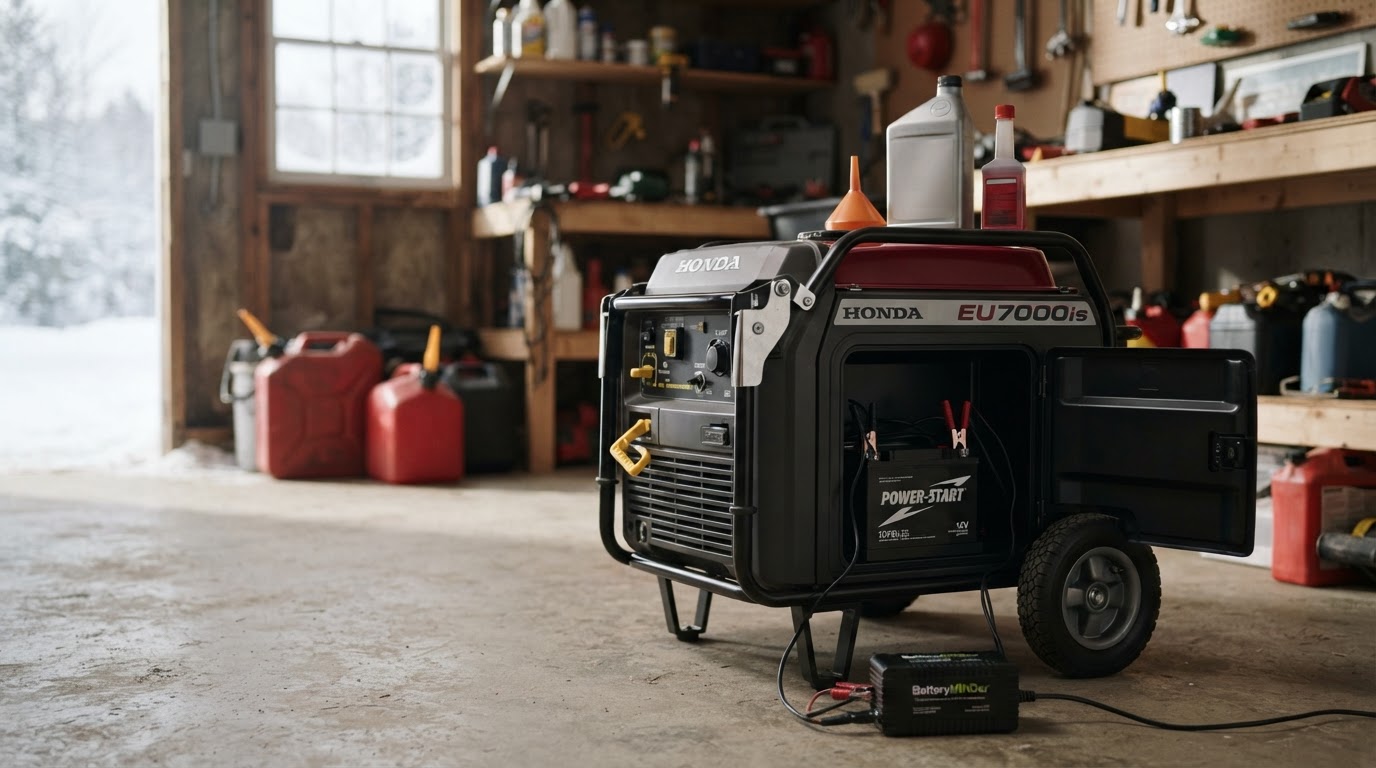
Make the generator fire first pull in January: winter oil weight, floated battery, treated fuel, choke drill, and monthly loaded exercise runs in one plan.
This article contains affiliate links. If you buy through these links, we may earn a small commission at no extra cost to you.
January is a bad time to meet your generator. Cold thickens oil, weakens batteries and exposes every month of stale fuel. This plan fixes all three before the storm. For sizing and runtime, see our generator sizing guide; for the safety half, our CO safety guide.
Quick answer: Fresh manual-spec oil, battery on a maintainer, full tank of treated fuel, monthly loaded runs, and a practiced choke drill. Do it in fall, not in the outage.
Oil: fresh and winter weight
Cold oil pours like honey and the starter drags. Change oil before the season, not after the failure. The 10W-30 small-engine oil below suits the season change on many portables, per the product listing. Check the manual first: many makers spec 5W-30 synthetic below freezing, and the wrong weight either drags cranking or thins protection.
Warm the motor two minutes before loading it. Cold clearances plus sudden full load wear fast. While the case is open, check the air filter and the plug: a fouled plug and a mouse-nested filter cause a third of no-starts, per shop-rule experience. Gap or replace the plug per the manual and keep a spare with the kit: a genuine NGK BPR6ES like the NGK BPR6ES Spark Plug for Honda Engines and Other… (about $6.55, 4.8 stars) fits Honda GX-series engines and most generator clones, but match the plug code in your manual before buying.
Battery: float it all winter
Electric-start generators die quietly: self-discharge plus cold steals cranking amps by January. The maintainer below brings a drained 12-volt battery back then float-charges it, safe to leave connected all winter, per the MOTOPOWER listing. Clamp it on at storage time and forget it until the outage.
Pull-start models skip this job but keep the drill sharp. Prime per the manual, full choke cold, ease to half as it catches, off when warm. Flooding from over-priming is the classic second-pull failure: if it sputters and dies, wait, back the choke off, and crank without prime.
Fuel: treated, full, rotated
Stale fuel varnishes carburetors over a single season. Treat every can at fill time, store full to cut air and moisture, and rotate stock so nothing sits past its stabilized life. The stabilizer below doses storage cans per its label, per the STA-BIL listing. Our gasoline storage guide runs the rotation math.
Run the carburetor dry only if the manual says so; some makers prefer treated fuel left in the bowl. Either way, exercise monthly: start, warm up, then run 10 to 20 minutes under real load like a space heater, per maker guidance. Unloaded idling glazes cylinders without proving anything. Log each run on tape on the tank.
The storm-day drill
Stage before dark: generator outside, downwind, 20-plus feet from windows and doors, exhaust pointed away, per the CO guidance in our safety guide. Cords rated for the load, dry connections, one appliance at a time past the surge budget from our sizing guide.
Cold start order: fuel valve open, choke full, switch on, firm pulls or button in short bursts. As it catches, ease the choke in steps. Let it stabilize before any load, then add loads one at a time. If it will not catch in a few tries, stop and check the triangle: fuel flow, spark, air. Most January failures answer to one of the three.
Starter checklist
See Gear Worth Buying for the three picks referenced below.
| Item | Why | Source |
|---|---|---|
| Fresh manual-spec oil and filter check | Thin oil cranks fast | see pick below |
| Battery on maintainer | January amps ready | see pick below |
| Full tank of treated fuel | No varnish surprises | see pick below |
| Monthly loaded exercise logged | Proves the machine | Tape on tank |
| Choke drill practiced | No flooding fumbling | Driveway rehearsal |
| CO-safe placement planned | Exhaust kills silently | Safety guide |
Gear Worth Buying
- MOTOPOWER MP00206A 12V 1.5-Amp Battery Charger and… (~$21.50, 4.5 stars): 1.5-amp charger and maintainer for the starter battery.
- STA-BIL Fuel Stabilizer, 32 oz (~$18.79): stabilizer for storage cans against varnish.
- STP Premium Synthetic Blend 4-Cycle Small Engine… (~$14.98, 4.8 stars): 10W-30 small-engine oil for the season change.
- NGK BPR6ES Spark Plug for Honda Engines and Other… (~$6.55, 4.8 stars): genuine NGK spare plug; confirm the code against your manual.
Source notes: Storage, exercise and choke practice per small-engine maker guidance. CO placement per CDC guidance and our safety guide. Product specs per maker listings.
Frequently asked questions
Why will my generator not start in the cold?
Three usual causes: thick oil cranking slow, a weak starter battery, and stale fuel gumming the carburetor, per small-engine maker guidance. Fix all three before January and most cold no-starts disappear.
What oil weight should a generator use in winter?
Follow the manual for your temperature range. Many manuals spec 10W-30 for general use and 5W-30 synthetic below freezing. The pick below is a 10W-30 small-engine oil for the season change; confirm your manual before pouring.
How do I store a generator between outages?
Full tank of treated fuel, battery on a maintainer, clean and dry under cover, exercised monthly under load, per maker guidance. Our gasoline storage guide covers fuel rotation.