
How to Store Gasoline for a Generator Safely (2026)
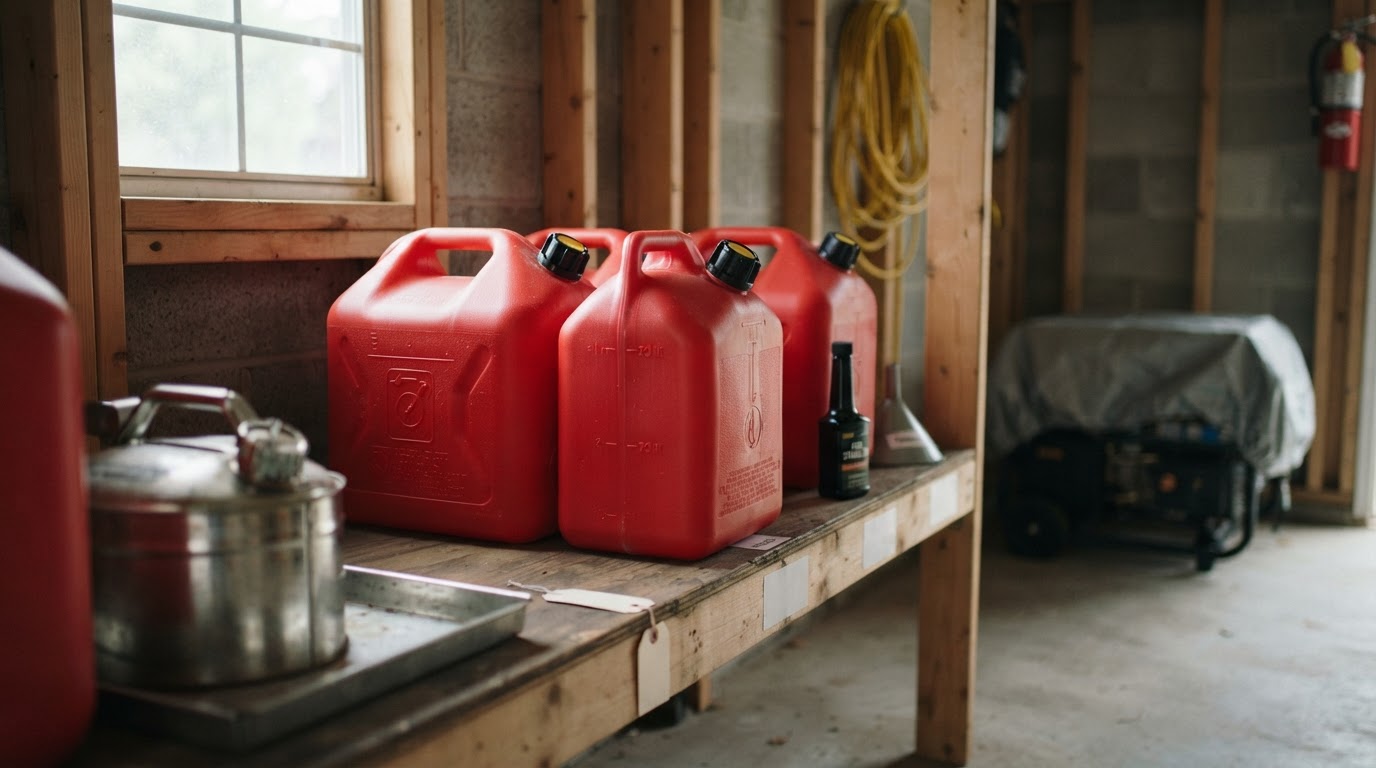
Store gasoline for a generator without spoiled fuel or fire risk: approved cans, stabilizer dosing, real shelf life, and storage spots away from living spaces.
Keep generator gasoline in approved sealed cans in a detached, ventilated spot away from ignition sources, dosed with stabilizer the day you fill them. Expect about three months of shelf life from untreated pump gas and up to twelve months once treated. Rotate aging fuel through your car tank, then refill the cans fresh.
The basics
- Treat it at fill-up: stabilizer goes into fresh fuel, never into stale fuel. It preserves, it does not revive.
- Seal it full: a nearly full, tightly capped can oxidizes slower than a half-empty one. Label every can with the fill date.
- Store it detached: shed or unattached garage, cool, dark, and ventilated. Never in the house or basement.
- Rotate on a calendar: every 6 to 12 months, pour aging cans into your car and refill fresh with stabilizer.
- Pair fuel with detection: a battery CO alarm in the house and an ABC extinguisher near (not inside) the storage spot.
Research method
We compared CPSC generator safety guidance, Ready.gov outage pages, stabilizer dosing specs, and gas-can listings against owner reports of stale-fuel failures. Prices are current Amazon listings checked September 2026.
How long does gasoline last in a gas can?
| Fuel in the can | Realistic shelf life | Notes |
|---|---|---|
| Untreated E10 pump gas | About 3 months | Ethanol absorbs water; heat and air shorten this fast |
| Untreated ethanol-free gas | 6 to 12 months | Lasts longer sealed, cool, and dark, but still degrades |
| Either, dosed with stabilizer at fill-up | Up to 12 months | Dose must go into fresh fuel per the label rate |
Stale gas smells sour or varnish-like and darkens. If a can has sat untreated past a season, do not gamble your generator carburetor on it: burn it in your car (diluted in a full tank) and refill. Never dump old fuel on the ground or down a drain; most counties take it at household hazardous waste collection.
The storage rules that matter
1. Approved cans only. Milk jugs, detergent bottles, and mystery plastic split, leak, and build static. Use listed fuel containers with self-closing spouts. A pair of CARB-compliant 5-gallon cans with flame mitigation screens and auto-stop spouts like the Midwest Can 5610 5-Gallon Gas Can, 2-Pack, about $50 for the pair, covers the two-can starter stock in one purchase.
2. Dose stabilizer the day you fill. Pour the stabilizer in per the label rate before or as you add fresh gas so it mixes fully. The STA-BIL Fuel Stabilizer, 32 oz 32 oz bottle runs about $17.99 and doses up to 80 gallons, so one bottle covers years of 5-gallon refills. Fuel you forgot to treat counts as untreated: run it through the car, not the generator.
3. Fill nearly full, seal tight, label the date. Less air in the can means slower oxidation. Cap it firmly and write the fill month on the can with a marker so rotation is a glance, not a memory test.
4. Keep it away from everything that sparks or flames. Store cans low (never above a furnace or water heater), away from pilot lights, power tools, and chargers, in a space with airflow. Fumes travel: that is why the cans live in a detached shed or unattached garage, never in living space. When outage day comes, our home generator sizing guide covers placement, including the CPSC guidance to run portable units at least 20 feet from the house with exhaust pointed away.
5. Keep the quantity sane. Two full 5-gallon cans suit most households starting out. Scale from your generator manual burn rate, not from anxiety, and check local fire code for residential limits before you stack more.
Rotate it or lose it
The rotation habit is the whole game. Twice a year, when you test-run the generator, pour the oldest cans into your car tank, drive to the station, and refill the cans fresh with stabilizer. Fuel that reaches a full year even treated gets burned in the car on principle.
Pair storage with detection and suppression
Gasoline storage and generator exhaust are a package deal with two companions. Battery-powered CO alarms stay on through the outage itself; our guide on where to mount CO alarms covers placement room by room, and a Kidde Battery-Powered Carbon Monoxide Detector costs about $19.89.
Quick recommendations
- Starting from zero: the two-can pair plus one bottle of stabilizer, about $68 total, sets up a safe rotation.
- Apartment or no shed: you likely have no code-compliant storage spot. Lean on the power outage survival guide battery-first plan instead of keeping gas cans on a balcony.
- Storm week: top off treated cans early, test-run the generator, confirm the CO alarms, and know your refill station before the lines form.
Gasoline storage checklist
- Two approved 5-gallon cans, filled, stabilized, dated
- Cans in a detached, ventilated spot away from ignition sources
- Stabilizer bottle on the shelf with the label dose rate marked
- Rotation dates on the calendar (every 6 to 12 months into the car)
- Battery CO alarms installed and tested in the house
- ABC extinguisher mounted near an exit, not inside the fuel storage
- Generator test-run quarterly; refill plan known before storm season
Frequently asked questions
How long does gasoline last in a gas can?
Untreated pump gas (E10) stays fresh about three months in a sealed can kept cool and dark. Ethanol-free gas stretches to six to twelve months, and fuel treated with stabilizer at fill-up stays usable up to twelve months. After that, burn it in your car and refill the cans.
Where should I store gasoline for my generator?
In approved containers inside a detached, ventilated space such as a shed or unattached garage, away from furnaces, water heaters, and any ignition source. Never in the house or basement, and never next to the spot where the generator runs.
Do I need fuel stabilizer for generator gas?
Yes if the fuel sits more than a month or two. Stabilizer dosed into fresh fuel at fill-up slows oxidation and keeps pump gas usable up to twelve months. It cannot revive fuel that has already gone stale, so dose it the day you fill the cans.
How much gasoline should I keep for outages?
Start with two full 5-gallon cans and size up from the burn rate in your generator manual. Keep the total small enough to store safely, and check your local fire code for residential storage limits before stockpiling more.