
What Size Generator to Run a Refrigerator and Freezer (2026)
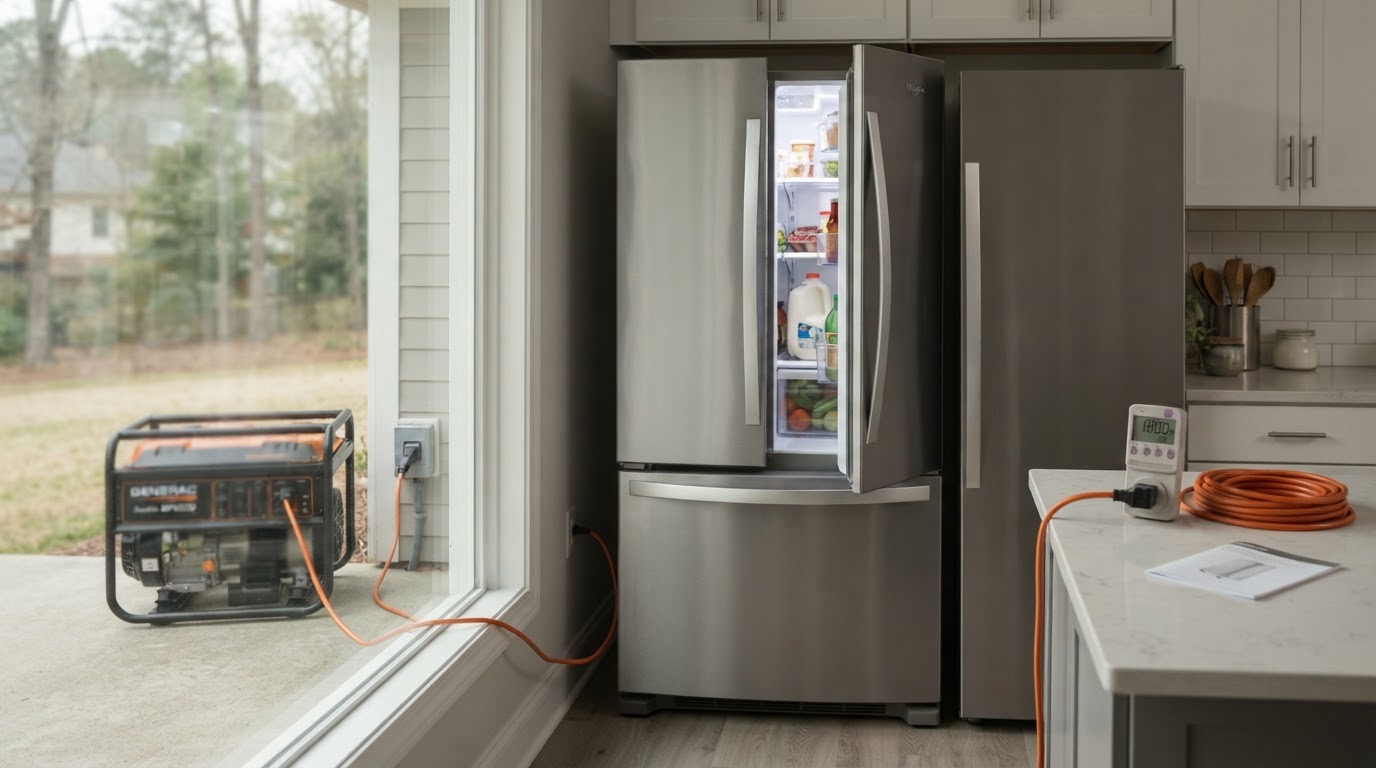
What size generator runs a refrigerator? Size from the compressor starting surge, not the running watts, then pick the right generator class for your own home.
This article contains affiliate links. If you buy through these links, we may earn a small commission at no extra cost to you.
For one full-size refrigerator, plan on a generator in the 3,600-watt surge class, about 2,900 running watts, and step up to the 5,300-running-watt class the moment a freezer or a sump pump shares the load. The number that decides it is not the running watts on the sticker. It is the compressor's starting surge, which briefly pulls two to three times higher every time the fridge cycles on.
The shorthand version, before the math:
- A typical full-size fridge runs at about 700 watts and starts at about 2,200. Size from the start.
- One fridge plus lights, wifi, and chargers: the 3,600-surge / 2,900-running inverter class.
- Add a freezer or one big motor (sump pump, furnace blower): the 6,600-surge / 5,300-running dual-fuel class.
- Stagger the starts so two compressors never kick at the same moment.
- Your nameplate beats every chart: compressor amps times 120 gives running watts, and the start is roughly two to three times that.
What size generator do you need to run a refrigerator?
For a single full-size refrigerator with a small essentials load, the practical class is a 3,600-watt surge inverter with 2,900 running watts. It covers the roughly 2,200-watt compressor start with room left for lights, a router, and phone chargers. Bring a separate freezer, a sump pump, or a furnace blower into the plan and the guidance moves to the 5,300-running-watt class, which absorbs a second compressor plus one large motor with margin to spare.
These are the planning figures the common generator sizing charts use, appliance by appliance (the box calls the second column surge or starting watts):
| Load | Running watts | Starting watts |
|---|---|---|
| Compact or mini fridge | 150 | 600 |
| Full-size fridge (18 to 22 cu ft) | 700 | 2,200 |
| Large side-by-side or French-door | 800 | up to 2,900 |
| Chest or upright freezer | 500 to 700 | 1,800 to 2,200 |
| Fridge plus freezer together | 1,400 | 2,200 (largest single start) |
The chart figures are deliberately conservative. A modern fridge often measures lower while the compressor is simply running, about 100 to 150 watts on an efficient model, so owner measurements and sizing charts can seem to disagree. The gap does not change the shopping decision: the number that stalls a generator is the start, and the start stays high. Older units, hot-garage fridges, and feature-heavy models with ice makers and defrost cycles lean toward the top of every range.
Why the starting surge decides the size
A refrigerator compressor is an electric motor, and motors have two numbers: the watts they use while running, and the burst they demand for the first second while the rotor spins up. The sizing charts put that burst at roughly two to three times the running rating. House wiring tolerates it because it lasts a heartbeat. A small generator may not, which is why a 1,000-watt unit that "runs a fridge" on paper can trip the moment the compressor kicks in.
A 2,000-watt-peak inverter generator sits right at the edge: fine for a compact fridge or a newer efficient model, a gamble on a typical full-size one. The 3,600-surge class is the safe first step, and if a second compressor shares the load, the margin is gone before you start.
Run the numbers once on the combination that matters most:
- A fridge (700 running watts) plus a chest freezer (700 on the chart figure) is about 1,400 watts of continuous load.
- The larger single start among the two is about 2,200 watts.
- Add the start to the running total and you are at roughly 3,600 watts at the instant of a kick. Size with any margin at all for that moment and the next class up is the 6,600-surge, 5,300-running dual-fuel machine.
Staggering the starts is the free fix, and it is worth doing even after you buy: connect the fridge first, let it settle into its cycle, then plug in the freezer. The compressors will still cycle whenever they want, but they rarely spike in the same second.
The three classes that cover a refrigerator
One fridge plus essentials: WEN 56360i 3600-Watt Portable Inverter Generator (~$420). 3,600 surge watts and 2,900 running watts, enough for the fridge start plus lights, wifi, and chargers, and it sips fuel when the load is light. Parallel terminals let a second unit double the capacity later if the house grows into it.
Fridge plus freezer with room to breathe: Westinghouse WGen5300DFc 6600W Dual Fuel Generator (~$649). 6,600 surge and 5,300 running watts on gasoline, 5,900 and 4,800 on propane, which matters when the gas cans run dry and the grill tank is still full. Remote electric start, CO shutdown, and about 14.5 hours at quarter load on a 4.7-gallon tank.
Whole house minus central AC: Westinghouse WGen9500DFc 12500W Dual Fuel Generator (~$1,049). 12,500 surge and 9,500 running watts carries the well pump, furnace blower, fridge, freezer, and lights at once, and it is transfer-switch ready if you ever want house circuits instead of extension cords.
Full picks, including the quiet premium inverter class, are in the best home generators guide.
Measure your fridge before you buy
Two numbers from your own appliance beat every table in this article, and both are free to find on the unit itself.
- Read the nameplate. The compressor's running amps times 120 volts gives running watts. If the label lists locked rotor amps (LRA), that is the true worst-case start for the motor and the number to respect.
- Measure the real draw. A plug-in meter like the P3 P4400 Kill A Watt Electricity Usage Monitor (~$32) reads true watts on any 120-volt load, so you can confirm the running figure yourself instead of trusting a chart. It will not catch the split-second start, so pair it with the nameplate LRA.
- Re-run the rule. Total running watts, plus the largest single start, plus a little margin. Compare that total to the surge rating on the box, never to its running watts.
- Test it once before the season. Run the fridge alone on the generator and listen to the compressor cycle. If the start trips the overload, you are undersized, and it is far better to learn that on a Saturday afternoon than during the storm.
No place to store fuel (apartment, condo, balcony)? The battery path works at the fridge's average draw, not its surge, and that math is different: the power station fridge runtime guide has the measured draws, and the power outage survival guide has the wider sequence.
Quick recommendations
- One fridge and a few small loads: the 3,600-watt surge / 2,900-running inverter class runs about $420 and covers the job.
- Fridge plus freezer, or one big motor in the mix: go to the 6,600 / 5,300 dual-fuel class at about $649, with propane storage as a bonus.
- Anything resembling a normal house: the 12,500 / 9,500 class at about $1,049 keeps the well pump and furnace blower in the plan.
Whichever you choose, fuel and safety have their own guides: runtime per tank, storing gasoline, and the carbon monoxide rules that keep the generator outside and the family safe. Keep the food clock in mind, too: USDA puts refrigerated food at about four hours once the power drops, and the full clock is all the motivation a generator purchase needs.
Size from the start, not the run, and the food stays cold.
Frequently asked questions
Will a 2,000-watt generator run a refrigerator?
For smaller or newer fridges, often yes, if the unit's surge rating covers the compressor start. A typical full-size unit on the sizing charts needs about 2,200 watts at startup, so a 2,000-watt-peak machine is marginal and may trip the moment the compressor kicks in. Check the nameplate, and treat the 3,600-watt surge class as the safe first step.
What size generator do I need for a refrigerator and a freezer?
Plan the combined running load (about 1,400 watts on chart figures) plus the larger single compressor start (about 2,200 watts): roughly 3,600 watts at the instant of a kick, so shop the 6,600-surge / 5,300-running dual-fuel class for margin, or stagger the starts carefully on a smaller unit. The dual-fuel class also leaves room for a sump pump or a furnace blower.
Does a refrigerator need an inverter generator?
Not strictly; a fridge is a motor load and runs on open-frame and inverter units alike. Inverter generators put out cleaner, lower-distortion power, which suits fridges with digital controls, and they throttle down at light load to save fuel. Open-frame units cost less up front and are fine for motor loads, with more noise and higher fuel use.