
Can You Melt Snow for Drinking Water? Ratios, Fuel Math, and Safety
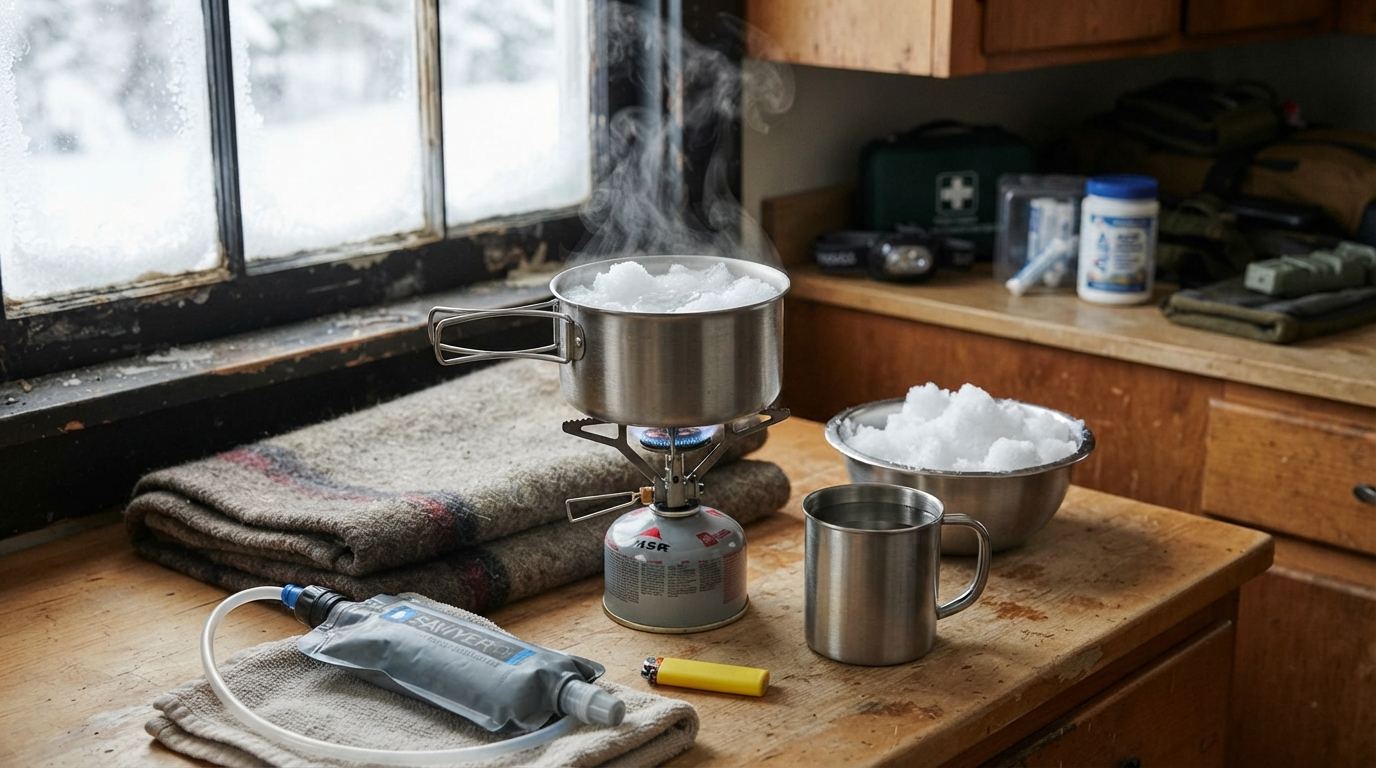
Can you melt snow for drinking water? Yes, with the right method: the snow-to-water ratios, stove fuel math, and when melted snow still needs treatment.
This article contains affiliate links. If you buy through these links, we may earn a small commission at no extra cost to you.
Don't eat snow to hydrate. Melt it first, then treat the melt like any other raw water source. The fastest safe sequence is: collect clean snow from a spot nothing has touched, melt and boil it for a full minute, and drink it once it's cool enough, or filter it instead to save stove fuel. The reason the order matters is volume: a full pot of fluffy snow melts down to maybe a quarter of what you scooped, so the math (and the fuel) runs out long before your throat does.
Before you need this article, the cheaper move is stopping the freeze: our home winterization guide covers the pipe insulation that keeps melted snow a campfire skill instead of a household emergency.
Why Melting Beats Eating Snow
Eating snow straight off the ground is the classic mistake, and it fails on two fronts. First, your body pays the melting bill: it costs roughly 334 kilojoules of body heat just to convert a liter of ice into liquid water at freezing point, so a mouthful of snow cools your core instead of hydrating you. Second, cold exposure triggers cold-induced diuresis, which makes your kidneys flush out water sooner. The net effect is that eaten snow can dehydrate you further, not less, on a day you can't afford to lose any.
Melt snow with an external heat source a stove, a fire, a body-warmed bottle and you sidestep both problems.
How Much Snow Equals How Much Water
Snow is mostly air. How much you need depends entirely on its density, which is why the "full pot" plan fails:
| Snow Type | Inches of Snow per Inch of Water | Pot of Snow → Water |
|---|---|---|
| Wet spring snow | 4–5 in | One scoop ≈ 1 cup |
| Average snow | ~10 in | ~¾ to 1 cup per pot |
| Powdery, cold snow | 15–20 in | Barely ½ cup |
Plan for a liter of water per person per day, the same rule as summer, and remember cold weather raises the bar: you lose more moisture just breathing dry winter air.
Collecting Clean Snow
Where you scoop matters as much as how much. The safest bet is freshly fallen snow from a high, open spot, taken from the top few inches and never from the very bottom, where dirt and debris settle. Skip snow within several feet of roads and driveways (salt and de-icing chemicals), plow piles, and snow under trees, where drips carry bark and droppings. Discolored snow is a flag: pink or red snow is algae, orange is wind-blown dust, and both warrant filtering or boiling. If there is no clean option at all, treat whatever you collect like floodwater and purify it properly.
Melting and Boiling: The Fuel Math
Melting eats fuel. Getting one liter of snow to a full rolling boil takes roughly 750 kilojoules once you add melting plus heating, and about 45 percent of that is just the phase change from ice to water. Use a fitted-lid pot such as the MSR Alpine Stowaway Camping Pot (about $24) so you can melt loose batches without carrying an open pan. A portable dual-fuel burner like the Gas One GS-3400P Dual Fuel Portable Stove (about $29) gives you a 10,000 BTU option, but it still belongs outdoors. On a typical backpacking stove, plan on an ounce (28 g) of canister fuel per liter of snow water. Budget at least a third more stove fuel for any winter trip or outage that forces you to melt water. A full 16-ounce canister like the MSR IsoPro Fuel Canister, 16 oz (450 g) (about $25) holds 450 grams of isobutane, which at that rate melts roughly 16 liters of snow water.
Method: scoop snow into the pot in loose batches rather than packing it to the brim, melt each batch a little, then add more. Bring the melt to a rolling boil for at least one minute at low altitude (three minutes above roughly 6,500 feet) before drinking or storing. Boiling kills viruses, bacteria, and protozoa, so it is the one method that needs no gear beyond a heat source.
Never run a stove inside a closed room, tent, or vehicle. Carbon monoxide builds up fast in a sealed space; melt snow near an open window or away from shelter, the same rule your winter storm survival guide hammers home.
Filtering to Save Fuel
Boiling is bulletproof, but it burns fuel you may need for heat. A filter turns the same liter of clean melt drinkable with zero fuel and no wait to cool. Three options cover the range:
- Boiling: the no-gear standard. Kills everything, costs ~1 oz fuel per liter.
- Sawyer Squeeze Water Filtration System: 0.1-micron, filters 100,000+ gallons, grabs bacteria and protozoa. Great for winter because it screws onto standard bottles and packs; keep the filter body inside your jacket, because cold slows the flow dramatically, and never let it freeze with water inside.
- Katadyn BeFree Water Filter: 0.1-micron hollow fiber with a fast 2 L/min flow, which is the filter you want when you're melting liters for the whole household rather than sipping one at a time. Its EZ-Clean shake clears clogs in seconds without a syringe.
- Grayl GeoPress Water Purifier: a true purifier that removes viruses in about 8 seconds, so it's the right choice when your only snow is questionable runoff and you can't boil.
| Method | Removes Viruses | Fuel Needed | Best For |
|---|---|---|---|
| Boiling (1 min) | Yes | ~1 oz per liter | Any source, no extra gear |
| Sawyer Squeeze | No | None | Clean snow, budget, bottle fit |
| Katadyn BeFree | No | None | Melting liters for a family |
| Grayl GeoPress | Yes | None | Suspect snow, can't boil |
A filter is not a purifier. For snow from a source that could be contaminated, pair a filter with boiling or use the purifier. Our emergency water filter guide compares these options using their published treatment limits and flow claims.
When the Stove Is Out
If the stove dies, the fuel runs out, or you're snowed in without either, you still have one option that costs nothing: melt snow with body heat. Pack clean snow into a water bottle, cap it, and tuck it inside your jacket or sleeping bag. It takes hours instead of minutes and yields far less than a boil, but it's real water and it's the difference between dehydrating and staying ahead while you wait for help. A dark-colored bottle left in the sun melts faster than a clear one. And if your home's other sources are still intact, check your emergency water sources at home before you go digging in the yard.
The winter rule, in one line: never eat snow, always melt it, and treat the melt like the raw water it is. Do that and a frozen landscape stops being a dry one.
Frequently asked questions
Can I eat snow for water in an emergency?
No: eating snow lowers your core temperature and dehydrates you further; your body pays roughly 334 kilojoules to melt a liter of it. Melt it first: over a stove, in a dark bottle in sunlight, or tucked inside clothing between layers.
How much snow makes a cup of water?
Roughly 10 to 1: ten cups of fluffy snow melt down to about one cup of water. Packed or wet snow is closer to 4 or 5 to 1. Plan fuel accordingly: melting snow takes far more stove fuel than heating already-liquid water.
Do I need to filter melted snow before drinking?
Snow is usually the cleanest natural source available in winter, but it collects whatever is on the ground surface. Treat it like rainwater: prefer fresh-fallen snow away from roads, animal areas, and roofs. If anyone is immunocompromised, boil or filter it anyway.