
O'Hare Ground Stops Hit Record Thanksgiving Travel
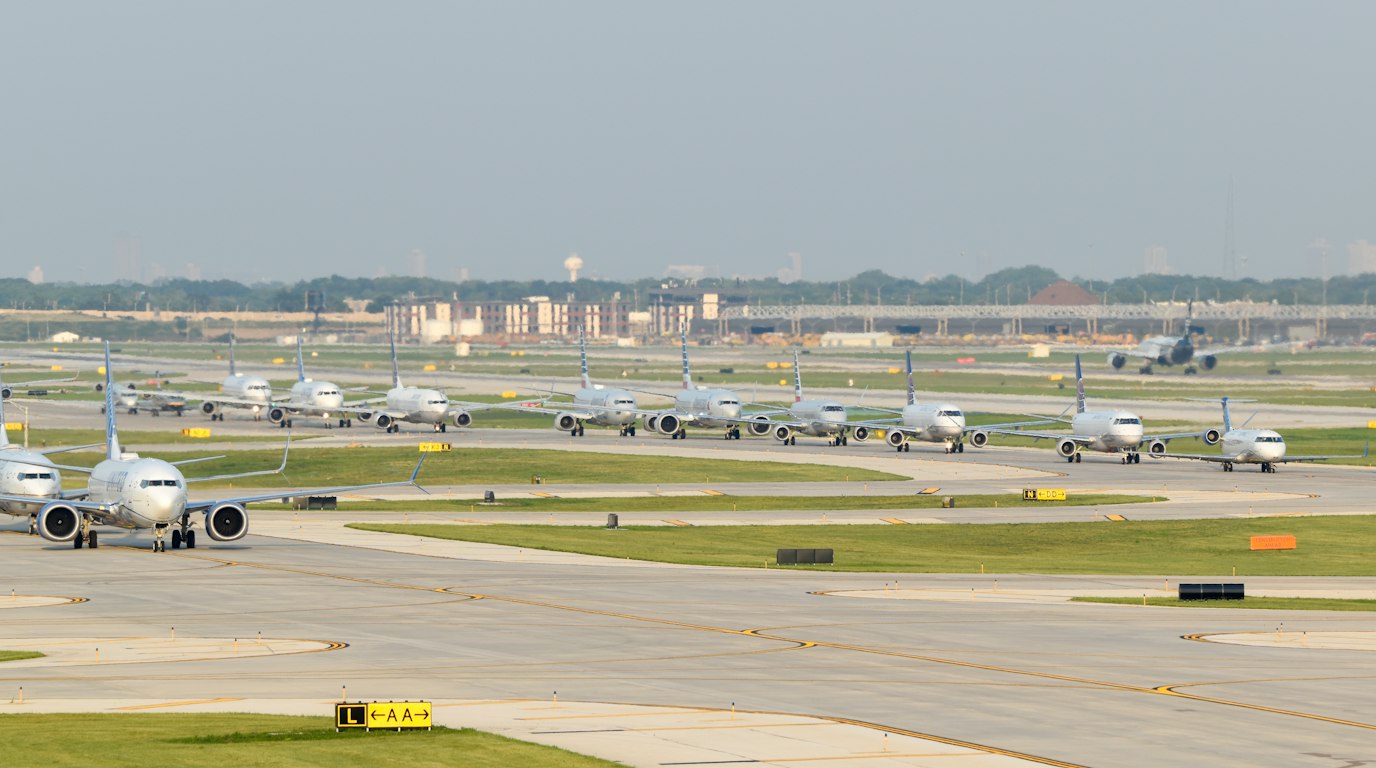
On Nov 24 the FAA halted O'Hare arrivals twice on the busiest Thanksgiving travel day. What broke, who it hit, and the carry-on kit for a stranded night.
This article contains affiliate links. If you buy through these links, we may earn a small commission at no extra cost to you.
On Tuesday afternoon, November 24, the FAA stopped flights headed for Chicago O'Hare, on the busiest air-travel day of the Thanksgiving week. The ground stop started around 3 p.m. local time and covered arrivals from Minneapolis, Milwaukee, Green Bay, and Des Moines, NBC Chicago reports. Technicians traced it to an outage in the surface radar that watches runways and taxiways, and the stop eased into a delay program around 4 p.m. before lifting near 5 p.m. By then the damage to the schedule was done: about 373 flights delayed, roughly 13 percent of the day's operation, with arriving flights held an average of 47 minutes and some stacked in the air for 30 minutes before landing, Reuters reports.
It was the second straight day of trouble at O'Hare. Monday morning brought a brief ground stop blamed on staffing constraints at Chicago Terminal Radar Approach Control. And the timing could hardly have been worse: about 1.67 million people are expected to pass through O'Hare over the holiday week, a Thanksgiving record up more than 7 percent from last year, according to the Chicago Department of Aviation. When a hub that full hiccups, connections across the country miss.
What actually broke
The failed part was ASDE-X, the ground surveillance radar and tracking system controllers use to monitor aircraft and vehicles on runways and taxiways. The FAA said it was "temporarily delaying some flights while technicians work to repair a piece of air traffic equipment," and stressed the issue was specific to O'Hare, not a national system failure. The agency's own operations plan for the day shows how tight the system ran: O'Hare went onto a ground delay program capped at a 72-arrival rate, while San Antonio sat under a ground stop and San Francisco and Teterboro faced possible ones, with thunderstorm constraints stacked over the New York, Jacksonville, Miami, and Houston centers (FAA ATCSCC advisory, Nov 24).
So this was a local equipment failure inside a national system already running at its holiday limit. That combination is the pattern of the month.
Why the system keeps wobbling
O'Hare was the third air-travel disruption in twelve days. On November 13 a router flooded the FAA network with data and forced a nationwide ground stop from about 3:30 p.m. to 8:15 p.m. ET; roughly 12,462 flights were canceled that day while some 3,500 aircraft already in the air landed safely, the FAA says. On November 22 a Delta computer failure for weight-and-balance calculations delayed more than 1,600 Delta flights going into the holiday (we covered that meltdown here).
Officials keep giving the same answer about the cause. Director of National Intelligence Jay Clayton told lawmakers the outages look like separate maintenance and technical failures, not a coordinated or state-sponsored attack, and Secretary of State Marco Rubio said they had "nothing to do with a hostile actor or another country," ABC News reports. Analysts quoted in the same report call that plausible: security patches stacked onto old infrastructure break things in new ways. For travelers the cause matters less than the consequence. Patch-driven or not, the system fails more often under holiday load, and this week is the heaviest load of the year.
If you are stuck in an airport tonight
Rebook in the airline app before you join any line. The gate line and the customer-service line chase the same shrinking pool of seats, and the app reaches it first. Then screenshot everything while it is on screen: boarding pass, delay and cancellation notices, baggage receipts, every meal and hotel receipt. Paper slips vanish. Phone photos do not.
Work the problem in order: seat first, food and rest second, baggage third. If your flight cancels and the rebooking lands days out, know the refund rule before you argue at the counter. US airlines must refund a canceled flight even on a nonrefundable ticket when you choose not to travel.
Assume your checked bag may arrive on a different schedule than you do. Medications, chargers, a change of clothes, snacks, water, and anything you need for work the next morning belong on your person. A charged power bank matters more than it sounds when hundreds of people hunt the same terminal outlets. Anker's 10,000mAh USB-C bank runs about $20 and refills a typical phone twice, which covers a day of rebooking apps, boarding passes, and ride-hailing.
Anker Power Bank 10,000mAh USB-C
A long USB-C cable earns its space the same way. Terminal outlets sit behind seats, under armrests, and halfway up pillars. A 10-foot cable reaches the outlet without parking your phone on the floor in foot traffic.
Anker USB-C to USB-C Cable 10ft (100W)
Eat before you are hungry. Airport food lines double when a bank of flights slips, and a delayed evening can turn into a closed-concourse night. A couple of calorie-dense bars in the carry-on buy you patience while everyone else queues. A 16-count variety box runs about $27 and splits across the family.
CLIF BAR Variety Pack (6 Flavors, 16 Count)
Before your next flight this week
Check the flight in the morning and again before leaving for the airport. O'Hare proved a schedule can break between lunch and boarding, and holiday operations recover slowly because every replacement seat is already sold. Build a buffer you would skip in February: earlier departure, longer layover, and a backup flight already researched in the app so one tap rebooks you.
Drivers face the same math on the roads. Holiday traffic plus winter weather strands more people in cars than any airport does, and a car kit turns that into an errand instead of an emergency. If you have not built one, start with our car emergency kit guide and read how to survive two days stranded in a car before you need either. The short version: full tank, charged phone, water, calories, warm layers, and someone who knows your route and expected arrival time.
This week rewards travelers who pack as though the system will fail them. Twice in two days at one airport, it did.