
Holiday Roads Will Be Packed: A Thanksgiving Drive Plan (2026)
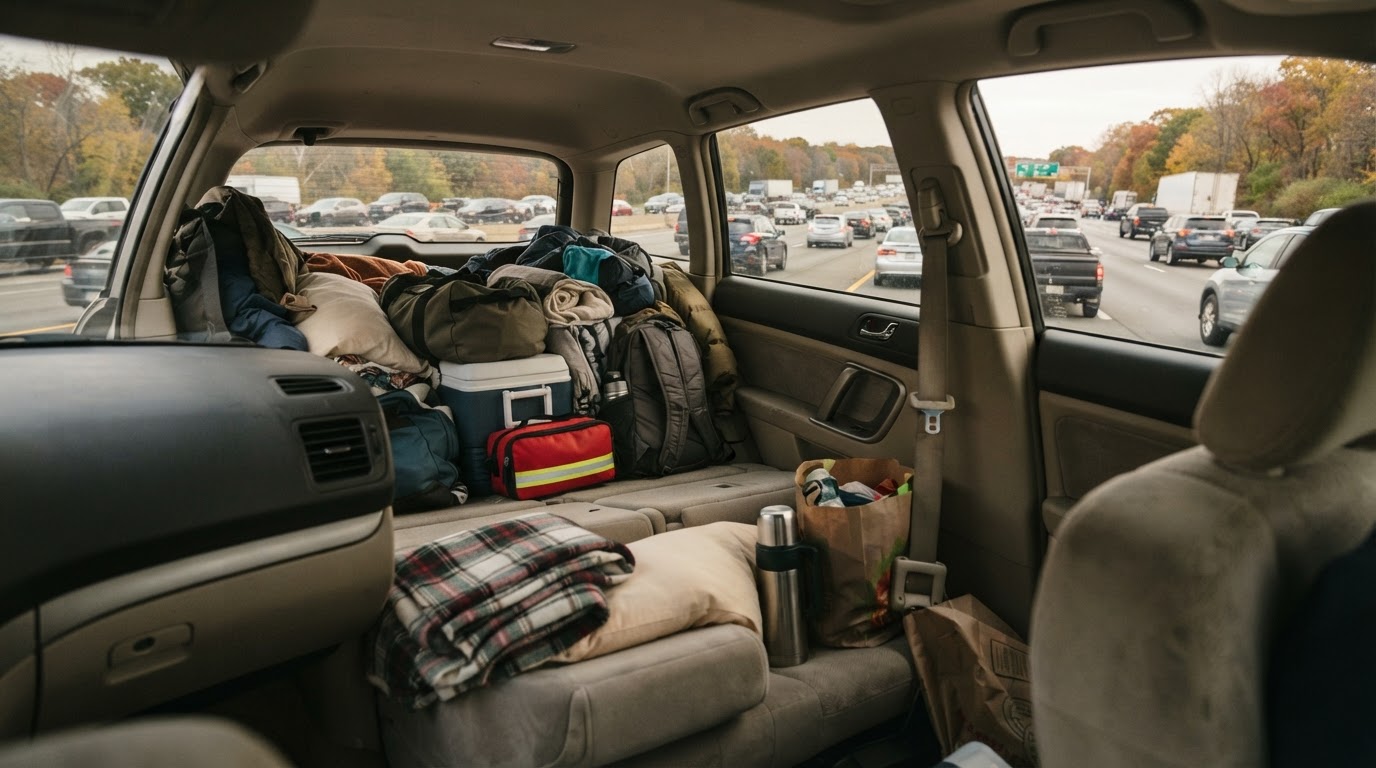
AAA counts 72.9 million Thanksgiving drivers this year. Plan your route, pack a small car kit, and know the stranded-car protocol before you hit the road.
This article contains affiliate links. If you buy through these links, we may earn a small commission at no extra cost to you.
AAA projects 81.5 million Americans will travel at least 50 miles from home between Tuesday, November 24 and Monday, November 30, and 72.9 million of them will drive (AAA Thanksgiving forecast, November 16, 2026). That is a hair below last year's record, but AAA says drivers will not notice the difference on the road. Add record-high gas prices through the fall, early-season snow in parts of the country, and a house full of people expecting you by dinner, and the drive deserves its own plan.
The plan is short: leave with a buffer, carry a small kit, and know the stranded-car protocol before you need it.
Before you leave
AAA reminds holiday drivers to check tires, battery, and fluids before leaving, and that check matters more in late November than in July. Cold exposes a weak battery, and the first hard freeze finds every underinflated tire. Add washer fluid rated for freezing temperatures and confirm the spare, jack, and lug wrench are actually in the car.
The National Weather Service advises keeping the gas tank at least half full during winter travel, and Thanksgiving week is the reason: a half tank buys heat and options if traffic stops in bad weather. Fill up before the remote stretch, not during it.
Then check the forecast the way pilots do, in layers. Read the NWS forecast for the whole route, not just your hometown, and check your state's 511 road-conditions line the morning you leave. A storm hitting Tuesday afternoon argues for a Monday-night or early-Wednesday departure; holiday traffic peaks midweek in the afternoon, so an early start dodges both crowds and ice. Share your route and arrival window with someone at each end, and carry medication for two days beyond the trip in case a storm turns a day trip into an overnight.
The holiday car kit
This is a delay kit, not an expedition load. Everything below fits in one bag behind the seat, and each piece earns its place on a crowded holiday highway.
- Charging on the move: The Anker 30W Dual-Port USB-C Car Charger costs about $10 and is rated 4.7 stars. Its dual USB-C ports keep the driver's phone on maps and the passenger's phone on the weather radar off the same 12-volt socket. Pair it with the Anker Power Bank 10,000mAh USB-C, about $20 and rated 4.5 stars, so a dead car battery does not mean a dead phone.
- Warmth if you wait: The Arcturus Military Wool Blanket (80% Wool, 66" x 90") costs about $28 and is rated 4.4 stars. Wool keeps insulating when damp, which matters if you step out into sleet to check a tire. Tuck in the HotHands Hand Warmers Value Pack, 10 Pairs, about $9 for ten pairs and rated 4.8 stars, for hands that still need to work a phone or a lug wrench in the cold.
Round it out with water, snacks a kid will actually eat, a flashlight, and a paper copy of the route. If the trip stretches past dark through snow country, read the winter car emergency kit guide for the full cold-weather load and the winter driving guide for technique.
If you get stuck
Stay with the car. That is the core of federal winter-safety guidance from the National Weather Service and the Red Cross: the car is shelter, visibility, and the thing rescuers look for. Tie something bright to the antenna, turn on the hazards, and call 911 with your mile marker or last exit.
Carbon monoxide is the quiet risk in this situation, and the CDC names the fix directly: clear snow from the exhaust pipe and crack a window on the sheltered side for fresh air. Run the engine in short intervals for heat rather than idling for hours, and check the pipe again after heavy snow or drifting. If the car is buried or the exhaust cannot be cleared, stay bundled with the engine off and wait for help. The stuck-in-snow guide walks through the full sequence.
Arriving to a cold or dark house
Holiday trips cut both ways: the house you left and the house you reach can both surprise you. If you arrive to a cold house, do not crank the thermostat to maximum and walk away; set a normal temperature and give the system time, then check pipes at the farthest faucet. A pipe that froze while the house sat empty shows up as a trickle or nothing at all, and the frozen-pipe guide covers safe thawing before a burst turns arrival night into mop night.
If the power failed while nobody was home, treat the fridge as a question, not a promise. Perishable food held above 40°F for more than two hours is not safe, according to federal food-safety guidance, and a fridge that sat dark for a day needs a cleanout, not a sniff test. The food-without-power guide has the full keep-or-toss rules.
Printable Thanksgiving drive checklist
- Tires, battery, fluids, and spare checked (AAA pre-trip list)
- Tank at least half full; filled before the remote stretch
- NWS route forecast read; 511 checked the morning of
- Route and arrival window shared with both ends
- Medications packed for two days beyond the trip
- Chargers, blanket, hand warmers, water, snacks, flashlight in the car
- Paper route backup in the glove box
- Arrival plan: heat set normal, pipes checked, fridge questioned
Most Thanksgiving drives end with nothing but a long playlist and a rest stop. Pack for the one that does not, and the holiday starts when you pull into the driveway instead of three hours earlier on the shoulder.
Source notes: AAA Thanksgiving travel forecast (November 16, 2026, with S&P Global Market Intelligence); National Weather Service winter vehicle guidance; CDC carbon monoxide poisoning prevention; Red Cross winter storm safety guidance.
Frequently asked questions
What should I pack in the car for a Thanksgiving road trip?
Pack phone charging, warm layers, water, snacks, medications for two extra days, a flashlight, and a paper backup of your route. A small kit covers most holiday delays without turning the trunk into a warehouse.
What do I do if my car gets stuck in snow on the way?
Stay with the car, make it visible, and call for help. Clear the exhaust pipe, crack a window, and run the engine in short intervals for heat. The CDC warns that a blocked exhaust can push carbon monoxide into the cabin.
When is the worst time to drive at Thanksgiving?
Midweek afternoons carry the heaviest traffic, and AAA notes holiday volumes stay near record levels even in an off year. Leave early in the morning or travel on the holiday itself for lighter roads.