
How to Prepare Your Home for an Earthquake
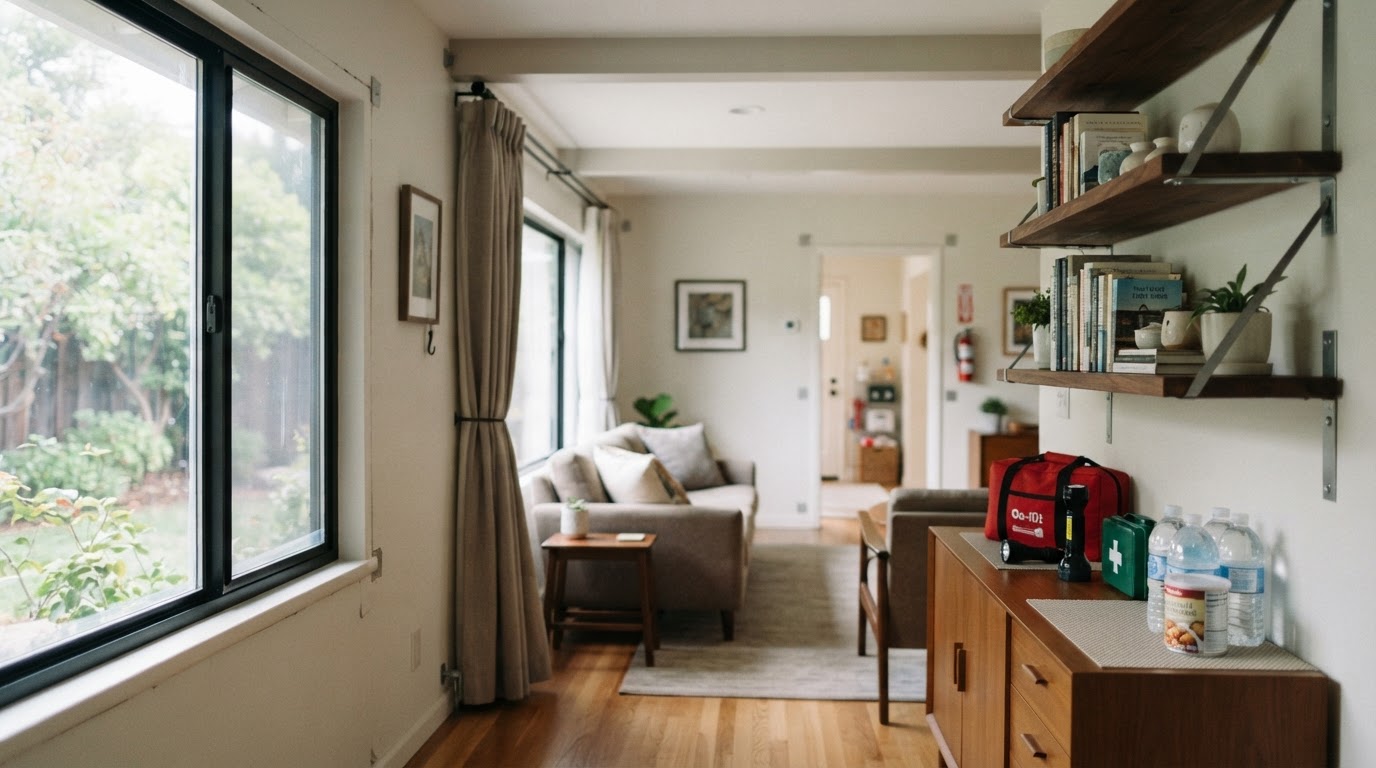
Retrofit, secure, and stock your home to survive and recover from a major earthquake. A step-by-step guide for homeowners and renters preparing for the big one.
This article contains affiliate links. If you buy through these links, we may earn a small commission at no extra cost to you.
Three fixes prevent most earthquake injuries, and none of them require a contractor: anchor the tall furniture, strap the water heater, and keep nothing heavy above a bed. The shaking itself rarely kills, in the 1994 Northridge quake, more than half of all injuries came from unsecured furniture, TVs, and falling objects. Here's how to make your home behave, room by room, in the order that matters most.
1. Identify Your Risks
Start with a walkthrough. Look for:
- Unsecured furniture (bookshelves, dressers, water heaters)
- Heavy objects above beds or seating
- Gas lines that could rupture
- Blocked exits
The quick math: a 40-gallon water heater weighs about 450 pounds once full, and a tall bookshelf loaded with hardcovers can top 200 pounds. When the ground moves at 1 g of sideways acceleration, roughly what a magnitude 6.5 nearby delivers, that's the weight of a small car trying to tip over onto you.
2. Essential Safety Gear
Every home in an earthquake zone should have:
- Gas shut-off tool, a Prime-Line PH 17106 Gas Shut-Off Wrench (about $6) kept next to the gas meter
- Fire extinguisher, a multipurpose ABC unit like the First Alert HOME1 Fire Extinguisher: UL rated 1-A:10-B:C, it covers wood, liquid, and electrical fires for about $20
- Emergency whistle, a Fox 40 Sonik Blast CMG Whistle (115 dB, about $8), one per person, attached to keys
- Sturdy shoes near the bed, broken glass everywhere. A dedicated pair of leather work boots like the Timberland PRO Pit Boss 6-Inch Steel-Toe Work Boot (about $110) lives under the bed so the first steps after a quake are not a hunt for sneakers.
3. Secure Your Furniture
The Big Three:
- Bookshelves: Anchor to wall studs with anti-tip straps. One strap at the top third of the shelf is not enough, use two, one high and one low. A QuakeHold! 4164 Furniture Strap Kit, Anti-Tip… kit covers both points on one shelf for about $10; screw into studs, not drywall.
- TVs: Wall mount or anti-tip strap. Flat-screen TVs are top-heavy and slide off stands easily; a dual-cable kit like the VIVO STAND-SK02 TV Anti-Tip Dual Cable Kit (about $15) bolts into the screen's VESA holes and anchors to a stud wall or straight to the stand, no wall mount needed.
- Water heater: Seismic straps + flexible gas line. A rigid gas line snaps where the heater moves, which is how fires start. FEMA recommends strapping it at the top third and lower third, bolted to wall studs. A two-pack like the Eastman 86299 Water Heater Safety Strap, 132 inch… covers both anchor points with one kit. For the gas side, a braided flexible connector like the EZ-Fluid 24 in. Full-Port Flexible Gas Connector… (about $27) replaces the rigid pipe segment so the line moves with the heater instead of snapping. Match the fitting size to your valve, and have a plumber make the swap if you do not work on gas lines.
4. The 72-Hour Earthquake Kit
Store near an exterior door (not in the garage, cars may be trapped). Build the kit in stages:
- Water (1 gal/person/day for 3 days): a family of four needs 12 gallons, two Reliance Aqua-Tainer 7 Gallon Water Container… jugs (7 gallons each) covers it, and see our food and water storage guide for the full two-week build-out.
- Food: a #10 can like the Mountain House Breakfast Skillet #10 Can (about $57, 8 just-add-water servings, 30-year shelf life), plus other no-cook staples.
- First aid kit: the SurviveX Large First Aid Kit packs professional-grade supplies into color-coded, labeled compartments, so you can find a bandage in the dark.
- Radio: the Midland ER310 Emergency Radio keeps NOAA weather alerts flowing for 72+ hours on battery, useful when the cell network is disrupted, as it was in the 2011 Tōhoku quake.
- Power: the EcoFlow RIVER 3 Portable Power Station portable power station recharges phones and radios for days when the grid is down.
- Multi-tool, flashlight, N95 masks
- Cash ($200 in small bills), ATMs and card readers will be down
- Copies of IDs, insurance, medical info in a ziplock
If you need a portable version for the car, our get home bag checklist covers a lighter kit that lives in your vehicle.
5. Room-by-Room Checklist
Living Room:
- Heavy picture frames not above seating
- Bookshelves anchored
- TV secured
- Clear path to exits
Kitchen:
- Cabinet latches: spring-loaded ones like the Safety 1st Spring-Loaded Cabinet & Drawer Latch, 10… hold doors shut while everything shakes, which keeps the dishes inside the cupboard instead of across the floor
- Heavy items in lower cabinets
- Glass items behind closed doors
- Fire extinguisher accessible
Bedrooms:
- Nothing heavy above beds (mirrors, shelves, frames)
- Flashlight under each bed, a magnetic-base AA light like the Energizer HC-550 Magnetic Flashlight (AA) sticks right to the frame so it can't wander off in an aftershock
- Shoes and glasses within reach
- Bed away from windows
- A way down from an upstairs window, a First Alert Two-Story Fire Escape Ladder hangs on the sill in seconds (steel, 14 feet, anti-slip rungs, no tools) and stores flat under the bed
Utility Area:
- Water heater strapped
- Flexible gas line installed
- Tools near gas shut-off
6. What to Do When It Happens
During: Drop, Cover, and Hold On. Get under a sturdy table or desk, in the 1994 Northridge quake, most of the 33 deaths happened indoors. Stay away from windows.
After: Check for gas leaks, put on shoes, grab your kit, and follow your evacuation plan. Expect aftershocks, a large quake typically produces dozens, some strong enough to knock down already-damaged structures. Shaking damage is not covered by homeowners insurance; earthquake coverage is a separate policy bought beforehand, with percentage deductibles, and the coverage and damage-documentation workflow are in our earthquake insurance claims guide. If the event escalates into a federal disaster declaration, FEMA's Individuals and Households Program may cover temporary housing and repair costs; the step-by-step apply-and-document walkthrough is in our FEMA disaster assistance guide.
Communication: Text, don't call (text uses less bandwidth). Have an out-of-state contact, local lines jam first, but long-distance texting often still works.