
How to Care for a Sick Family at Home: A Practical Kit (2026)
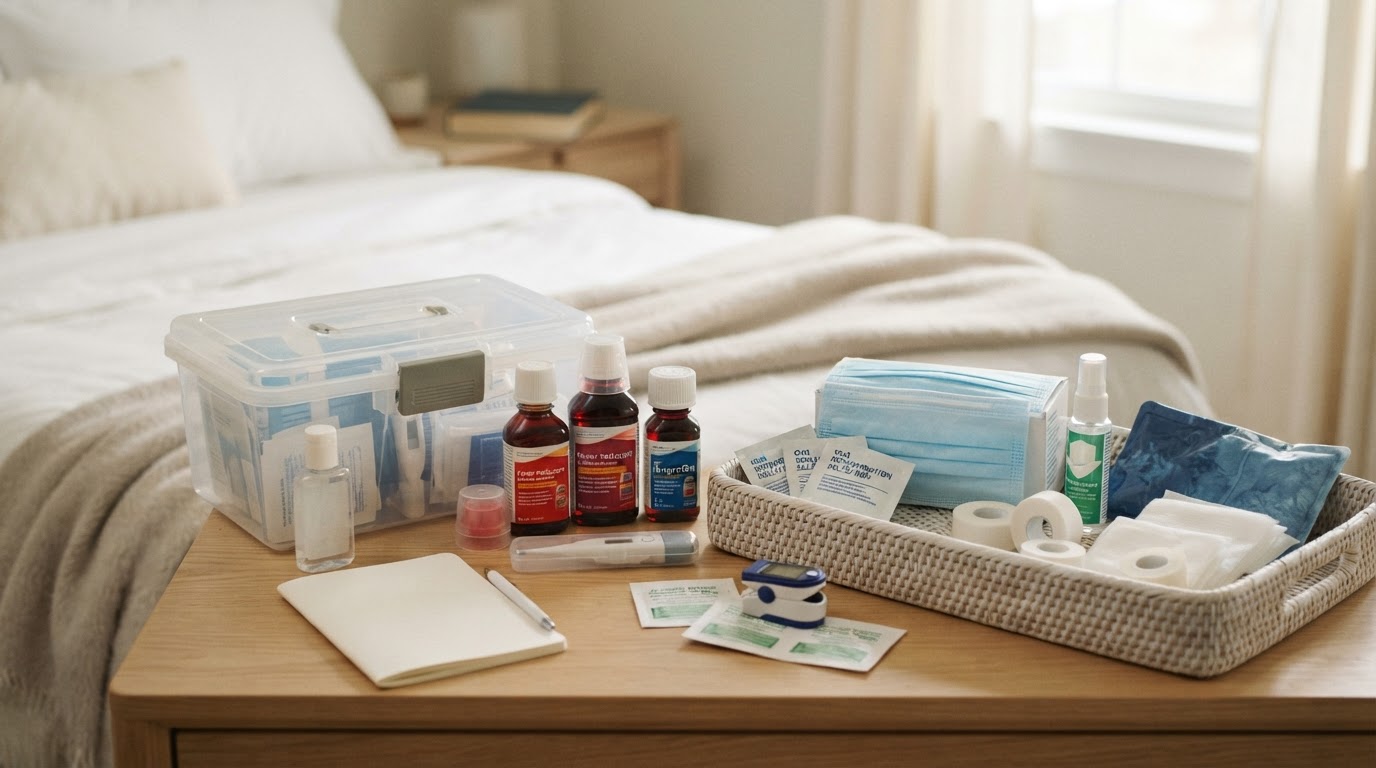
How to care for a sick family at home: stock a practical sick-room kit, reduce household spread, and know the warning signs that call for medical help.
This article contains affiliate links. If you buy through these links, we may earn a small commission at no extra cost to you.
Put one sick-room bin together before anyone gets ill: a thermometer, the over-the-counter medicines your household can safely use, oral rehydration supplies, tissues, masks, and a cleaner labeled for the surface and germ. Keep dosing instructions and emergency phone numbers in the bin. That is much easier than visiting several stores while everyone feels awful.
Respiratory viruses and stomach bugs need different controls. Ventilation and a well-fitting mask can reduce respiratory spread. Vomiting and diarrhea call for careful handwashing, laundry handling, and a disinfectant labeled as effective against the suspected germ. The same supply bin can support both, but the cleanup plan changes.
What to Keep in the Sick-Room Kit
A sick-room kit is a small set of supplies kept in one place, a plastic bin or a drawer in the hall closet, so you're not hunting for a thermometer at 2 a.m.
| Item | Purpose |
|---|---|
| Digital thermometer (iHealth No-Touch Forehead Thermometer PT3) | Track fever trends; 100.4°F (38°C) or higher counts as a fever in adults |
| Pulse oximeter (Zacurate Pro Series 500DL Pulse Oximeter) | Optional. Learn the person's normal reading and the device's limits; do not use one number to overrule breathing symptoms or delay care. |
| Amazon Basic Care Acetaminophen 500mg (400 Caplets) & Amazon Basic Care Ibuprofen 200mg (500 Tablets) | Fever and pain relief for people who can safely take them. Follow the label and check with a pharmacist about age limits, pregnancy, kidney or liver disease, ulcers, and drug interactions. |
| Cough and congestion meds | Guaifenesin for chest congestion, dextromethorphan for cough, ARM & Hammer Simply Saline Nasal Spray… for stuffy nose. A combined 12-hour tablet like Mucinex DM Maximum Strength Cough & Chest… covers both in one pill. |
| Oral rehydration salts (Ideal360 Oral Rehydration Salts Packets) or electrolyte drink | Replace fluids lost to fever, sweating, vomiting, or diarrhea. |
| Tissues and paper towels | Contain coughs and sneezes. |
| Face masks | For the sick person when they must leave the room, and for caregivers. A 50-pack of 3-ply masks like MED PRIDE Blue Medical Face Masks, 3-Ply, 50 Pack (about $7) covers the sick person's trips out; caregivers should still wear a fitted N95 like 3M Aura N95 Particulate Respirator 9205+ for close contact. |
| Trash bags | Line a dedicated can for used tissues; tie off daily. |
| MedPride Powder-Free Nitrile Exam Gloves, Medium… | Caregiver protection during close contact or cleanup. |
| Disinfectant wipes or spray | Use a product whose label covers the surface and germ, and keep it wet for the listed contact time. Clorox Disinfecting Wipes, Variety Pack (3 x 75 ct) suit many hard surfaces; Lysol Disinfectant Spray, Crisp Linen, 19 oz… covers additional surfaces when its label permits. |
| Humidifier (optional) | A cool-mist unit like Levoit Top Fill Cool Mist Humidifier 2.5L may ease dry air. Empty, clean, and dry it as directed so the tank does not spread microbes. |
| Levoit Core 300 Air Purifier (optional) | A quiet HEPA air purifier in the sick room helps filter airborne particles |
Size disposable supplies for the number of people you expect to care for, then check medication labels before buying extras. For tissues, the case beats single boxes: a twelve-cube case like the Kleenex Ultra Soft Facial Tissues, 12 Cube Boxes is about $2.30 per box, so each sick person gets a sealed cube and no one rations the last tissues. A smaller bin you actually rotate is better than a two-week claim built from expired bottles.
Isolating a Sick Family Member
The CDC's practical guidance: keep the sick person away from everyone else as much as possible, and have them mask around others.
- Separate space. If possible, give the sick person a bedroom away from others. Use a separate bathroom when one is available; otherwise clean shared high-touch surfaces according to the product label.
- Meals and dishes. Limit close contact during contagious periods. Wash dishes with hot, soapy water or in the dishwasher; a separate set is not required when they are cleaned properly.
- Mask and airflow. The sick person can wear a well-fitting mask around others, and caregivers can do the same during close contact. Open windows when weather allows, run exhaust fans, and use the Levoit Core 300 Air Purifier if you already own one.
- Separate personal items. Do not share towels, drinking glasses, or toothbrushes.
- Match cleaning to the illness. Vomiting and diarrhea require soap-and-water handwashing plus a disinfectant labeled for the suspected germ. See our stomach flu playbook.
- Clean safely. Follow ventilation, dilution, contact-time, and surface instructions on the label. Never mix cleaning products.
Separation will not stop every household infection, but it reduces close exposure. See our pandemic preparedness checklist for how the sick-room plan fits into a broader household plan.
Monitoring Warning Signs: When to Call a Doctor
Call 911 for trouble breathing, persistent chest pain or pressure, new confusion, inability to wake or stay awake, or pale, gray, or blue lips, skin, or nail beds. Do not wait for a pulse oximeter to confirm visible distress.
Call a clinician for a fever that is high, persistent, returns after improving, or comes with worsening symptoms. Also call for dehydration signs such as very dark or infrequent urine, dizziness, a very dry mouth, or no tears when crying. A home pulse oximeter helps only when you know the person's normal range and the threshold your clinician set; readings skew with nail polish, cold hands, and poor circulation.
For an infant younger than 3 months, a rectal temperature of 100.4°F (38°C) or higher needs prompt medical advice. Children also need earlier help for hard or fast breathing, poor feeding, unusual sleepiness, or fewer wet diapers.
If someone is getting worse instead of better, call. The doctor's office can advise whether symptoms need a visit, telehealth, urgent care, or emergency care.
Restocking After Each Illness
The most common failure with home care kits is that they get used and never refilled. Make restocking part of the routine:
- After everyone recovers, inventory what's empty or expired.
- Check medication expiration dates and replace empty or nearly empty packages, including Mucinex DM Maximum Strength Cough & Chest… if your household uses it.
- Replace used masks and tissues.
- Wipe down the bin and set it back in its spot.
- If you refill a prescription, add a note in the bin so you know what's on hand.
Our best first aid kits for 2026 covers the gear that belongs alongside your sick-room kit.
Quick Recommendations
- Start with the basics: thermometer, household-safe fever medicine, oral rehydration supplies, tissues, masks, and cleaner.
- Choose the isolation space now: decide which room the sick person can use and where the bin will live.
- Keep medical contacts in the bin: include the doctor's office, after-hours line, pharmacy, and poison control.
- Treat the air purifier as optional: ventilation and masking come first; Levoit Core 300 Air Purifier can add filtration in a standard bedroom.
- Restock after recovery: replace used items and remove expired medicine before the next illness.
Caring for someone at home gets easier when supplies, dosing instructions, and emergency numbers are in one place. Separate people when practical, match cleaning to the illness, and call for help when breathing, alertness, hydration, or symptoms worsen.