
How to Improve Indoor Air Quality for Flu Season 2026
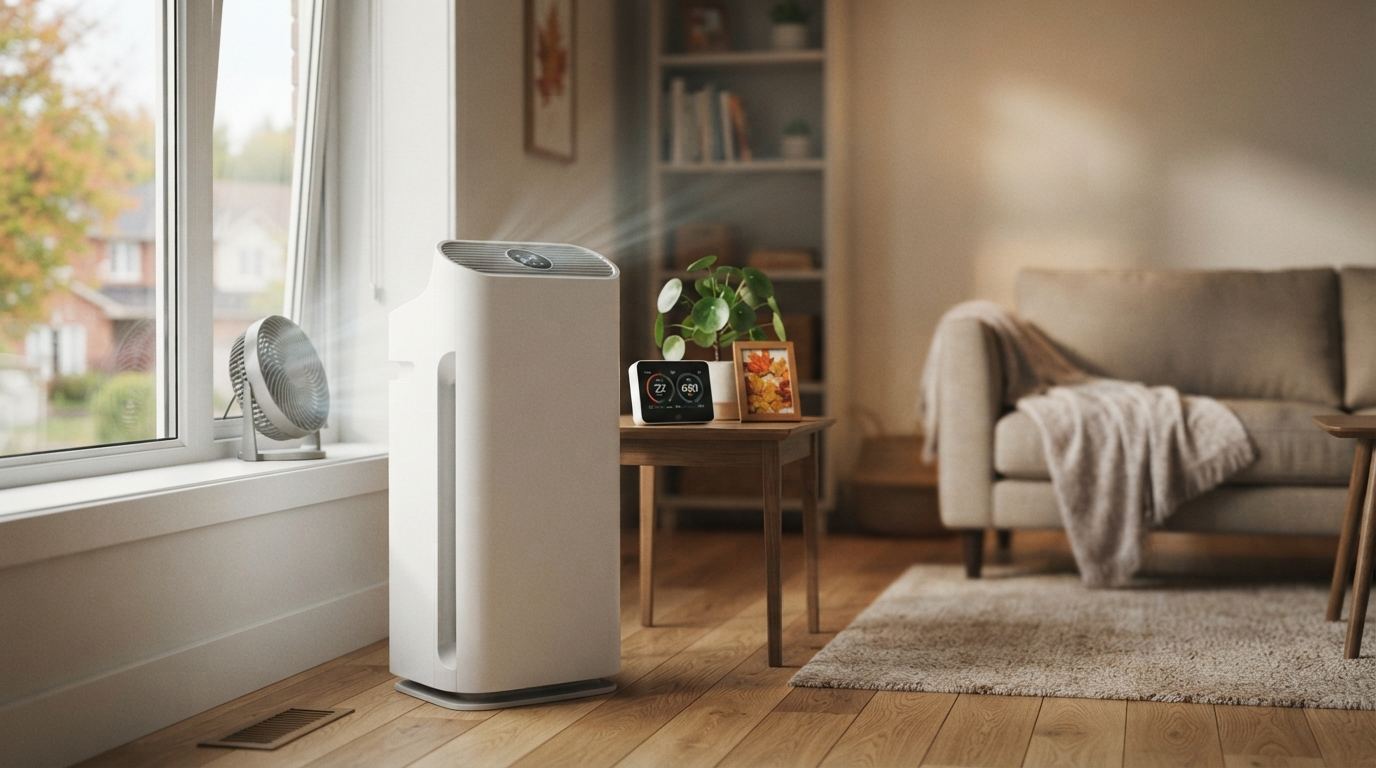
How to improve indoor air quality for flu season 2026: ventilation, air changes per hour, and the HEPA air purifiers that actually help reduce spread.
This article contains affiliate links. If you buy through these links, we may earn a small commission at no extra cost to you.
Improving indoor air quality for flu season is mostly a ventilation problem, and the fix is simpler than people expect: bring in more outdoor air. Open two windows on opposite sides of a room and you cut how much respiratory virus stays suspended in the air; when weather or a power outage makes that impossible, a true HEPA purifier sized to the room does most of the same work.
The why is straightforward: when someone with a cold or flu talks, breathes, or coughs, they release virus-laden droplets and aerosols. Those particles hang in the room's air for minutes to hours. Every bit of fresh air dilutes them, and dilution is the CDC's core non-pharmaceutical recommendation for respiratory viruses. In the 2026 summer COVID wave, much of the spread still happened at home, which makes air quality the cheapest layer of defense most households are missing.
Indoor Air Quality for Flu Season: The Basics
- Open two opposite windows in the room where people gather; cross-ventilation beats one window by a wide margin.
- Run exhaust fans in bathrooms and kitchens whenever someone is sick; they pull stale air out.
- Size a HEPA purifier to the room, not the house. A purifier too small for the space is wasted money.
- Aim for 4–6 air changes per hour in a sick room; achievable with an open window or the right purifier.
- Watch the CO₂ reading if you have a monitor: above roughly 1,000 ppm indoors means the ventilation is the weak link.
How Much Ventilation Is Enough
Public health guidance works in "air changes per hour," or ACH: how many times the full volume of a room's air gets replaced in one hour. For normal living, 2–4 ACH is fine. For a room where someone is sick, the CDC's ventilation guidance points at 4–6 ACH.
You do not need instruments to approximate it. A couple of open windows and a box fan aimed out one of them will hit that range in a standard bedroom on a mild day. The classic version is the Comfort Zone CZ200A 20" 3-Speed Box Fan: corded, about $35, around 900 CFM on high. In winter, cracking a window 2–3 inches for ten minutes several times a day moves a lot of air. The CO₂ yardstick is the honest check: indoor levels under about 1,000 ppm mean ventilation is keeping up; past 1,500 ppm means it is not. If you want that number instead of an estimate, a portable CO₂ meter like the Temtop CO2 Monitor (about $30, with temperature and humidity on the same screen) reads the ppm directly, including the overnight climb in a closed bedroom.
The HEPA Purifier: The Gear That Actually Helps
When opening windows is not an option (freezing temperatures, wildfire smoke outside, or a house without good cross-flow), a portable purifier is the right tool. Not an "ionizer" labeled as a purifier, and not a UV wand. A true HEPA unit, verified by the "HEPA" label and a CADR (clean air delivery rate) number on the box.
The one that fits most bedrooms is the Levoit Core 300 Air Purifier: 141 CFM CADR, true HEPA filtering 99.97% of particles down to 0.3 microns, rated for rooms up to 219 sq ft, quiet enough to run next to a bed all night. A good rule of sizing: a HEPA unit at 4+ ACH in your bedroom roughly doubles to triples the effective ventilation on a night when the windows stay shut.
Can a Purifier Replace an Open Window?
No, and it helps to be clear about the difference. Ventilation removes virus-laden air and replaces it with clean; a purifier cleans the air already in the room but does not bring new air in. If one person in the room is the source, a purifier reduces what everyone else breathes. If the source leaves (the sick person moves to their own room), ventilating that space gets the concentration down fastest.
For most flu-season setups, run them together when you can: a window cracked for ventilation plus a HEPA purifier for steady scrubbing.
| Approach | What it does | Cost | Best for |
|---|---|---|---|
| Open windows + cross-flow | Dilutes virus-laden air | $0 | Mild weather, daytime |
| Exhaust fan | Pulls stale air out of one room | ~$30 | Bathrooms, kitchens |
| HEPA purifier (Levoit Core 300) | Scrubs 99.97% of particles in the room | ~$81 | Bedrooms, sick rooms, smoky days |
| Purifier + power station | Purifier keeps running in an outage | ~$330 | Multi-day outages, severe weather windows |
Keep the Purifier Running Through Outages
A purifier only helps while it is running, and flu season often overlaps with storm season. If the power goes out mid-illness, a battery station keeps the sick-room purifier going through the night, and can run a CPAP or a phone off the same charge. The EcoFlow RIVER 3 Portable Power Station is a good fit at 245Wh, recharging from wall, car, or solar. It is the piece that turns a HEPA purifier from a fair-weather tool into a real emergency asset.
Humidity, HVAC Filters, and Other Easy Wins
Beyond ventilation and a purifier, three cheap moves round out a healthier sick-season house:
- Keep humidity at 40–60%, the range experts have long recommended; Stanford research in 2024 found this band naturally creates antiviral compounds in the air. Dry air lets aerosols hang longer; damp air feeds mold. A humidistat tells you where you are.
- Upgrade the furnace filter to MERV-13. A pleated MERV-13 like the Filterbuy 20x20x1 MERV 13 Air Filter (2-Pack) (about $34 for a two-pack) catches far more particulates than the cheap fiberglass default; match the size on your current filter's frame. Change it on the same schedule.
- Use exhaust fans with the door open a crack. Running the bathroom fan with the door closed creates negative pressure and pulls hallway air through the sick room. Leave a 1-inch gap under the door.
When Air Quality Matters Most
The stakes are highest in three situations: someone in the house is sick, it is smoke season (ventilation and purifiers are the same toolbox we use for wildfire smoke), or you are caring for someone higher risk. For a full quarantine-room setup, our sick-day home care kit covers the room layout, and the pandemic preparedness checklist fits air quality into the broader plan.
Quick Recommendations
- This weekend: walk the house and confirm which windows give you cross-flow, and check your furnace for a MERV-13 slot.
- If someone is sick: move them to a room with its own window, crack it, and run a Levoit Core 300 Air Purifier on low overnight.
- Before storm season: add a EcoFlow RIVER 3 Portable Power Station if you want the purifier (and a CPAP) to survive an outage.
- Buy the purifier before flu season, not during it.
Open air is free, and it is the single best thing most homes can do for flu season. A HEPA purifier closes the gap when windows cannot open. That combination keeps the air moving, the concentration low, and the sick season shorter.