
How to Use a Thermometer and Pulse Oximeter at Home: Fever, Oxygen, and When to Call (2026)
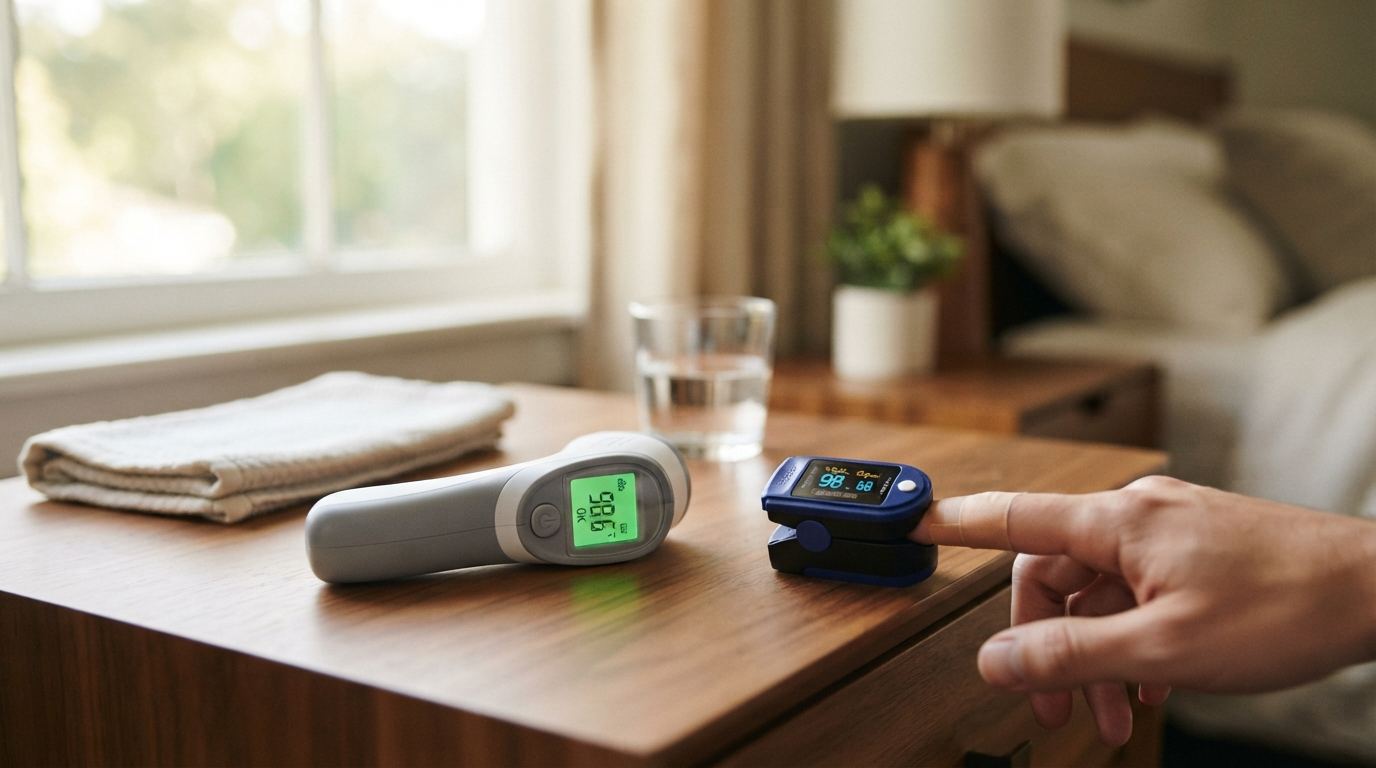
How to use a thermometer and pulse oximeter at home: get accurate fever and oxygen readings, fix common errors, and know when CDC guidance says to call.
This article contains affiliate links. If you buy through these links, we may earn a small commission at no extra cost to you.
Two small devices answer the two questions every caregiver asks at 2 a.m.: do they have a fever, and are they getting enough oxygen? A no-touch forehead thermometer and a fingertip pulse oximeter give you both numbers in under a minute, if you use them correctly. The iHealth No-Touch Forehead Thermometer PT3 reads in one second with three sensors and vibration feedback, and the Zacurate Pro Series 500DL Pulse Oximeter shows SpO₂ and pulse in seconds with batteries included. This guide shows how to get accurate readings, what the numbers mean by age, and when CDC guidance says to call.
Quick takeaways:
- Forehead readings run 0.5–1°F lower than oral: 100.4°F (38°C) on the forehead is a fever in adults; 100.4°F rectal is the threshold for infants under 3 months.
- An oximeter needs warm, still hands and no nail polish: wait 10–20 seconds for a steady number; below 94% warrants a call.
- Log temperature, oxygen, pulse, symptoms, and meds every 4–6 hours. A trend beats any single number at telehealth.
How to Take an Accurate Forehead Temperature
The iHealth No-Touch Forehead Thermometer PT3 is built for home use: hold it 1–1.5 inches from the center of a dry forehead, press and hold, wait for the vibration, and read the large LED. Three sensors compensate for distance and the one-second read helps with a squirming child.
- Dry the forehead first. Sweat or a cool washcloth can drop a reading by a full degree. Pat dry and wait 2–3 minutes after wiping.
- Center it. Aim at the middle of the forehead, hair pushed back, perpendicular to the skin. Off-center reads low.
- Don't rapid-fire. Wait 10–15 seconds between pulls; the sensor needs to reset. If a number surprises you, wait five minutes and retry.
- Track the trend. Most adults run 97.6–99.6°F depending on time of day. A rising curve matters more than one spike.
- Match method to age. For infants under 3 months the AAP still calls rectal temperature most reliable. For older kids and adults, a properly aimed forehead thermometer is accurate enough for daily monitoring, just stay consistent so trends compare.
Keep spare AAA batteries where the thermometer lives. A low battery is the quietest way to get a wrong reading.
How to Get a Reliable Oxygen Reading
A pulse oximeter shines light through your fingertip to estimate SpO₂ and pulse. The Zacurate Pro Series 500DL Pulse Oximeter is the household workhorse: slip it on, stay still 10–20 seconds until the number steadies, and read the display. It comes with a silicone cover and batteries so it's ready out of the box.
- Warm the hands. Cold fingers are the top reason for a low or no reading. Rub hands together or run warm water for 30 seconds first.
- Stay still and seated. Sit upright, hand at heart level, fingers relaxed. Motion is the second-biggest error source.
- Check the nail. Dark polish, acrylics, or very long nails block the light. Try a different finger if you can't remove polish.
- Mind fit and light. Finger should reach the end of the clip, nail up, out of direct sun. For a small child, try the pinky and hold the clip gently closed.
Note: oximeters can read slightly high on darker skin tones and slightly low when perfusion is poor (cold, dehydration). Treat a borderline 94–95% as worth rechecking, not dismissing.
What the Numbers Mean, and When to Call
The table summarizes CDC and AAP thresholds for home use. It is not medical advice: when in doubt, call your clinician and read them your log.
| Reading | Typical normal | Watch closely | Call now / seek care |
|---|---|---|---|
| Adult forehead temp | 97.6–99.6°F | 100.4–102°F, recheck every 4–6h | >103°F not responding to meds, or fever >3–4 days |
| Child forehead temp | 97.6–100°F | 100.4–102°F, offer fluids | >104°F, or fever with rash, trouble breathing, confusion |
| Infant <3 mo (rectal) | 97.9–100.4°F | Any 100.4°F (38°C) | 100.4°F+ is an immediate call |
| SpO₂ (pulse ox) | 95–100% | 93–94% recheck in 5 min, call clinician | <93%, or <94% with breathlessness or chest pain |
| Pulse rate | 60–100 bpm adult | Persistently >100 or <50 with symptoms | Chest pain, fainting, or worsening breathlessness |
Emergency signs override any single reading: trouble breathing, persistent chest pain or pressure, new confusion or inability to wake, and bluish lips or face. If someone looks worse but the oximeter says 96%, trust the person and call. For children, watch hydration as closely as temperature: fewer wet diapers, no tears when crying, or dry mouth can mean dehydration before the fever curve tells you.
Keep a Simple Sick-Day Log for Telehealth
Clinicians love a log because it turns "they've had a fever" into a trend they can triage. Keep a notecard or phone note in the sick-room bin:
- Every 4–6 hours: time, temperature and method, SpO₂, pulse, symptoms, fluids, and meds with dose and time.
- Once a day: note direction (better, same, or worse) and any new symptom.
- Bring it to the call: read the last 24 hours verbatim. "Fever 101.2°F forehead at 8 p.m., SpO₂ 93% at rest, pulse 108, dry cough, little urine today" gets better guidance than "fever and cough."
Have pharmacy, insurance, medication list, and a 24-hour telehealth number on paper in the kit. Phones die at the worst moment. Our sick-day home care kit covers the full isolation setup, the pandemic preparedness checklist fits monitoring into the household plan, the indoor air quality guide shows when a cracked window or HEPA purifier helps while someone is isolating, and sick-room humidity and comfort covers the humidity and air-movement layer around that kit.
Quick Recommendations
- Put the pair in one bin now: iHealth No-Touch Forehead Thermometer PT3 (~$14) and Zacurate Pro Series 500DL Pulse Oximeter (~$20) together cost under $45 plus a 24-pack of Energizer MAX AAA Batteries, 24 Count (~$13) so the devices don't go dark mid-fever.
- Practice once while well: one clean forehead read and one steady SpO₂ read per person before a 2 a.m. fever does the teaching.
- Restock after every illness: wipe both devices, replace batteries if dim, and put the log back so the next check is ready before the next wave.
Two practiced devices, one simple log, and a clear sense of which numbers trigger a call keep most respiratory illnesses safely managed at home, and get you faster, better help when home is no longer the right place to stay.