
Pandemic Preparedness Checklist: How to Prepare for the Next Outbreak
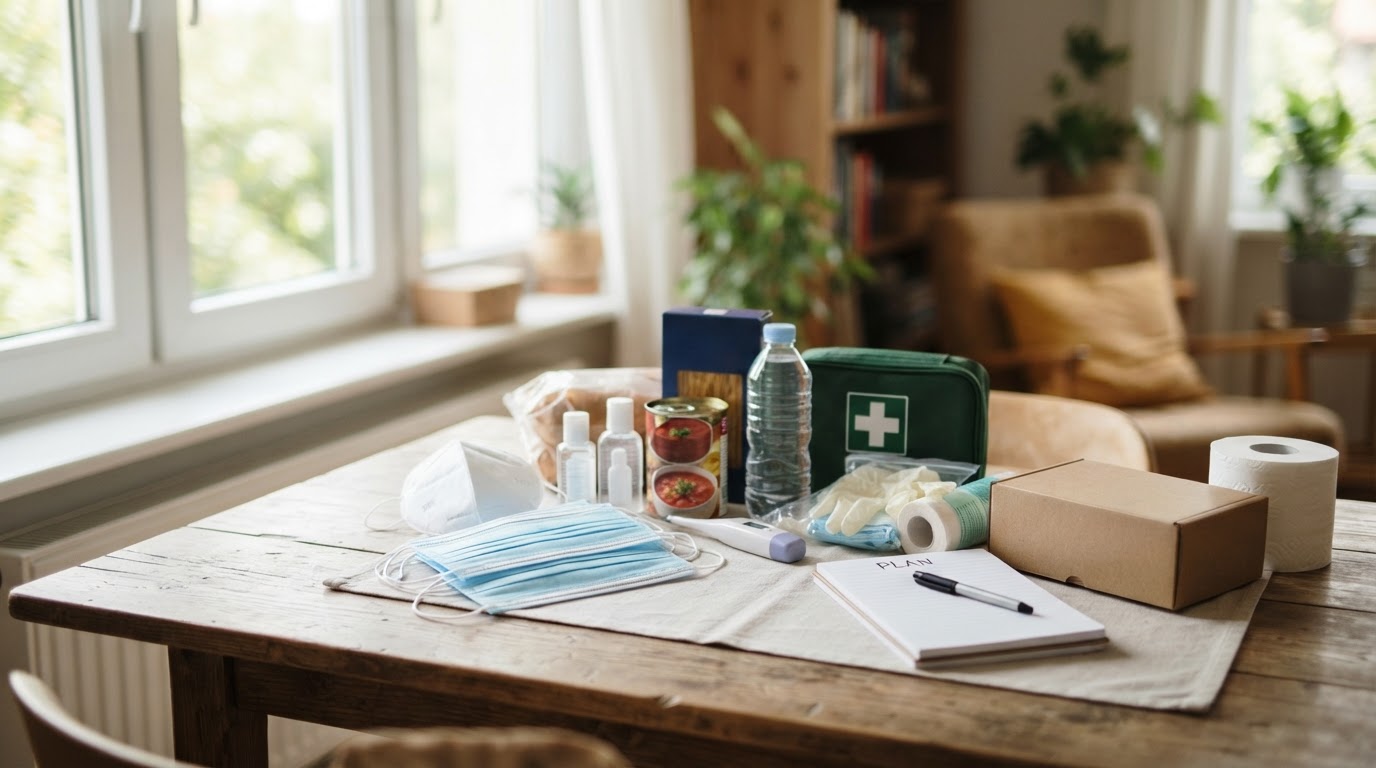
A practical pandemic preparedness checklist for households: masks, supplies, quarantine plans, and knowing when to seek care — grounded in CDC guidance.
This article contains affiliate links. If you buy through these links, we may earn a small commission at no extra cost to you.
Outbreaks are part of the public health calendar, and 2026 has made that impossible to ignore. The WHO called the DRC/Uganda Ebola outbreak the fastest-growing ever recorded, the CDC reported COVID-19 still circulating at "epidemic levels" in late July, and contaminated food can still reach our kitchens.
You can't control what the next outbreak brings. You can control how ready your household is. This checklist covers masks, meds, supplies, and a plan, so a sick day doesn't become a household crisis.
The 2026 Pandemic Preparedness Checklist: What Every Household Needs
This is about making sure the items are stocked before you need them, since stores crowd fast once an outbreak is announced.
1. Stock N95 Masks for Every Household Member
The CDC recommends N95 (or better) respirators for protection against airborne viruses; cloth and surgical masks are far less effective. A 3-panel flat-fold like the 3M Aura N95 Particulate Respirator 9205+ seals across more face shapes than the round cup style.
- Quantity: 15–30 NIOSH-approved N95 masks per person (more if anyone is a caregiver)
- Why: A two-week quarantine with one sick member burns through masks fast. Fit-test yours once so they seal.
2. Keep a Thermometer and a 2-Week Supply of OTC Meds and Electrolyte Drinks
Fever is the first symptom of most respiratory infections. Your thermometer is your early-warning system. Keep one per household with spare batteries. A no-touch model like the iHealth No-Touch Forehead Thermometer PT3 (about $14) reads a forehead in one second and signals with a quiet vibration, so a sleeping kid does not have to be woken for the check.
Stock the medicine cabinet with:
- Fever/pain: Amazon Basic Care Acetaminophen 500mg (400 Caplets) and Amazon Basic Care Ibuprofen 200mg (500 Tablets)
- Cough/cold: a suppressant like Mucinex DM Maximum Strength Cough & Chest…, a decongestant like MAJOR Maximum Strength Nasal Decongestant Spray… (three days in a row max, per the label), and an antihistamine like Member's Mark Diphenhydramine 25 mg (600 Tablets)
- Hydration: electrolyte drinks or ORS packets, since fever plus diarrhea is a fast road to dehydration. WHO-formulation ORS packets like the TRIORAL Oral Rehydration Salts, 15 Single-Serve… rehydrate faster than water or sports drinks.
A 2-week supply of each covers the typical illness window without a pharmacy trip.
3. Refill Prescriptions for 30 Days (or 90 If Your Plan Allows)
Ask your doctor or pharmacy for a 30-day supply of every regular medication, or a 90-day mail-order supply if your plan supports it. Inhalers, insulin, blood-pressure meds, and mental-health prescriptions are the ones that hurt most when refills stall during a surge. A 30-day cushion means no one rationing meds mid-illness.
4. Store 2 Weeks of Food and Water
The CDC and FEMA recommend a two-week supply of food and water for pandemic-type events, roughly double the standard 72-hour kit. Two weeks covers the incubation-to-recovery window of most respiratory illnesses and keeps you out of crowded stores at peak spread.
- Food: non-perishables you already eat (canned goods, rice, pasta, shelf-stable milk)
- Water: 1 gallon per person per day for 14 days. A Reliance Aqua-Tainer 7 Gallon Water Container… stores 7 gallons and is the standard.
See our food and water storage guide for the full breakdown.
5. Stock Hygiene Essentials: Soap, Hand Sanitizer, Disinfectant, Tissues
Handwashing with plain soap is the CDC's single most effective infection-control measure. Stock enough that washing 20 seconds, several times a day, for two weeks is never a scarcity problem:
- Hand soap: 2-week supply. The Ivory Original Bar Soap, 24-Count Bath Size (4 oz) 24-pack works out to about $1.72 a bar.
- Hand sanitizer: 60%+ alcohol, a couple of small bottles per person
- Disinfectant: EPA-registered wipes or spray. The Clorox Disinfecting Wipes, Variety Pack (3 x 75 ct) variety pack holds 225 bleach-free wipes per tub, covering a two-week sick-room sweep with no rag laundry.
- Tissues: 2 boxes per person, plus a lidded trash bin in the sick room
6. Set Up a Quarantine Plan: Separate Room and Bathroom
Decide now where a sick household member will sleep and which bathroom they'll use, before anyone gets sick. A separate room and bathroom (or a strict rotation with disinfection) cuts household transmission. Your plan should cover how meals get delivered, how laundry is handled, who's the designated caregiver, and how you'll check on the sick member without shared contact. A sick-day home care kit makes running this routine far easier. For the comfort layer of that room, humidity, air movement, and quiet, see sick room humidity and comfort.
A true HEPA purifier in the sick room reduces airborne particles. The Levoit Core 300 Air Purifier covers up to 219 sq ft and runs quiet enough for a bedroom.
7. Add a Cleaning Routine to Your Week
The CDC's "How to Clean and Disinfect" guidance says high-touch surfaces: doorknobs, light switches, countertops, phones, faucet handles, remote controls, should be cleaned daily, and more often once someone is sick.
A simple habit that pays off: a "disinfect everything touched" sweep at the end of each day. During an active illness, that sweep happens after every bathroom use.
8. Stay Informed From Trusted Sources
Bookmark the CDC, WHO, and your state and county health department before the rumors start. Trust these over social media and group chats. During the 2026 DRC/Uganda Ebola outbreak, WHO and CDC bulletins were the reliable sources.
9. Know When to Seek Care
The CDC lists emergency warning signs for respiratory illness. Seek care immediately if a sick household member has:
- Trouble breathing or persistent chest pain
- Confusion or inability to wake or stay awake
- Bluish lips, skin, or nail beds
- High fever that won't break after 3 days, or a fever that drops then spikes
Call ahead to your clinic or use telehealth when you can. Have your pharmacy and insurance card numbers on paper.
Pandemic Preparedness Checklist Table
| Item | Quantity (per person) | Why it matters |
|---|---|---|
| N95 masks (NIOSH-approved) | 15–30 | Blocks airborne transmission when caring for a sick member |
| Thermometer | 1 per household | Fever is the earliest signal of infection |
| OTC fever/pain meds | 2-week supply | Covers illness window without pharmacy trips |
| Cough/cold meds | 2-week supply | Symptom relief aids rest and recovery |
| Electrolyte drinks / ORS | 2-week supply | Prevents dehydration from fever and diarrhea |
| Prescriptions | 30–90 day supply | Protects against pharmacy delays during surges |
| Non-perishable food | 2 weeks | Keeps you out of crowded stores at peak spread |
| Water | 1 gal/day × 14 days | Covers drinking, cooking, and hygiene |
| Hand soap | 2-week supply | #1 CDC-recommended infection control |
| Hand sanitizer (60%+) | 2 small bottles | When soap and water aren't available |
| Disinfectant wipes/spray | 2-week supply | Daily high-touch surface cleaning |
| Tissues | 2 boxes | Containment for coughs and sneezes |
Quick Recommendations
- This weekend: order masks and check your thermometer battery
- This week: call your pharmacy about a 30- or 90-day prescription refill
- This month: build your 2-week food and water stash using the food and water storage guide
- Before anyone's sick: walk the house and write down your quarantine plan, and put together a sick-day home care kit
- Worth the upgrade: Levoit Core 300 Air Purifier for the sick room, Reliance Aqua-Tainer 7 Gallon Water Container… for water storage
The next outbreak will eventually come. The households that work through this checklist this week are the ones that stay calm and stay well.