
When to Call the Doctor vs. Ride It Out: Symptom Red Flags at Home
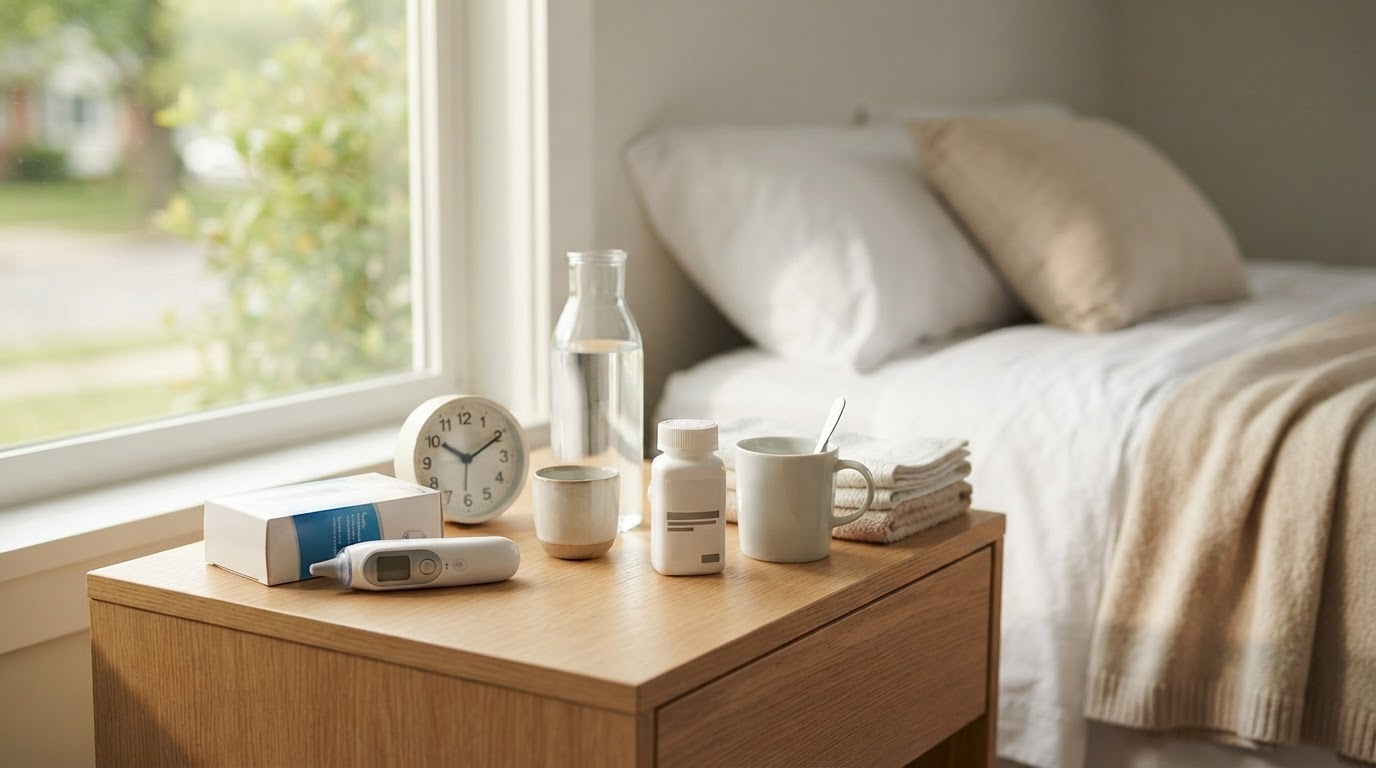
When to call the doctor, head to urgent care, or call 911 versus ride it out at home, with red flags for fever, dehydration, breathing, pain, and kids.
This article contains affiliate links. If you buy through these links, we may earn a small commission at no extra cost to you.
Most home sickness stays home. The hard part is deciding when it stops being a wait-it-out illness and becomes a call-a-clinician one. A few symptoms mean "call right now," a longer list means "call today," and a much longer list means "watch and document." This guide is the in-between decision tool, the one that lives next to the thermometer and pulse oximeter in the sick-room bin, so a 2 a.m. fever doesn't turn into guessing.
The two devices that anchor most home decisions are a thermometer and a pulse oximeter. The iHealth No-Touch Forehead Thermometer PT3 reads in one second with vibration feedback, and the Zacurate Pro Series 500DL Pulse Oximeter shows SpO₂ and pulse in seconds. Keep TRIORAL Oral Rehydration Salts, 15 Single-Serve… in the same bin for small-sip rehydration when vomiting or diarrhea are still mild enough for home care; mix it exactly as directed. Keep MedPride Powder-Free Nitrile Exam Gloves, Medium… nearby for blood or vomit cleanup. These tools support a decision; they do not make it. Our thermometer and pulse oximeter guide covers the device side. This article covers the when, not the how.
Three Buckets, Not One
Before any specific symptom, sort the situation into one of three buckets:
- Call 911 (or go to the ER). A short list of red flags that override every threshold below. If you see one, you stop reading and call.
- Call today (or this hour). Symptoms that won't kill tonight but will hurt if ignored. Telemedicine is fine for most; urgent care if the doctor can't see you.
- Watch and document. Everything else. You keep a log, you recheck on a schedule, and you call if the situation moves up a bucket.
The mistake most people make is staying in "watch" when they've actually moved up. The mistake on the other side is calling for every fever. Both waste clinician time, and the second one trains you to ignore your own judgment.
Call 911 / Go to the ER
These signs override any single reading. If someone looks awful but the oximeter says 96%, trust the person, not the device.
- Trouble breathing or shortness of breath that gets worse, or speaking in single words between breaths
- Persistent chest pain or pressure, especially with sweating, nausea, or shortness of breath
- New confusion, trouble waking up, or passing out
- Bluish, gray, or very pale lips, face, or nail beds
- A seizure, severe head injury, or sudden severe headache ("worst headache of my life")
- Heavy or spurting bleeding, or bleeding that soaks through dressings and does not slow with firm, continuous direct pressure
- Stiff neck with high fever and a rash that looks like tiny red dots under the skin
- Thoughts of self-harm or harming others
For an infant under 3 months, a rectal temperature of 100.4°F (38°C) or higher means urgent medical evaluation now, no matter how well the baby looks; that is the American Academy of Pediatrics' threshold for young infants. Call 911 if the baby is hard to wake, struggling to breathe, blue or gray, or having a seizure.
Call Today (or This Hour)
This bucket covers symptoms that don't warrant a siren but shouldn't wait a week:
- Fever at 103°F (39.4°C) or higher that doesn't respond to medication, or any fever lasting more than 3 days without improvement (both are the Mayo Clinic's adult call-your-doctor thresholds)
- For most people, a resting SpO₂ of 93–94% that stays there on a repeat reading needs same-day medical advice; at 92% or lower, call 911 or seek emergency care now, especially with breathing trouble. Those cutoffs match the NHS pulse-oximetry program, which sends people at 93–94% to call for advice and at 92% or below to get urgent help. If a clinician has given you a different baseline for a chronic lung condition, follow that plan.
- Trouble keeping fluids down, or signs of dehydration: dark urine, dry mouth, dizziness on standing, no tears when crying, fewer wet diapers. The American Red Cross treats an inability to keep foods or fluids down as needing immediate medical care, so make the call now and let a clinician triage it.
- Severe abdominal pain, especially one-sided lower-right (appendix), or pain that wakes you from sleep
- Vomiting blood, or black/tarry stools
- A rash that spreads quickly, comes with fever, or looks like a target/bullseye
- Painful urination, blood in urine, or back pain with fever (kidney infection sign)
- A cough that brings up blood, or shortness of breath that doesn't match the fever
- Persistent vomiting in a pregnant person, or any vaginal bleeding during pregnancy
- For kids: lethargy, refusal to drink, fewer wet diapers for 8+ hours, no smile or engagement, sunken soft spot on the infant skull
The faster half of the list often ends in a same-day urgent-care visit rather than a telehealth call. If you can't reach your doctor within 2 hours and the symptom is worsening, go in person. A log with timestamps helps either way: "fever 101.8°F at 8 p.m., SpO₂ 93% at 8:30, vomiting since 6, urine dark" gets you past the front desk faster than "they've been sick."
Watch and Document
Most of home sick care lives here, and the right tool is a written log, not a feeling:
- Mild fever under 102°F in an adult, responding to acetaminophen or ibuprofen, with steady SpO₂ and no shortness of breath
- Runny nose, sore throat, body aches, and cough without breathing trouble
- Mild vomiting and diarrhea that is settling down, with sips of oral rehydration salts staying down
- A rash without fever, no spread, no breathing trouble
- Headache, fatigue, and low-grade fever that responds to rest and fluids
Track every 4–6 hours: time, temperature and how you took it, SpO₂ if you have a meter, fluids in, urine color, meds with dose and time, and the direction (better / same / worse). The sick-day home care kit carries the supplies that keep this bucket from sliding up, the pandemic preparedness checklist fits monitoring into the household plan, and our stomach flu playbook covers the one bucket where "ride it out" really does mean days of bleach and patience.
The 2 a.m. Rule
Most home escalations happen overnight when no one's available, and the question is "do I drive to urgent care now, or wait for morning?" Use this rule:
- If they're in the 911 bucket, call 911. Don't drive them yourself if they may deteriorate on the way.
- If they're in the call-today bucket, use an after-hours nurse line, urgent care, or the clinician's on-call service. Do not assume morning is safe when a reading or symptom is worsening.
- If they're moving from "watch" toward "call today" and you cannot place them, call a nurse line or urgent care for triage and keep monitoring while you wait.
Trust your instinct, but log what changed. "Something felt off at 3 a.m." gives a clinician less to work with than "SpO₂ dropped from 95 to 93 over four hours, fever held at 102, and they started refusing sips."