
The Household Stomach Flu Playbook: Norovirus Rules for 2026
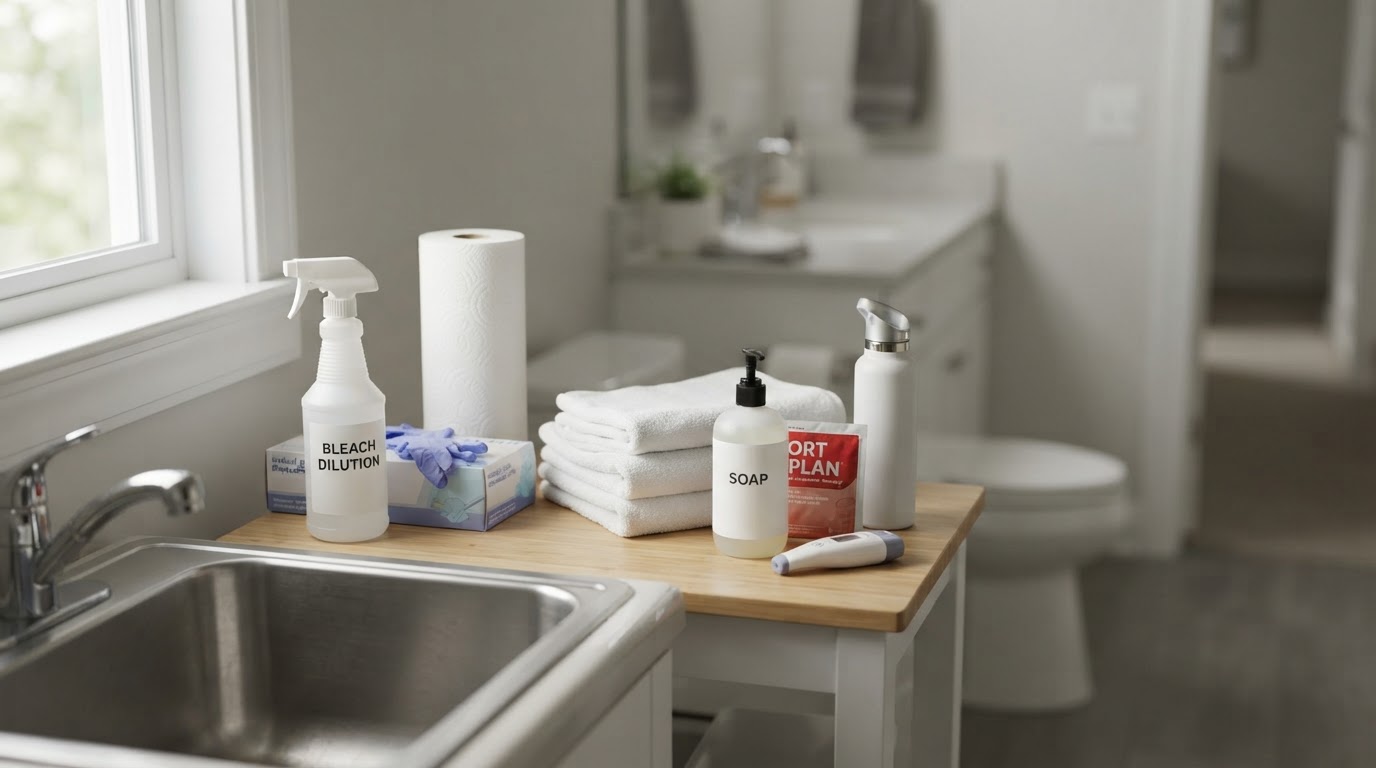
Norovirus moves through a house fast. The soap rule, bleach dilution, vomit protocol, and ORT plan that keep one sick person from becoming the whole household.
This article contains affiliate links. If you buy through these links, we may earn a small commission at no extra cost to you.
The stomach flu is not the flu, and it does not respond to the playbook that works for coughs. Norovirus, the most common cause of vomiting and diarrhea in the US, is fought with soap, a correctly mixed bleach solution, and fast rehydration. Get those three right and you can usually keep the outbreak to one bedroom instead of the whole family.
Here is why the usual tricks fail. It takes fewer than 100 virus particles to make someone sick, and a symptomatic person sheds billions with a single episode. Symptoms hit 12 to 48 hours after exposure and last one to three miserable days, and people keep shedding the virus for at least a couple of days after they feel better. It survives on counters and doorknobs for days, and alcohol hand sanitizer barely touches it.
Wash Hands With Soap, Not Sanitizer
Hand sanitizer is great against respiratory viruses and nearly useless here. Norovirus has a tough protein shell that alcohol does not break down well, which is why outbreaks march straight through offices where everyone douses with gel.
The fix costs nothing: wash with plain soap and running water for 20 seconds, and be strict about the two moments that matter most, after using the bathroom and before touching food. Soap does not need to be antibacterial. The physical scrubbing is what carries the virus off your skin and down the drain. Put a bottle of sanitizer in the kit if you like, but during a stomach bug, treat it as a decoration.
Mix a Real Bleach Solution
EPA-registered disinfecting wipes are convenient for colds, but most do not carry enough active ingredient to inactivate norovirus on a first pass. The reliable tool is a fresh bleach solution mixed the same morning you use it.
The numbers, per gallon of water:
| Bleach strength | Everyday surfaces | Vomit or diarrhea zones |
|---|---|---|
| ~5.5% (regular unscented) | 3/4 cup | 1 1/2 cups |
| ~7.5% (concentrated) | 3 1/2 tablespoons | 7 tablespoons |
Either mix lands you roughly in the 1,000 to 2,000 ppm chlorine range the CDC lays out for norovirus, with the doubled dose for the zones that actually carry the outbreak. Apply it to the surface, leave it wet for about 5 minutes, then rinse any food-contact surface with clean water afterward. A jug of Clorox Disinfecting Bleach, 121 oz costs about as much as lunch and makes dozens of gallons. Bleach loses strength in dilute form, so mix a fresh batch each day of the outbreak rather than storing leftover spray.
The Vomit Protocol
A single vomiting event releases virus into the air, not just the floor. Clean it like the hazard it is:
- Open a window or door and send kids and pets out of the room.
- Put on disposable gloves, a box of MedPride Powder-Free Nitrile Exam Gloves, Medium… lives next to the bleach for exactly this.
- Never sweep or vacuum vomit while it is wet and full of virus; that mists particles into the air you breathe. Cover the mess with paper towels, lift the whole thing straight into a plastic bag, knot it, and take the trash out. A household carton like the Bounty Quick Size Paper Towels, 16 Family Rolls… breaks down to about $1.15 per regular roll, so the bulk pack is the honest way to buy a consumable you will burn through during an outbreak.
- Pour the bleach solution over the spot, let it sit wet for 5 minutes, wipe outward from the edges in, then repeat on everything within a few feet, including the floor.
- Close the toilet lid before flushing if the sick person has been using that bathroom, and disinfect the seat, handle, and faucet daily.
Carpet cannot take bleach. Steam clean it hot, or clean it with a carpet cleaner and accept that replacing the rug is sometimes the honest answer.
Food and Laundry Rules
Norovirus spreads through food handled by someone who is contagious, and through shared linens.
- Anyone sick with vomiting or diarrhea does not prepare food for other people for at least 48 hours after symptoms stop. That rule matters more than any cleaning product in this article.
- Toss ready-to-eat food the sick person touched, and wash raw produce before it goes in the fridge.
- Run the dishwasher on a hot cycle for the sick person's dishes, or wash them by hand in hot, soapy water.
- For laundry, wear gloves and keep soiled items away from your face. Wash with detergent at the warmest setting the fabric allows, and do not shake the items out first, that flings virus around the room.
Rehydration Is the Actual Treatment
There is no medicine that shortens norovirus. The whole game is keeping the sick person hydrated while their gut does its thing, and the tool for that is oral rehydration solution, not sports drinks. WHO-formulation packets like TRIORAL Oral Rehydration Salts, 15 Single-Serve… replace the salts and glucose that water alone cannot, and they keep for years in the kit. The technique is patience: small sips every few minutes once vomiting eases, not a giant glass that comes right back up.
Call the doctor if you cannot keep fluids down after repeated attempts, if urine turns dark and scarce, or if someone seems confused or listless. Infants and older adults dehydrate fastest, so start their sips early and keep a closer eye on them.
One Plan, Two Kinds of Bug
The rest of this site's sick-season advice, the sick-day home care kit and the pandemic preparedness checklist, covers the respiratory bug: masks, HEPA air, distance. Norovirus ignores all of that. It travels on hands, surfaces, food, and laundry, so the playbook swaps the purifier for bleach and the masks for soap. Stock both kits while everyone is healthy. The week your family meets a stomach bug, you will not want to shop for it.