
Keep a Sick Room Comfortable: Humidity, Air, and Isolation Comfort
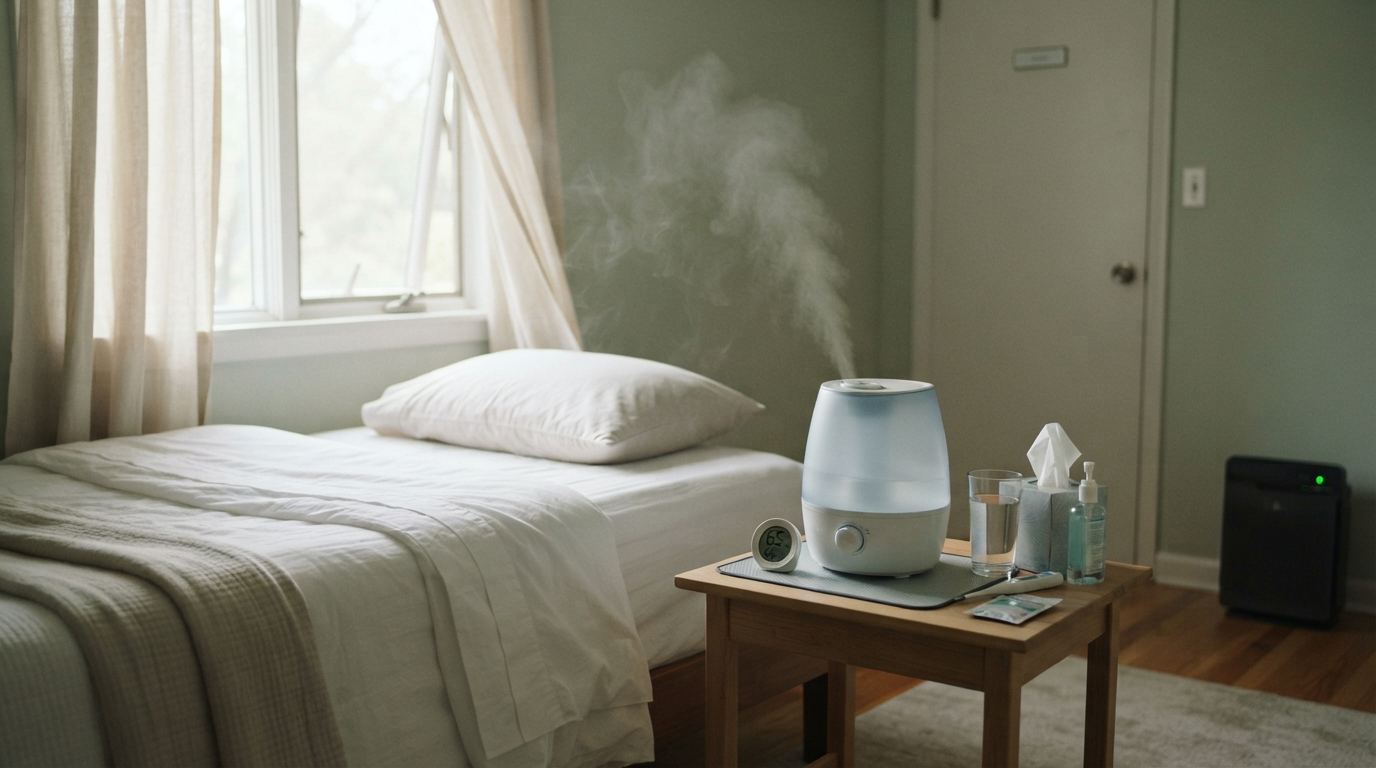
Set up a sick room that actually aids recovery: the right humidity for coughs, quiet air movement, safe humidifier habits, isolation that protects the house.
This article contains affiliate links. If you buy through these links, we may earn a small commission at no extra cost to you.
A fever is miserable without dry air and a stuffy room. You cannot fix the illness with gear, but you can make the room where someone recovers easier to breathe, sleep, and wait out. That is the job of a sick room: one space dialed for comfort, and distance for everyone else.
Why one room should hold the illness
Most homes spread sickness around without meaning to. The ill person camps on the couch, kids wander in and out, and the air does whatever it does. Giving one room the job changes two things: the sick person gets a space set for rest, and the rest of the house gets distance. You do not need much. A door that closes, a window that opens, and a small table for water and medicine are enough.
The humidity window that helps coughs
Very dry air thickens mucus and leaves throats raw. Very damp air fogs windows and invites mold. The range both clinicians and building folks point to is 40 to 60 percent relative humidity indoors.
A Antonki Room Thermometer and Indoor Hygrometer, 2… on the nightstand tells you where you are, and the spare unit can live where the rest of the household gathers. Below 30 percent, coughs feel harsher and noses bleed for no reason. Above 65 percent for hours, you have moisture problems.
Winter hits hardest. Forced-air heat can drop bedrooms into the twenties. That is when a little added moisture takes the edge off a cough.
A simple cool-mist humidifier is all a bedroom needs. Cool mist is safer with kids and easy to keep clean. For a standard bedroom, 2 to 3 liters is plenty.
The Levoit Top Fill Cool Mist Humidifier 2.5L fits this job. It holds 2.5 liters, runs up to about 25 hours on low, and stays near 28 decibels. Top-fill means you can pour from a pitcher without hauling the base to the sink, and it shuts off when the water runs out. Around $40.
Humidity makes breathing more comfortable, but it does not clean the air. The Levoit Core 300 Air Purifier does that, a true HEPA purifier sized for bedrooms up to 219 square feet and quiet enough to run overnight. Around $80.
If the power goes out, both keep going on a small battery like the EcoFlow RIVER 3 Portable Power Station.
Using a humidifier without creating new problems
A humidifier helps only if you keep it clean. A dirty tank grows what you are trying to avoid.
- Use distilled water if your tap leaves white dust. That dust is mineral but settles everywhere and can irritate airways. | Rinse and wipe the tank daily, deep clean weekly. Follow the manual for a vinegar soak.
- Do not over-humidify. If windows fog, turn it down or crack the door. Stay under 60 percent.
- If the model has a filter, change it on schedule. Filter-free designs are one less thing to restock. If anyone has a mold allergy or visible mold, skip the humidifier and lean on ventilation and the purifier.
Air movement: quiet beats powerful
Still air feels stuffy and lets exhaled particles linger near the bed. You do not need a big fan. A small, quiet source of movement is enough.
- Crack a window for ten minutes, a few times a day. That moves a lot of stale air without freezing the room.
- Run the bathroom exhaust with the sick-room door cracked an inch. That pulls hallway air through the sick room and out. Shutting the door tight with the fan on can pull air the wrong way.
- A small clip fan on low, aimed at the wall, keeps air from pooling. Pointing a draft at a feverish person just feels miserable.
- At night, the purifier on low is the right fan. It moves and cleans the same air, so you do not need another device.
Skip the large box fan on high in a small bedroom. It is loud, it dries the face, and it makes sleep harder.
The isolation setup that actually gets used
Comfort keeps people in the room. That is the trick. If it is miserable, no one stays.
- One room, one bathroom if you can. If not, the sick person uses the shared bath last, wipes handles and faucets after, and runs the exhaust.
- Meals at the door. Leave food on a tray outside, knock, and step back. Dishes go straight to hot soapy water or the dishwasher.
- Own towels, own water bottle, own tissues. Label them when kids are in the house.
- Masks for trips out of the room. The sick person masks when they must leave. Caregivers mask for close contact. A mask on the source helps more than masking everyone else.
- Trash with a lid in the room. Bag it, tie it, take it out daily.
- A table that holds everything. Thermometer, water, tissues, medicine, phone charger, hygrometer. If it is not in the room, someone will hunt for it at 2 a.m.
See our sick-day home care kit for the full kit that belongs in that bin, and how to use your thermometer and pulse oximeter so the numbers you log there mean something. This article is the comfort layer around that kit.
When to add or skip the humidifier
Not every cough wants extra moisture.
- Add it when the air feels dry, the hygrometer reads under 35 percent, or the person wakes with a dry throat and a harsh cough. Winter bedrooms almost always qualify.
- Skip it when the room already reads over 60 percent, windows are fogging, or anyone has active mold issues.
- Pause it when you are fully ventilating. An open window and a humidifier fighting each other wastes water and power.
With kids, keep the unit where they cannot knock it over and use cool mist only.
Quick recommendations
- If you do nothing else: put a hygrometer in the bedroom and crack a window for ten minutes twice a day.
- For cough comfort: add the Levoit Top Fill Cool Mist Humidifier 2.5L on low and keep it under 60 percent.
- For cleaner air: run the purifier on low overnight.
- For outages: keep a small power station charged through storm season.
Humid air is not medicine. It just makes a hard few days less hard. Pair it with a little ventilation, a quiet purifier, and a room that is easy to stay in. For the broader ventilation strategy, see our indoor air quality for flu season guide and the pandemic preparedness checklist for how the sick room fits the household plan.